
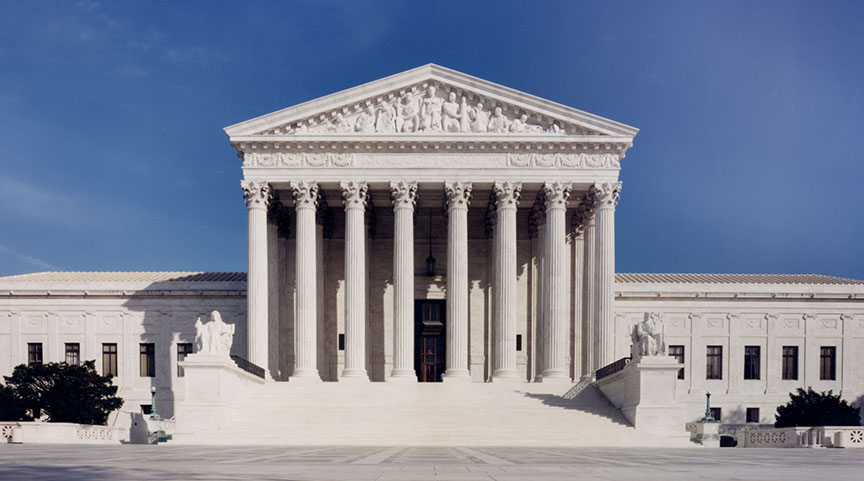
The United States Supreme Court has agreed to hear a case that may set an important precedent for how American immigration law treats people who say they were forced to assist groups regarded as terrorist organisations.
On Tuesday 13 October 2026 the justices accepted an appeal brought by the Trump administration against a lower court ruling in favour of Izuchukwu Ozurumba, a Nigerian national. Ozurumba was denied asylum after he worked as a cook for leaders of a group known as the Unknown Gunmen, which United States officials have treated as a terrorist organisation linked to separatist violence in southern Nigeria. He maintains that he was coerced into the work and held against his will.
The central question is whether preparing meals for members of such a group qualifies as providing “material support” under the Immigration and Nationality Act. That provision bars many non citizens who have engaged in terrorist activity, including those who supply material support, from receiving asylum and other forms of immigration relief.
According to court records, Ozurumba accepted a position in 2022 at a rural camp outside Lagos after responding to what he understood to be a legitimate job advertisement. Once there he discovered that the camp was run by the Unknown Gunmen. He prepared three meals a day for roughly 15 to 17 leaders over a period of about six months. For part of that time he received no pay. Armed guards prevented him from leaving. He later escaped during a trip into town to buy supplies. After his escape he faced beatings and repeated death threats. He fled first to Venezuela and then entered the United States without authorisation across the southern border in July 2023, where he applied for asylum.
An immigration judge concluded that the Unknown Gunmen met the statutory definition of a terrorist organisation and that Ozurumba’s cooking constituted material support. The Board of Immigration Appeals affirmed the decision and found that the statute contains no exception for assistance given under duress. Ozurumba was ordered removed. He was deported to Nigeria in April 2025 while his appeal remained pending.
In September 2025 a divided panel of the United States Court of Appeals for the Fourth Circuit reversed the immigration authorities. The majority held that cooking meals did not amount to material support because the work did not provide resources that the organisation could use directly or readily divert for the planning or commission of terrorist acts. The court described Ozurumba as a captive labourer whose ordinary duties had no connection to the group’s violent objectives.
The Department of Justice petitioned the Supreme Court, arguing that the Fourth Circuit’s interpretation conflicts with rulings from at least three other federal appeals courts. Government lawyers contend that supplying meals is no less a form of material support than providing petrol for vehicles. They maintain that allowing the lower court decision to stand would substantially increase the burden on the government when it seeks to exclude non citizens who have links to terrorism.
The Supreme Court is expected to hear oral argument and to issue its decision by the end of June 2027.
Lawyers representing Ozurumba have warned that a broad reading of material support could make it extremely difficult for people fleeing persecution to obtain protection in the United States, even when any assistance was involuntary and limited to basic services such as cooking. The case therefore raises wider questions about the proper scope of the terrorism related bars in United States immigration law and the treatment of claims of coercion.
By A.Ikechukwu
- US Supreme Court to Consider Whether Cooking for Nigerian Separatists Counts as Material Support for Terrorism
- US Sanctions Cuban State Bank Over Links to Iran
- Lagos Court Sentences Man to Three Years for Facebook Impersonation in Currency Fraud
- NBA President Constitutes Committee to Probe ₦100 Million Imo Gift to Owerri Branch
- Tinubu’s Campaign Opt Out: The Governance Excuse That Masks Fitness Concerns Ahead of 2027


