
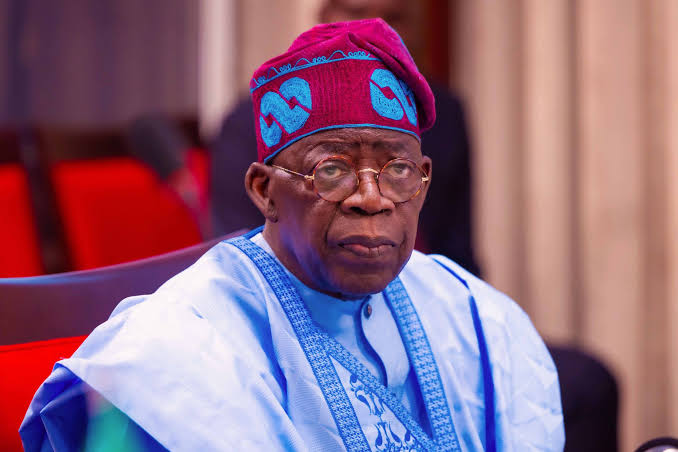
A United States federal judge has granted the Federal Bureau of Investigation permission to submit certain documents privately for judicial review in a long-running Freedom of Information Act case concerning historical records linked to Nigerian President Bola Tinubu.
According to an update posted on X by the Washington-based firm Von Batten-Montague-York, L.C., US District Judge Beryl Howell granted the FBI leave this morning to provide the court with the materials in private (ex parte and in camera). The judge has given the FBI, the Drug Enforcement Administration, the Department of Justice and President Tinubu until 28 August 2026 “and no later” to file their opposition to the release of the records at issue.
The firm highlighted the judge’s “and no later” language as an indication that the court has reached the limit of its patience with delays in a case that has already been pending for more than three years.
The records sought relate to FBI files and interview reports from the early 1990s connected to a Chicago-based heroin trafficking investigation and a related civil forfeiture action in which approximately $460,000 linked to accounts associated with Tinubu was forfeited to the US government. Tinubu was never charged or convicted in connection with the matter and has consistently denied any involvement in drug trafficking. This development comes as Nigeria’s NDLEA dismantles a major cocaine cartel using Nigeria as a transit hub to Uk, Europe, and Asia.
In its post, the firm stated that the FBI has now acknowledged holding highly sensitive drug-trafficking-related information concerning Tinubu. It argued that the request for private judicial review is inconsistent with claims that the matter was purely a civil forfeiture case, noting that such in-camera procedures are typically reserved for cases involving sensitive law-enforcement information, including the protection of informants. The firm further linked the development to longstanding allegations that Tinubu cooperated with US authorities in exchange for immunity, though these claims remain unproven in any criminal proceeding.
The firm contrasted the current pace of proceedings under the Trump administration with what it described as earlier stonewalling under the previous administration, expressing thanks to President Trump and White House staff for advancing the matter after years of delay.
The litigation, brought by Aaron Greenspan, stems from FOIA requests seeking the FBI’s full file on Tinubu and related Form 302 interview records from 1992–1993. In 2025 Judge Howell ruled that certain “Glomar” responses (neither confirming nor denying the existence of records) by the FBI and DEA were improper. Subsequent production has been subject to repeated extensions and disputes over exemptions, including those protecting privacy, investigative techniques and information that could endanger individuals.
President Tinubu’s legal team has previously joined requests for additional time in the case. The Nigerian government and Tinubu have maintained that the decades-old allegations are without merit and that he was never subject to criminal prosecution.
The latest court direction requires the agencies and Tinubu to present their arguments against disclosure by the hard deadline of 28 August 2026, after which the judge will determine the next steps, including any public release of non-exempt material.


One comment