
Asaba, 7 October 2026
On 7 October 1967, men and boys in Asaba dressed in white and walked out to meet Nigerian federal troops, singing, dancing and chanting “One Nigeria”. They were told the soldiers had come for a peace talk. Instead, the men and teenage boys were separated from the women and children and shot.
That is the account given by Ilomechina Amuwah, who says he was there and escaped death only because a former schoolmate among the troops recognised him. Fifty nine years later, he is still telling the story. An Igbo saying captures the narrowness of that survival: “Na onye ga-akọ akụkọ agha ama anwụ na agha.” The person who will tell the story of the war will not perish in the war.
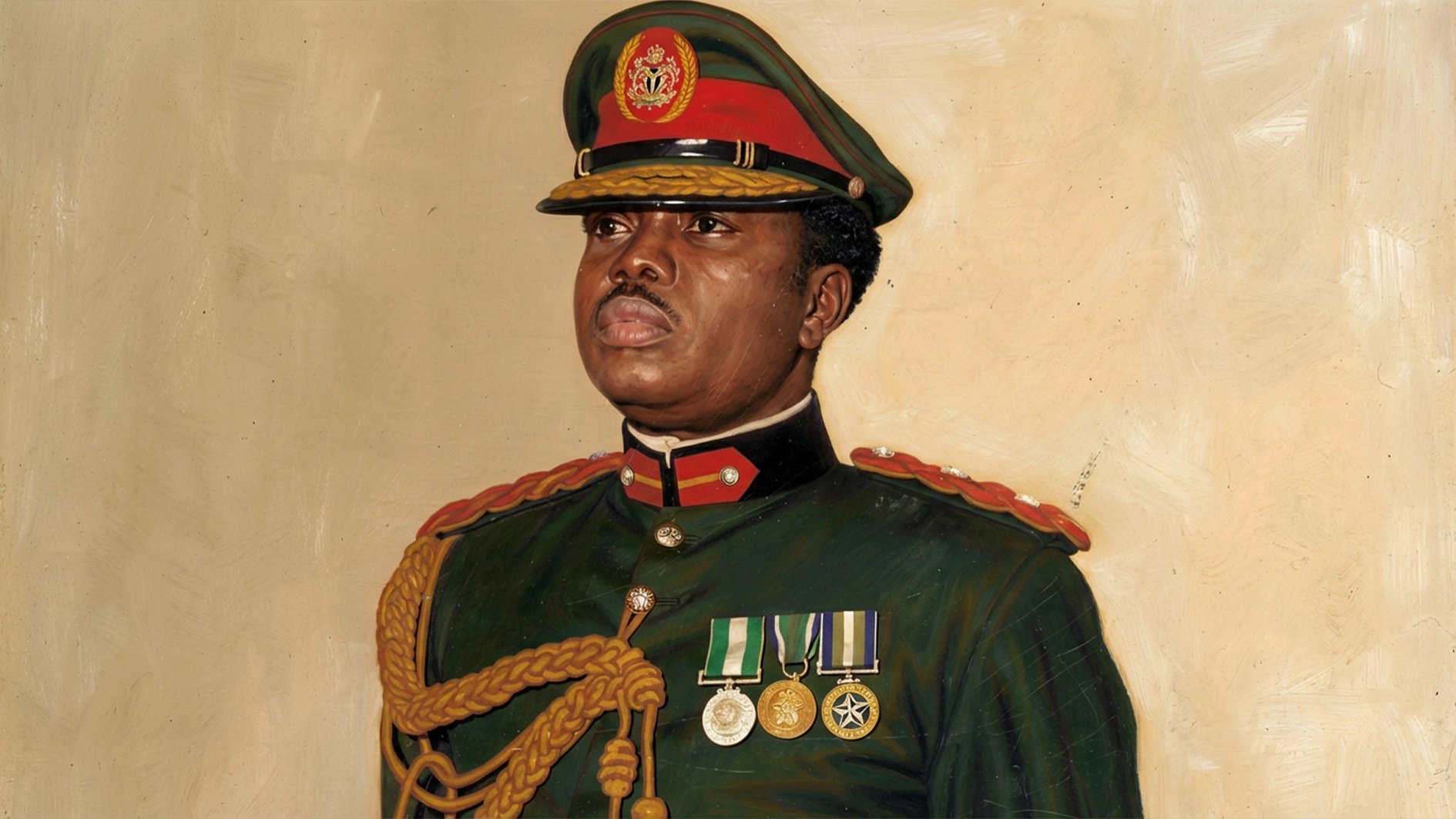
The Asaba killings took place in the early months of the Nigerian Civil War, after federal forces retook the Mid West from Biafran troops. Colonel Murtala Muhammed commanded the Federal Second Infantry Division. Officers and soldiers under his command, including Major Ibrahim Taiwo, carried out the operation in Asaba. Community leaders had urged residents to show loyalty to Nigeria in the hope of ending days of house to house violence. People came out in the traditional white Akwa Ọcha, a cloth associated with peace, waving Nigerian flags and declaring that they stood with one country.
According to Amuwah’s testimony, the gathering was a trap. The men were taken aside and killed. Survivor accounts and later historical work describe machine gun fire at Ogbe Osowa and killings at other points in the town in the days before and after 7 October. No official count exists. A 1981 community list named 373 dead and said it was incomplete. Academic estimates by Elizabeth Bird and Fraser Ottanelli put the toll between 500 and 800. Contemporary relief reports cited about 700 to 759 men and boys. Community memory and some eyewitness accounts place the number well above 1,000. Most of the dead were buried in mass graves.
Amuwah says he lived because Bab Ali, a classmate from Onitsha Bethel Primary School who was serving with the Nigerian troops, helped him get away. Other survivors have described hiding among the bodies. The troops, according to the account he has given, treated the killings as a lesson for a town they regarded as sympathetic to Biafra.
Muhammed later became head of state. He was assassinated in 1976. Neither he nor the officers associated with the Asaba operation were ever charged with war crimes. Nigeria held no truth and reconciliation process for the massacre. The Federal Government has never issued a formal apology. At today’s 59th anniversary memorial in Asaba, community leaders again said there can be no closure without a public apology from a sitting president. Reports from the ceremony said the Delta State Government expects a federal reconciliation declaration, and that a son of the late Ibrahim Taiwo offered a personal apology. Campaigners say a private gesture is not a state reckoning.
Professor Edwin Ijeoma, commenting on the anniversary, said the blood of his people is still crying for justice, and that Nigerian nations will not know peace until that justice is done. He said the killings were carried out without apology, without a truth and reconciliation commission, and without remorse, yet the victims are asked to forget and forgive.
On X, a user identified as Neta wrote that the dead were identified as Igbo, treated as Igbo and killed as Igbo, yet some people still deny that identity for political reasons. The post added that if war returned, Asaba and the rest of Delta North would again be treated as Igbo. Another user, African Jesu, called the story a very sad one and noted that the Federal Government has never officially apologised.
The massacre remains one of the least officially acknowledged civilian killings of the civil war. Lists of the dead are incomplete. No court has tested the chain of command. For Amuwah and others who walked out in white on 7 October 1967, the unanswered question is why the men who ordered and carried out the killings were left unprosecuted.
By A.Ikechukwu
- Keyamo and Air Chief agree closer civil and military aviation safety collaboration after Igbokoda tragedy
- President Tinubu Mourns Chief Ralph Obioha and Praises His Stand for Democracy
- Fifty nine years on, an Asaba survivor recounts how federal troops killed men who had come out for peace
- Kanu appeal: fresh plea, repealed terrorism Act, and whether sections 97 and 98 can still save the conviction
- Shettima arrives in Addis Ababa for Nigeria–Ethiopia nutrition leadership exchange


