
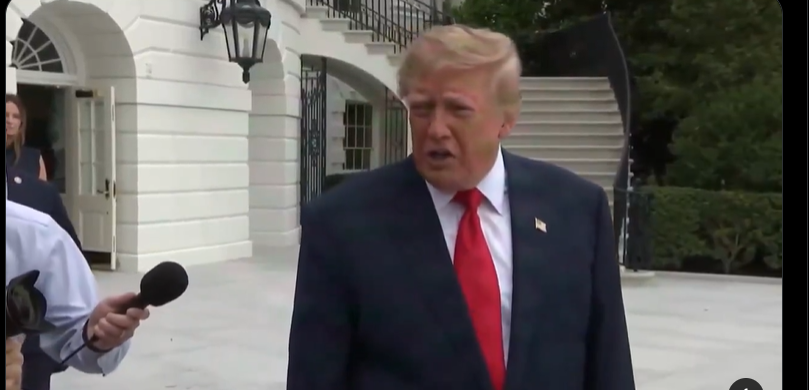
United States President Donald Trump has suggested that Ukraine should replace President Volodymyr Zelensky with a new leader capable of reaching an agreement with Russia. Speaking to reporters on Saturday, 10 October 2026, Trump said: “You know what I suggest? I suggest they get a new leader who could make a deal because he could’ve made many deals and for some reason he never does… I think it’s time for Ukraine to get a new President.”
The remarks came a day after Trump announced a deal with Russian President Vladimir Putin under which Russia would supply diesel fuel to the American and global markets. Trump stated that Russia would deliver more than 300,000 tonnes immediately, followed by further shipments of 500,000 tonnes in November and additional volumes thereafter. The US Treasury issued a temporary licence allowing Russian diesel onto the market in circumvention of sanctions until April 2027.
Trump has repeatedly urged Ukraine to stop striking Russian oil refineries, which he has linked to elevated diesel prices in the United States ahead of the midterm elections. He has claimed that Zelensky could have settled the conflict many times but chooses not to, and has warned that continued attacks on Russian energy infrastructure create problems for the world. Zelensky and Ukrainian officials have rejected this characterisation, arguing that Russian oil revenues directly finance the war of aggression against Ukraine.
The diesel arrangement has drawn sharp criticism in Kyiv. Zelensky has described the decision as a gift to Putin and an investment in a war that must be ended rather than prolonged. He has also said Ukrainian negotiators were used as a smokescreen while Washington reached an understanding with Moscow. Ukrainian strikes on Russian refineries continue, as Kyiv maintains that these targets form part of the economic base supporting the invasion.
Trump’s comments highlight a markedly transactional approach to the conflict. Facing domestic pressure over fuel costs, which have also been affected by the United States led war in Iran, the American president has prioritised short term energy supplies from Russia over consistent pressure on the aggressor. By easing sanctions on Russian diesel while publicly demanding a change of leadership in Ukraine, Trump has signalled that support for Kyiv is secondary to American political and economic calculations.
This shift has reinforced longstanding doubts about the reliability of American commitments under the current administration. Russia remains the initiator of the full scale invasion, and its forces continue to strike Ukrainian cities and infrastructure. Yet Trump has directed his strongest public criticism at the Ukrainian leadership rather than at the country conducting the aggression.
European reactions have diverged from the American position. British Prime Minister Andy Burnham telephoned Zelensky on the same day and expressed complete solidarity, stating that the United Kingdom would continue to strengthen sanctions against Russia and take further steps to constrain the Russian war effort. Ukrainian Foreign Minister Andriy Sybiga noted that Zelensky enjoys the support of the Ukrainian people, who alone have the right to decide their leadership.
The episode underscores the volatility of Trump’s foreign policy. Deals struck with Moscow on energy can rapidly translate into public pressure on Kyiv to concede, even as Russian attacks persist. For Ukraine, the immediate question is whether American support will remain conditional on accepting terms that ease Russia’s economic burden while the war continues.
By A,IKechukwu

- Trump Calls for New Ukrainian President After Striking Diesel Deal with Russia
- Israeli President Herzog Calls Captain Smit Machchhar a Hero of Israel, and Pledges Top Civilian Award
- EFCC Secures Conviction of Onatayo Pelumi for Money Laundering Involving 132 Million Naira in Lagos
- EFCC Recovers $104,950 for United States Based Businesswoman in Lagos
- Lawyer Chinedu Agu Released on Bail After Detention Linked to NBA Owerri Meeting


