
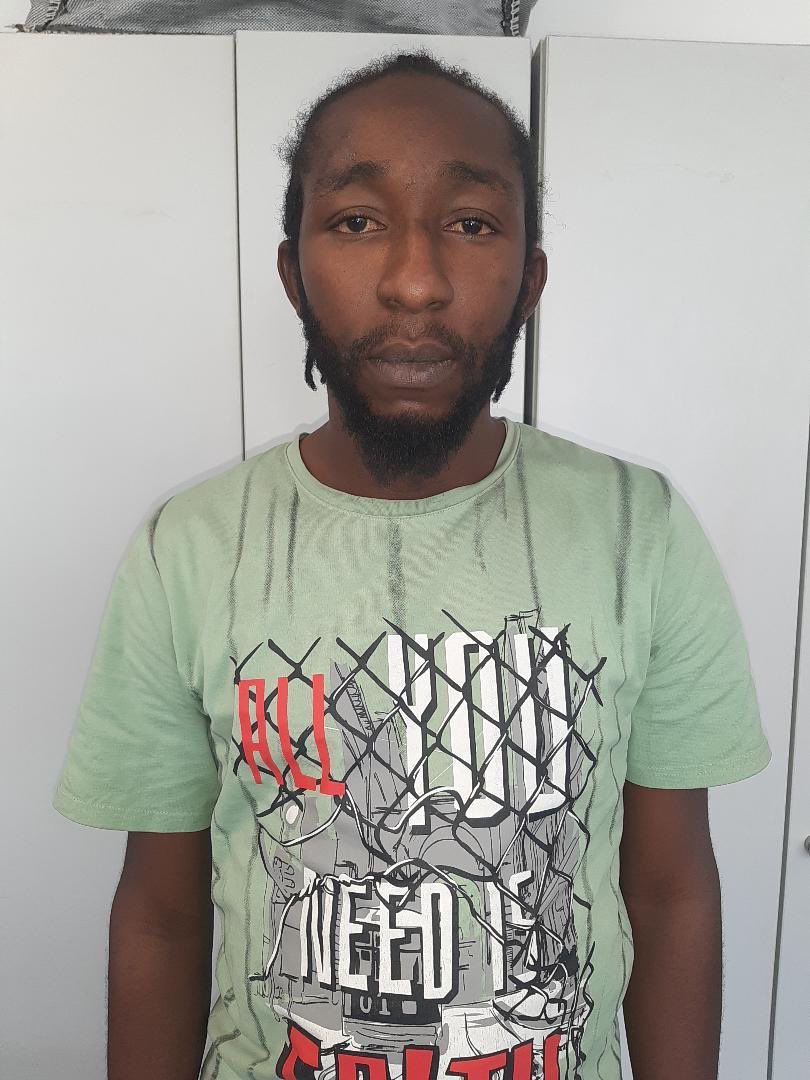
The Economic and Financial Crimes Commission has secured the conviction and sentence of Nwachi Chidozie Kingsley for obtaining $205,238 from an American citizen under false pretence.
Justice U.P. Kekemeke of the Federal Capital Territory High Court in Maitama, Abuja, convicted Kingsley on Thursday, 29 October 2026. The court sentenced him to seven years’ imprisonment on each of the two counts, with no option of fine. The sentences are to run concurrently at the Kuje Correctional Centre in Abuja. The court also ordered Kingsley to restitute the victim the sum of $205,238.
Kingsley was prosecuted by the EFCC on a two count amended charge of possession of a document containing false pretence and obtaining money by false pretence. The offences related to a purported contract with the Federal Ministry of Works and Housing. One count accused him of being in possession of a fake notice of intent to award a contract allegedly issued in his name by the ministry. The second count accused him of obtaining $205,238 from Nicole Kierulff Sayers under the false pretence that the money was required to finance a government contract, knowing the claim was false.
Sayers, an American lawyer based in Oregon in the United States, testified that Kingsley contacted her on Facebook on her birthday. She told the court: “I know the defendant. The defendant messaged me on Facebook on my birthday and he said he was a member of the same spiritual organisation as me.” Their conversations developed into a romantic relationship, which she said led her to trust him and believe his claims.
According to her evidence, Kingsley later asked for money to facilitate the award of a contract by the Federal Ministry of Works and Housing. He claimed that some men were threatening his life because he had not provided the money required to secure the contract. He supplied details of the purported contract, including a logo and other information. She believed the documents because of the emotional attachment she had developed.
Sayers said Kingsley initially requested $15,000 and promised to repay the money within 45 days. She transferred the funds through a money transfer application. He later introduced her to members of his family during a video call, during which they thanked her for helping him secure the purported contract. She stated that she had transferred approximately $40,000 to him before travelling to Nigeria to meet him in person.
Sayers arrived in Abuja in March 2022 and spent two weeks with the defendant at his rented house in Sun City, Abuja. She continued the relationship because she wanted to recover her money. She alleged that Kingsley subsequently requested additional funds for medical emergencies, surgeries, malaria treatment and supplies for the purported government contract. She told the court that the requests involved more than 125 transactions and that the total amount she transferred was, by her estimate, well over $200,000 within a 12 month period.
Sayers further testified that Kingsley presented her with a document he claimed was proof that he had attempted to transfer $10,000 to her. He claimed that the bank had intercepted the transaction because the money was allegedly linked to the misappropriation of government funds, which he said had resulted in his arrest and detention. She alleged that he then asked her to provide money for his bail and for bribes connected to the purported criminal case.
By John James


