Jerusalem/Tehran, 28 February 2026
Israel, acting in close coordination with the United States, has begun a significant military operation against targets inside Iran. Israeli officials have described the action as a pre-emptive strike aimed at neutralising serious threats to regional and Israeli security.
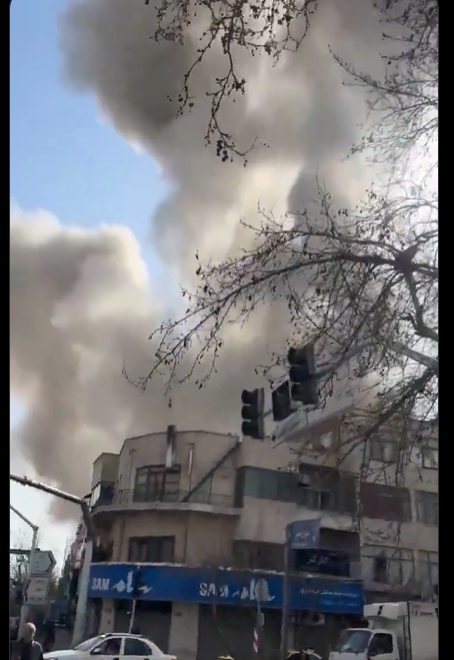
The operation commenced in the early hours of this morning. Multiple large explosions have been reported across Tehran, with thick columns of smoke seen rising from several locations in the city centre.
Israel’s Defence Minister Israel Katz confirmed the launch of the strikes in a televised address, stating that the action was necessary to “remove immediate and existential threats to the State of Israel” linked to Iran’s nuclear programme and advanced missile arsenal.
A senior United States official separately acknowledged American involvement in the joint operation, confirming that the strikes had targeted high-value Iranian military sites and facilities believed to be connected to the nuclear programme.
In anticipation of possible Iranian retaliation, Israel has declared a nationwide state of emergency. Air-raid sirens have sounded in multiple cities, and the public has been instructed to remain close to protected spaces.
The military action follows a prolonged period of failed diplomacy. Recent rounds of nuclear talks between the United States and Iran, most recently held in Geneva, ended without any agreement. Washington had insisted on the complete dismantlement of key Iranian nuclear facilities and the removal of stockpiled enriched uranium, demands that Tehran firmly rejected. Iranian representatives have repeatedly stated that all sanctions must be lifted before any meaningful negotiations can resume.
US President Donald Trump had previously expressed frustration with the stalled talks and signalled that military options remained on the table if diplomatic efforts continued to fail.
Eyewitnesses in Tehran described hearing several powerful blasts in the downtown districts. Iranian state television has acknowledged the explosions but has so far provided no official explanation or casualty figures.
Analysts warn that Iran is likely to respond, possibly with missile barrages directed at Israeli territory or with attacks on American military positions across the region, using either its own forces or allied militia groups. In a previous round of direct confrontation in June 2025, Iran launched more than 500 ballistic missiles and drones towards Israel, causing civilian deaths and significant infrastructure damage.
Several countries have already taken precautionary measures. The British government has begun evacuating embassy personnel from Iran, while a number of international airlines have cancelled or diverted flights to and from airports across the Middle East.
The operation has raised immediate concerns about the stability of global energy markets and the risk of a wider regional conflict. The United Nations Secretary-General has urged both sides to exercise maximum restraint to prevent further escalation.
Developments are unfolding rapidly. Both Israel and the United States remain on high military alert, and further statements from all parties are expected in the coming hours.
- Religious Bigotry on Full Display: Sheikh Sani Yahaya Jingir’s “Infidels” Rant in Kano Must Be Condemned and Investigated by the DSS
- Paul Biya’s prolonged absence from Cameroon fuels power vacuum fears
- Bandits abduct Kebbi High Court judge, Justice Faruku Hassan Bunza
- ICC Chief Prosecutor Karim Khan Removed in Historic Vote
- US House backs measure targeting Nigeria over Christian persecution as Ted Cruz hails defeat of Abuja’s PR drive