12 Reasons Why Seyi Makinde Is Right to Demand an International Investigation into Terrorism in Nigeria
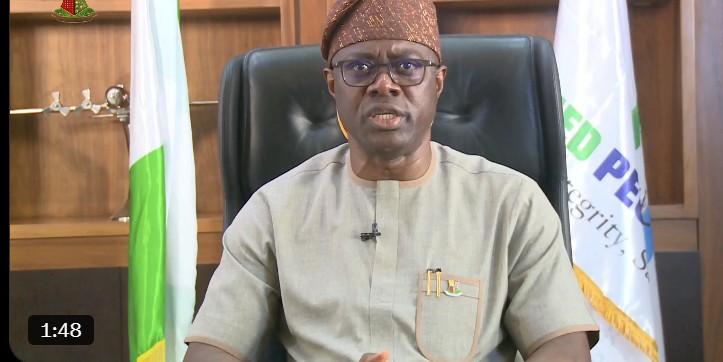
Governor Seyi Makinde’s call for United Nations involvement in probing school abductions and broader terrorism has been dismissed by some as politically motivated. However, a growing body of evidence suggests that internal Nigerian investigations into terrorism and banditry are deeply compromised, making external scrutiny not only reasonable but necessary.
Following the recent abduction of pupils and teachers in Oyo State’s Oriire area, Governor Makinde urged international organisations to investigate the circumstances, potential security lapses, and failures in prevention. His position is strengthened by a pattern of incidents, official statements, and systemic weaknesses that have undermined public confidence in Nigeria’s security and justice institutions.
Here are twelve key reasons why many believe Governor Makinde is justified in rejecting reliance on purely internal investigations.
1. Documented cases of military personnel selling arms to terrorists Senior Nigerian military commanders have publicly admitted that some officers and soldiers sold weapons and ammunition to Boko Haram. Such diversion directly strengthens terrorist groups and raises serious questions about internal accountability.
2. Repeated arrests and probes of soldiers for collaborating with insurgents Over the years, members of the armed forces have faced court-martial or investigation for leaking operational information or supplying logistics to terrorist groups. These cases indicate that the problem is not isolated.
3. A retired general’s stark warning about military collusion In 2018, former Chief of Army Staff Lt Gen Theophilus Danjuma accused the military of colluding with armed bandits, claiming they facilitated movement and covered for attackers. He told Nigerians they could not depend on the armed forces for protection and should defend themselves. The military denied the claims, but the intervention from such a senior figure remains highly damaging.
4. Specific incidents of troops being withdrawn before attacks In November 2025, Kebbi State Governor Nasir Idris alleged that soldiers were pulled out of a girls’ secondary school in Maga just hours before bandits abducted 25 students. The Nigerian Army confirmed it was investigating the withdrawal. Such incidents fuel suspicions that internal probes rarely deliver full answers.
5. Security lapses appearing to coincide with political moments Critics have noted patterns where major kidnappings occur around politically sensitive periods. The timing of school abductions in Oyo State around discussions of Governor Makinde’s national profile has been cited as one example that warrants independent examination.
6. Terrorists routinely found with military-grade weapons Insurgents and bandits are frequently discovered with arms, vehicles and equipment that originated from Nigerian military stocks. While some items are captured in battle, the scale and consistency suggest diversion beyond normal combat losses.
7. Evidence of terrorists having advance knowledge of military operations Armed groups have repeatedly evaded or ambushed security forces in ways that indicate prior knowledge of movements and deployments. This points to possible insider leaks that internal investigations have failed to resolve convincingly.
8. Systemic corruption weakening the fight against terrorism Independent analyses have repeatedly linked corruption, diversion of funds and poor logistical support to the military’s struggles against Boko Haram and bandit groups. These structural failures create an environment in which collusion or negligence can thrive.
9. Impunity in herder-farmer violence Killings attributed to herdsmen in Plateau State and other parts of the Middle Belt are frequently said to go uninvestigated or unpunished. This selective justice has eroded trust in domestic institutions to deliver impartial outcomes.
10. Perceived lack of empathy from the highest levels of government In April 2026, President Bola Tinubu visited Plateau State after deadly attacks but met victims’ representatives only at the airport rather than entering affected communities in Jos. The Presidency cited security and logistical reasons, yet the decision was widely criticised as detached and has reinforced perceptions of insufficient accountability.
11. Allegations of a compromised judiciary There are longstanding claims that the judiciary, which should independently investigate terrorism cases and hold officials to account, has been influenced by the executive. Accusations include judges receiving houses or other benefits, undermining confidence that internal probes can be fair or thorough.
12. “Catch and release” practices and controversial reintegration programmes Critics argue that some individuals arrested as terrorists or bandits are later freed or reintegrated into communities through deradicalisation schemes or other channels, sometimes with little transparency. Allegations persist that some return to violence or receive lenient treatment. While the government defends these programmes as necessary to weaken insurgent groups, the lack of robust, independent oversight has fuelled distrust.
Governor Makinde’s call for international involvement comes after domestic mechanisms have repeatedly failed to provide satisfactory answers in high-profile cases. When serving governors publicly question the withdrawal of troops before attacks, when retired generals accuse the military of collusion, and when reintegration programmes operate with limited transparency, it is understandable that some leaders no longer trust internal investigations alone.
An international probe, conducted with the cooperation of Nigerian authorities, would not replace domestic efforts but could help restore credibility where it has been lost. For Governor Seyi Makinde and others raising similar concerns, the question is no longer whether problems exist, but whether Nigeria’s current institutions are equipped to investigate them impartially.
The pattern of incidents and allegations outlined above suggests that external scrutiny may be the only way to break the cycle of suspicion and impunity.
- FBI search yields 399 pages on Tinubu, Washington lobbying firm claims
- Tinubu asks US court to keep 1990s drug-inquiry files secret
- Adebola Festus Adekunle and Mudashiru Afeez Olawale extradited to US over alleged sextortion of minors
- What Obasanjo Did to the Igbo Through the Abandoned Property Decree of 1979
- EFCC offers global whistleblowers up to 5 per cent of recovered loot