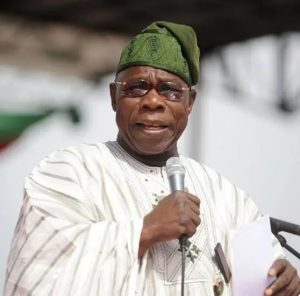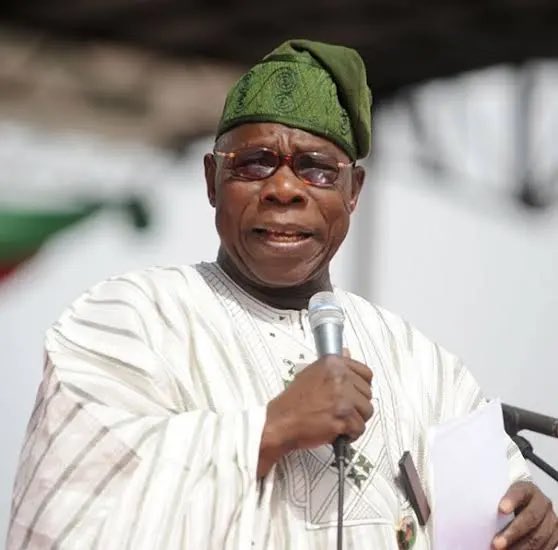
Two days before he handed Nigeria back to civilians, General Olusegun Obasanjo signed a law that closed the courts to Igbo families trying to recover houses and land they had fled during the civil war. Decree No. 90 of 1979 later compiled as the Abandoned Properties Act in the Laws of the Federation 1990 was dated 28 September 1979. Shehu Shagari took office on 1 October. The timing was not an accident.
The decree did not invent the seizure of Igbo property. That began during and after the war of 1967–70, when Igbo owners left Port Harcourt and other towns in former Biafran territory. Rivers State and other state authorities declared the houses “abandoned”, took custody of them, and passed them to new occupants. What Obasanjo did was to turn those state actions into a federal, court-proof transfer of title.
The law treated every sale by the Abandoned Properties Implementation Committee as lawful. Title passed to the buyer free of all previous claims. Land registrars were ordered to strike the original owner’s name from the register and insert the purchasers. Anyone who refused faced a year in prison, with no option of a fine. Committee members were indemnified. No suit was to lie against them. In plain terms, an Igbo owner who returned to find a stranger in his house could not take the matter to a judge.
That was the point. Earlier federal panels had talked of compensation and of returning a fraction of the buildings in Port Harcourt. The White Paper that followed reserved most of those houses for River’s indigenes and other Nigerians, leaving only a minority for the people who had built them. Obasanjo’s decree then made the committee’s decisions incontestable. Administrative confiscation became finished law.
The properties were not abstract. They were family houses in Diobu, D-Line, the old GRA, Borikiri and other quarters of Port Harcourt, as well as land and buildings elsewhere in the old Eastern Region that had fallen under Rivers and neighbouring states. Owners who survived the war came home to locked gates, new names on the deeds, and a statute that told the courts to stay out. Compensation schemes were announced. Many families regarded them as a poor substitute for restitution they never accepted.
This is why the decree is still spoken of as something done to the Igbo, not as a neutral tidy-up of wartime chaos. The legal machine that followed state edicts aimed at non-indigenes who had fled, a federal committee to sell the stock, and a last-minute ouster of the courts fell most heavily on Igbo owners in the oil city they had helped to build.
Obasanjo has never been judged in a criminal court for that statute. He left office as the soldier who kept the promise of a handover. The handover and the decree arrived together. One restored civilian rule. The other wrote Igbo title out of the land register and forbade a judge to write it back in.
The same record is why his later years in power are read against this earlier act. As elected president he ordered military operations at Odi in 1999 and Zaki-Biam in 2001 in which large numbers of civilians died. In 2006 his allies tried to change the constitution so that a president could serve a third term; the Senate defeated the bill. He has denied that he personally sought that third term. The abandoned-property decree needs no such argument. The text is short, the date is clear, and the people locked out of court were, in the main, Igbo.
Nigeria has lived with that law for more than forty years. Families still name the houses. The register still carries the names the committee put there. That is what Obasanjo did with Decree No. 90 of 1979.
By Jerry Thomas
- What Obasanjo Did to the Igbo Through the Abandoned Property Decree of 1979
- EFCC offers global whistleblowers up to 5 per cent of recovered loot
- New book argues Achebe’s famous verdict on Nigeria is a profound misdiagnosis
- Ex-Liberian VP’s 2021 Meeting with Nigerian Socialites Resurfaces Amid Drug Trafficking Charges
- Editorial: Good Morning, Tony: Hierarchy, Training and the Performance of Respect in Nigeria