
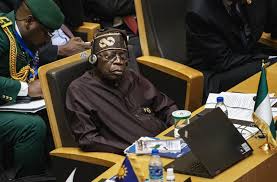
Claims that President Bola Tinubu struck a secret deal with Osun State Governor Ademola Adeleke are not dishonest so much as simply inane. The evidence of the last governorship contest points in the opposite direction: a sustained, high-intensity effort by the All Progressives Congress to seize the state that ultimately failed.
Before the APC’s most desperate phase of intervention, roughly 40 people had already been killed in political violence linked to the struggle for control of Osun. Rather than withdraw, the party escalated. A 297-member committee was assembled specifically to help “grab and snatch” the state. The Senate President, serving ministers and 33 state governors were deployed to Osun in a show of federal and inter-state force rarely seen outside a national election. Individual governors and ministers did not merely lend their names; many were physically present, using their offices, security details and patronage networks to tilt the ground. However INEC Declares Adeleke Winner of the Governorship Election
The desperation extended to the machinery of the election itself. At a critical stage, the Independent National Electoral Commission’s IReV portal was shut down for six hours without any public explanation from either INEC or the presidency. In the absence of a credible technical account, the most probable interpretation is that the interruption was deliberate and intended to create space for the manipulation of results. Such an unexplained blackout of the primary public verification system, occurring amid an all-out mobilisation by the ruling party, cannot be dismissed as coincidence.
Underlying this entire operation was a clear deployment of Tinubu’s long-standing political mantra that “all is fair in politics.” The phrase was not merely rhetorical; it functioned as operational doctrine. Violence was tolerated, federal might was weaponised, electoral transparency was interrupted, and the collective weight of 33 governors plus senior ministers was thrown into a single state contest. Under this maxim, any method that advances the capture of power is treated as legitimate. The Osun campaign became a practical demonstration of that belief, even as Wike proclaimed that he would have been in Osun if Tinubu wanted APC victory at all costs.
Yet the mobilisation still failed. Adeleke retained the governorship. The outcome demonstrated that even the concentrated application of presidential, ministerial and gubernatorial power, backed by an opaque interruption of the result-viewing portal and justified by the creed that all is fair, could not overcome local resistance and the preference of Osun voters, as more pressure mounted from all sources including from Davido who appealed to Trump over fears of violence in Osun.
The same apparatus is now being turned against former Kaduna Governor Nasir El-Rufai and other opposition figures. To claim that Tinubu has reached any understanding with El-Rufai would be both comic and dishonest once that campaign also fails, as current trends suggest it may. The pattern is consistent: when persuasion and performance prove insufficient, the ruling party reaches for numbers, money, coercive presence and, when necessary, disruption of electoral transparency, all under the banner that the ends justify the means. In Osun it did not work. There is little reason to believe the method will suddenly become more effective elsewhere.
The broader implication for 2027 is straightforward. Tinubu has not governed in a manner that expands his political capital. The failed attempt to capture Osun is therefore less an isolated setback than an early indicator. Force, ethnic solidarity, the selective disabling of electoral safeguards and the open embrace of “all is fair in politics” are being offered as substitutes for delivery. Moreover, former President Jonathan has called for new Boundaries on political conduct in off-cycle elections.
Governor Adeleke has nevertheless announced that he will support Tinubu’s re-election bid in 2027 on the grounds that the President is a Yoruba man from the South-West. That decision sits awkwardly alongside the recent record of confrontation, violence, the deployment of 33 governors, the unexplained six-hour blackout of the IReV portal and the practical application of Tinubu’s maxim. It also underscores a recurring feature of Nigerian politics: ethnic and regional calculation frequently outweighs both recent history and policy performance.
Tinubu’s administration tried to take Osun by overwhelming deployment of federal and APC state resources, accompanied by an unexplained interruption of the public result-viewing system and guided by the doctrine that all is fair in politics. It failed. The same methods are now being prepared for use against other opponents. Whether those methods succeed or again prove inadequate will shape the 2027 contest far more than any alleged private understandings.
By Tom Fedding


