
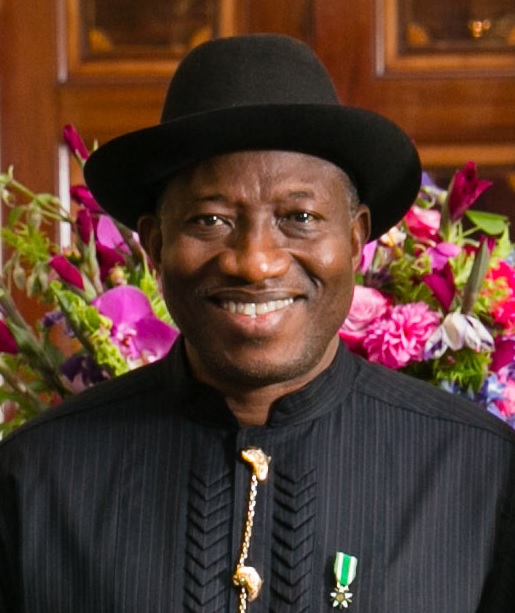
Former President Goodluck Jonathan has urged Nigeria to set clearer limits on the involvement of serving governors and senior political figures in off-cycle state elections, warning that current practices risk undermining democratic stability.
In a statement issued after the recent Osun State governorship election, Jonathan commended the Independent National Electoral Commission (INEC), security agencies, political parties and the people of Osun for conducting a peaceful poll that, in his view, strengthened public confidence in democratic institutions. He noted that the outcome demonstrated Nigeria’s capacity to hold elections despite the challenges facing its democracy, and despite political gambits of incumbent president.
However, Jonathan raised serious concerns about what he described as an emerging and “unwholesome” trend. He pointed to the growing practice of serving governors, senior political office holders, party leaders and other influential government functionaries travelling into states holding elections accompanied by large numbers of aides and heavy security details from outside those states.
“The conduct witnessed around the recent elections in Osun, Ekiti and Ondo States was, in my view, unusual. It is not a practice that should become normal in a democratic society,” he said.
Jonathan recalled that similar situations arose during the 2013 Anambra and 2014 Ekiti governorship elections while he was president. On those occasions, he said, he ordered party leaders and senior government officials to leave the states immediately after being briefed on their presence.
He argued that while political parties are fully entitled to campaign, mobilise supporters and deploy legitimate party structures, there is a point at which the overwhelming presence of serving governors and powerful political actors on election day creates an atmosphere of apprehension, intimidation, bullying and undue pressure.
“We must ask ourselves whether the increasing deployment of political power and large-scale mobilisation by senior office holders on election day in states holding elections is consistent with the spirit of free, fair and peaceful democratic competition. This hardly happens in other democratic countries,” Jonathan stated.
He warned of dangerous long-term implications if the trend becomes established. Should governors from opposing parties begin descending on every competitive state election, matching political power with political power and mobilisation with counter-mobilisation, elections risk coming to resemble “battles for political survival rather than peaceful contests for the mandate of the people.”
Jonathan stressed that the issue should not be treated as a partisan dispute linked solely to the Osun election. Instead, he framed it as a broader national question concerning the future of Nigeria’s electoral democracy. Those who have held public office, he said, carry a greater responsibility to ensure that the power and influence of their positions strengthen democratic institutions rather than create apprehension among opponents or citizens.
The former president’s intervention adds to ongoing debates about the conduct of Nigeria’s staggered state elections and the appropriate role of federal and state-level political heavyweights in contests outside their own jurisdictions.
By Love Iwe
You can also read: Sowore: Compassion Does Not Require Historical Amnesia: My Response to Datti Baba-Ahmed on IBB


