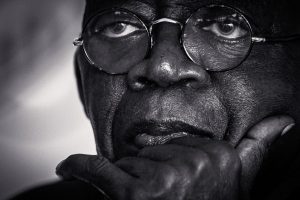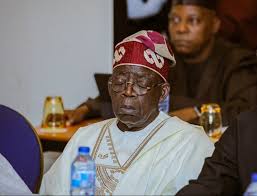
President Bola Tinubu has urged a federal court in Washington not to compel the US Department of Justice, the FBI and the Drug Enforcement Administration to release withheld records linked to allegations of heroin trafficking in the early 1990s.
In a 16-page filing dated 28 August, Mr Tinubu’s lawyers asked Judge Beryl Howell of the US District Court for the District of Columbia to deny a motion for summary judgment by the plaintiff, American transparency campaigner Aaron Greenspan, and to leave in place redactions and withholdings already made by the FBI and DEA.
The Nigerian president, who is an intervenor in the long-running Freedom of Information Act case, argues that disclosure would breach his privacy. He contends that the records are being sought “to influence politics in a foreign nation” — a reference to Nigeria’s next presidential election, due in 2027 and that even public interest in his background does not confer a FOIA right to the withheld material.
Mr Tinubu has consistently denied any criminal wrongdoing. He has never been charged with a drugs offence in the United States.
What the files concern
The records sit at the centre of Greenspan v Executive Office for United States Attorneys and others. Mr Greenspan, founder of the research site PlainSite, lodged a series of FOIA requests in 2022 and 2023 seeking, among other things, “the entire FBI file” on Mr Tinubu and FBI Form 302 interview reports from case number 245-IP-71386 covering 1992–93.
Those requests grew out of a 1993 civil forfeiture action in the Northern District of Illinois, United States v. Funds in Account No. 263226700 et al. US authorities alleged that proceeds of a Chicago heroin-distribution network operating between about 1988 and 1991 had been placed in American bank accounts owned or controlled by Mr Tinubu. The individuals named in the government’s allegations included Mr Tinubu, Adegboyega Mueez Akande and Abiodun Agbele. A court later ordered the forfeiture of about $460,000 held in an account in Mr Tinubu’s name. He was not prosecuted.
Mr Tinubu has long described the episode as a civil matter rather than a criminal case. Critics argue that the still-withheld FBI and DEA files go beyond the public forfeiture papers.
Privacy, FOIA and “a private individual”
In the new filing, shared by solicitors Christopher W. Carmichael, Victor P. Henderson and Oluwole O. Afolabi, Mr Tinubu’s team said limited public details from the 1993 forfeiture did not extinguish a privacy interest in the rest of the investigative files.
Citing US Supreme Court authority, they wrote that a person retains a privacy interest in an entire file even where there are “scattered” disclosures of information from that same file. They added that being publicly associated with an investigation is distinct from the contents of the files themselves.
The lawyers accused Mr Greenspan of having a “singular focus” on obtaining documents with the intervenor’s “name on them”, and argued that FOIA should not be used “to mine information in government files about a private individual”. They asked the court to uphold withholdings under FOIA Exemption 7(C), which protects unwarranted invasions of personal privacy in law-enforcement records, and under the Privacy Act.
That framing is contested. Mr Tinubu is a sitting head of state seeking re-election. Critics say the public interest in the fitness for office of the president of Africa’s most populous country outweighs a privacy claim over 30-year-old investigative papers. US FOIA law, however, balances privacy against the public interest as defined in American statute and case law; it does not treat foreign electoral interest as a free-standing right of access.
How the case reached this point
Federal agencies initially issued “Glomar” responses refusing even to confirm or deny that records existed. In April 2025 Judge Howell ruled that the FBI and DEA Glomar replies were improper and must be lifted, finding it neither logical nor plausible to keep secret the fact that Mr Tinubu had been a subject of investigation once that fact was already acknowledged. She ordered the agencies to search for and process non-exempt records.
Production has been slow. Mr Greenspan has told the court that, years after his requests, he had still not received a processed page containing Mr Tinubu’s name. The agencies have sought repeated extensions. Mr Tinubu was granted leave to intervene in late 2023 and has opposed disclosure on privacy grounds ever since.
This month the FBI asked to file confidential ex parte, in camera declarations papers the judge may read in private — to explain withholdings under exemptions that protect law-enforcement techniques and information whose release “could reasonably be expected to endanger the life or physical safety of any individual”. Judge Howell allowed that sealed submission and set 28 August as the deadline for the FBI, DEA, Justice Department and Mr Tinubu to file their opposition to release.
The political overlay
The case is no longer only a transparency dispute. Von Batten-Montague-York, a Washington lobbying firm hired this year by Mr Abubakar, has circulated historical Justice Department and court material to the Trump administration and Congress and has publicised each new filing. Mr Tinubu’s camp portrays that campaign as an attempt to weaponise old American paperwork against him before 2027. The lobbyists portray his court interventions as proof that he fears what the files contain.
Neither characterisation has been tested in a criminal courtroom. The 1993 action was a civil forfeiture of funds, not a trial of Mr Tinubu. No US indictment of the president has been produced in the present litigation.
What happens next
Judge Howell must now decide how much of the processed FBI and DEA material, if any, can be released or must remain redacted. Even a ruling for Mr Greenspan would not automatically put raw investigative files on the public docket; exemptions for informants, methods and personal privacy can still strip a document to fragments.
For Nigerians the legal question is narrower than the political one. A US judge is applying American open-records law to American police files. Whether those files, if disclosed, would alter judgments about Mr Tinubu’s fitness for office is a matter for voters in 2027 — not for FOIA.
Judge Gowon
- FBI search yields 399 pages on Tinubu, Washington lobbying firm claims
- Tinubu asks US court to keep 1990s drug-inquiry files secret
- Adebola Festus Adekunle and Mudashiru Afeez Olawale extradited to US over alleged sextortion of minors
- What Obasanjo Did to the Igbo Through the Abandoned Property Decree of 1979
- EFCC offers global whistleblowers up to 5 per cent of recovered loot