
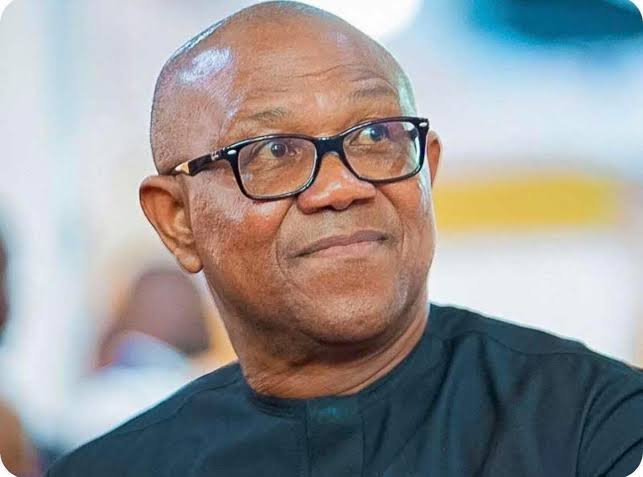
Former Anambra governor and Nigeria Democratic Congress presidential candidate Peter Obi has said he has no disagreement with Governor Chukwuma Soludo and has rejected claims that he left the state with about US$123.77 million in loans.
In a statement issued on Friday, 25 September 2026, Obi said he had stayed quiet for several days while mourning his elder brother and friend, Chief Okey Ezeibe. He said the time had come to address the controversy that has dominated public debate in recent days.
Obi urged politicians and the public to concentrate on the hardships facing Nigerians rather than on what he called needless political distractions. He said he has no quarrel with Soludo or with any other governor in the country.
“I wish to assure the public that I have no disagreement with my dear elder brother, Governor Soludo, or with any governor in Nigeria,” he said. “I am not seeking the office of governor in any state, and I will not seek that position again, even if the Constitution is amended.”
He appealed to governors to back whichever presidential candidate they prefer while still allowing other candidates to campaign freely in their states. Voters, he said, should be left to decide who serves them.
The remarks follow a dispute with the Anambra State Government, which has said eight external facilities linked to projects during Obi’s tenure from 2006 to 2014 had a combined contracted value of about US$123.77 million, with about US$92.35 million still outstanding in June 2026. The state has put that balance at about N127.4 billion at the official exchange rate and says monthly deductions from federal allocations continue to service the obligations.
Obi said those figures have been wrongly presented as “debt owed by Peter Obi.” He said he did not approach any financial institution to borrow money or issue a bond for Anambra while he was governor. He recalled that Abraham Nwankwo, then Director General of the Debt Management Office, named him chairman at a farewell event and said Obi was the only state governor who had not sought a loan facility during Nwankwo’s ten years in office.
He said that when he left office on 17 March 2014 the state owed no unpaid salaries, gratuities or pensions, and owed no contractor or supplier whose completed work had been verified and certified.
World Bank and International Fund for Agricultural Development programmes, he said, were concessionary development funds secured by the Federal Government for selected states. Repayment is spread over 25 to 30 years. Participating states received access through subsidiary arrangements. They were not, he argued, ordinary commercial loans that he personally raised.
Obi said the state government had mixed three separate figures: the total amount approved for a multi year programme, the amount Anambra actually drew during his tenure, and the balance still open when he handed over. Adding those together and calling the sum “loans left by Peter Obi” was, he said, an incorrect use of public sector accounting.
He pointed to published DMO records that put Anambra’s total external debt at about US$18 million when he took office in March 2006, about US$30 million when he left in March 2014, and about US$45.15 million on 31 December 2014, nine months after his departure. He asked how a state recorded at about US$30 million in March 2014 could be said to have inherited US$123.77 million from a governor who left that same month.
Obi said that on the day he left office he left more than US$150 million as the dollar portion of investments made for the state, and that he had bank documents that could be checked. He said the funds were expected to yield about US$10 million a year if left intact.
Even if the government’s claim of a US$123 million obligation were true, which he denied, he said the annual income from those savings could have reduced the debt. Thirteen years after he left office, he said, that income would have totalled about US$130 million and the debt would already have been cleared. Had the principal remained in the bank with compound interest and extra income, he put the present value at about US$335 million. After meeting the US$92.35 million still cited by the government, he said about US$242 million would have remained, generating about US$20 million a year for the state.
“Let me reiterate that, when I left office, I left Anambra State in a strong financial position, the strongest of any state in Nigeria, and I stand by that position,” he said.
Obi said he would not trade words with anyone about his record in Anambra. His attention, he added, would now stay on the hardships facing ordinary Nigerians, which he described as the reason for his presidential ambition.
The Anambra Government has maintained that the eight facilities were signed between 2007 and 2013 for programmes covering malaria control, education, health, erosion management, community development and agricultural value chains, and that the present administration is still servicing them. The argument has sharpened as the 2027 presidential contest gathers pace.
By A.Ikechukwu


