
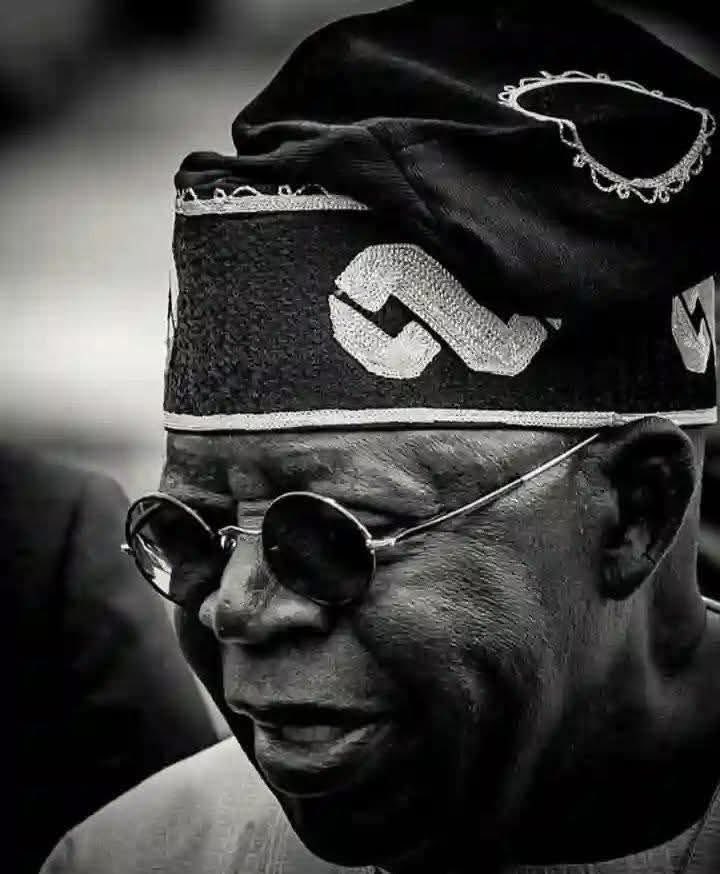
It is no longer news that President Bola Ahmed Tinubu is not in New York for the 81st United Nations General Assembly. Vice President Kashim Shettima is leading Nigeria’s delegation. That fact is settled. What is not settled, and what some commentators are now trying to bury under polite talk of protocol, is why a president who had signalled that he would attend did not attend.
A school of thought has emerged among analysts, media voices and businessmen. Tony Elumelu has been cited in that conversation. The argument is simple. It does not matter that the president stayed away, they say, so long as he delegated the duty to his deputy. Other heads of government, they add, also stayed away, including leaders whose countries sit far higher on the global table than Nigeria. If India and others can send substitutes, why should Nigeria make a feast of Tinubu’s absence?
They miss the point.
First, this is not a one off decision. Tinubu attended the Assembly in 2023. He stayed away in 2024. He stayed away in 2025. He is staying away again in 2026. Three successive absences after one appearance is a pattern, not a diary clash.
Second, the presidency and its envoys did not treat this year’s meeting as optional until the last moment. Nigeria’s Permanent Representative to the United Nations, Jimoh Ibrahim, met the president and then told Nigerians that Tinubu would attend. He went further. He said arrangements had been made for the Nigerian president to sit very close to President Donald Trump in the front row. Presidential media aides did not publicly correct him. They did not say he had misspoken. They allowed Nigerians to believe that the commander in chief would stand in that hall and speak for the country.
That announcement mattered because a large body of Nigerian opinion already held a harder view. Many citizens believe Tinubu cannot safely set foot in the United States while Trump occupies the White House. They point to old American records, to Freedom of Information litigation in Washington, and to a political fight in which Atiku Abubakar’s lobbyists and Tinubu’s own image managers have been wrestling over the president’s past. Jimoh Ibrahim’s promise of a seat near Trump was therefore not a small piece of protocol gossip. It was an attempt to kill that fear in public.
The fear did not come from nowhere. In Washington, Aaron Greenspan’s Freedom of Information case has kept alive a demand for FBI and DEA files tied to a 1990s Chicago investigation into a heroin network and related money laundering. Tinubu has joined that case as an interested party, seeking to block further release of records he says should remain private. That is not a criminal trial of a sitting president. It is, however, a live American court fight about narcotics era files bearing his name. In 1993 a United States court ordered the forfeiture of 460,000 dollars held in an account in his name, describing those funds as proceeds of narcotics trafficking or as money involved in unlawful financial transactions. Tinubu has never been convicted in that matter. The political problem is not a fresh indictment. The political problem is that the paper trail will not die, and that Trump’s America is a less forgiving place in which to test it.
Atiku’s camp has used Washington lobbyists to keep that history in the open. Tinubu’s government, for its part, has spent heavily to polish Nigeria’s name in the same city. Public filings in the United States show a nine million dollar lobbying engagement through DCI Group, hired via a Nigerian law firm for the Office of the National Security Adviser. Officials present the contract as work on security messaging and relations with Washington. Critics call it an attempt to launder both the president’s reputation and the image of his government. A rival American firm has since claimed that the effort to secure warm access to Trump failed. Whether every charge in that public quarrel is precise is less important than the obvious fact. Huge sums were spent to clear a path in Washington. The path to UNGA still was not walked by the man who was supposed to walk it.
Then came the holiday that made the picture worse. Tinubu left Nigeria on 30 August for a working holiday in Europe, first London, then Paris. The trip was announced as three weeks, which is twenty one days. It has now been stretched toward four weeks. In that period he did not publicly transmit power to the Vice President in the manner Section 145 of the Constitution contemplates. Nigerians have asked who is in charge while both the president and the Vice President are outside the country, Shettima having gone to New York. Opposition figures have demanded that the National Assembly act. Some have called for impeachment. The presidency insists the president remains in command from abroad. That answer has not quietened a country that can see its two most senior officers abroad at the same time and no public instrument of transfer.
So the honest questions are these. Did Tinubu intend to attend UNGA 2026? Yes. His own envoy said so. A seat near Trump was advertised. The media machine around the president did not deny it. Why, then, did he not go?
Nigerians who reject the Elumelu line give an answer the villa will not like. They say the heroin era records and the Washington file fight made the journey unsafe under Trump. They recall the fate of other foreign leaders who discovered too late that American hospitality is not a right. They ask whether Tinubu feared a Maduro style humiliation. Jimoh Ibrahim has since insisted that UN host rules protect visiting representatives and that Tinubu has no case to answer. That legal comfort arrived after the earlier promise of attendance had already collapsed. It does not explain why a president who wanted the photograph beside Trump chose Paris and an extended holiday instead.
This is the difference that the “other presidents also stayed away” chorus refuses to face. Other heads of government who skipped the Assembly are not, in the public mind, men who cannot enter the United States without looking over their shoulder. They did not have an envoy announce a front row seat beside Trump and then vanish from the list. They did not spend nine million dollars on Washington persuasion only to remain in Europe while their deputy read the national statement. They did not leave a constitutional argument raging at home about a twenty one day absence stretched into a fourth week without a public handover.
Tinubu did not miss UNGA because Nigeria had more urgent business than the world’s principal diplomatic stage. He missed it after signalling that he would be there. The nine million dollar lobby effort did not open the door. Delegation to Shettima may keep Nigeria on the speakers’ list. It does not answer the charge that the president stayed out of America because America, under Trump, was not safe ground for him.
That is the story. Everything else is camouflage.
By A.Ikechukwu


