
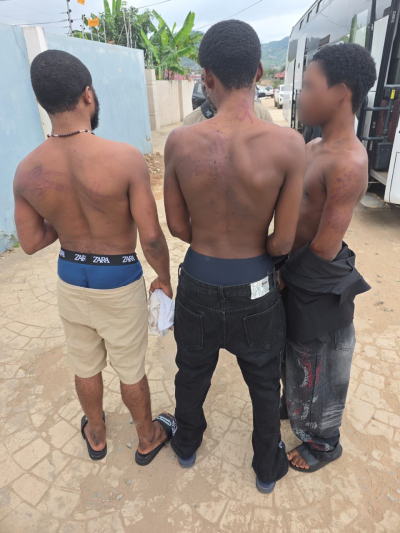
Law enforcement agencies from the United States, United Kingdom, Nigeria, Ghana and other countries, working alongside major technology companies, have carried out a coordinated Joint Disruption Week against transnational criminal networks operating online scam centres in West Africa. The action, announced by the US Department of Justice on 13 October 2026, resulted in dozens of arrests, the removal of more than 3.7 million fraudulent social media accounts, and the rescue of more than 100 victims of human trafficking.
The operation, hosted by the UK’s National Crime Agency in London, brought together the US Department of Justice, the Scam Center Strike Force, the FBI, the US Secret Service, Homeland Security Investigations, the Nigerian Joint Case Team on Cybercrimes, the Nigeria Police Force National Cybercrime Center, the Ghanaian Cyber Security Authority, and agencies from Australia, Canada, India, New Zealand and Interpol. Private sector participants included Meta, Google, Microsoft, Binance, Coinbase, Chainalysis, OpenAI and others, who voluntarily removed accounts and shared intelligence on suspected scam centres.
Assistant Attorney General A. Tysen Duva of the Justice Department’s Criminal Division said the action demonstrated the effectiveness of collaboration. “Criminals beware: Law enforcement from around the world are working together, and with private industry, to find you, stop your schemes, and bring you to justice,” he stated. He thanked the National Crime Agency and its Director General, Graeme Biggar, as well as officers in Ghana and Nigeria who seized evidence and made arrests. US Attorney Jeanine Ferris Pirro for the District of Columbia, who founded the Scam Center Strike Force, added that “transnational fraud demands a transnational response” and that investigators would pursue cases across borders.
FBI Director Kash Patel reported that the partnership led to dozens of arrests, the seizure of hundreds of devices, the identification of at least 11 million dollars in potentially freezable funds, and the rescue of trafficking victims. Nick Sharp, Deputy Director of Fraud at the National Crime Agency, said the joint effort sent a clear signal that fraudsters would be pursued regardless of where they operated.
Investigators and industry partners exchanged real-time intelligence during the week beginning 6 October, enabling rapid action against scam centres in Nigeria, Ghana and other African countries. Many of the operations targeted victims in the United States, the United Kingdom and elsewhere. Private companies reported removing more than 3.7 million accounts, Pages and Groups, and sharing leads on more than 30 suspected scam centres. Meta coordinated much of the private sector participation.
In Ghana, authorities arrested 19 people in the Accra suburb of Sasaabi and seized 303 electronic devices. They identified 117 victims of human trafficking who are pending repatriation to Nigeria, along with an additional 89 scam victims who had suffered approximate losses of 8.3 million dollars. In the final week of September, Ghanaian forces had already made scores of arrests at six locations, identified 34 trafficking victims and seized 129 devices. The Ghana operation was led by the Ghana Cyber Security Authority, the Ghana Police Service Criminal Investigation Department and the National Security Service, with support from the National Crime Agency, the FBI and Nigeria’s Economic and Financial Crimes Commission.
In Nigeria, authorities arrested nine individuals and seized 53 electronic devices. The disrupted schemes included law enforcement impersonation scams, digital arrest extortion schemes, cryptocurrency investment fraud and other online fraud operations.
According to the FBI’s Internet Crime Complaint Center, investment scams were reported 72,984 times in 2025, with cryptocurrency investment fraud comprising 72 per cent of that category. Reported losses from these scams rose from 3.96 billion dollars in 2023 to 5.8 billion dollars in 2024, and losses linked to cryptocurrency investment scams rose a further 24 per cent in 2025 to more than 7.2 billion dollars. Officials note that these figures, based largely on victim reports, significantly understate the true scale of losses. One government estimate placed the annual value of funds stolen by scam syndicates worldwide at approaching 64 billion dollars by the end of 2023.
Criminal scam centres in West Africa operate in a manner similar to those previously identified in Southeast Asia. They recruit workers, train them in social engineering and run multi-platform campaigns against global victims. While technology companies can disrupt the online infrastructure, sustained law enforcement action is required to hold the organisers accountable. The FBI, the Scam Center Strike Force and their international partners have stated that they will continue this model of public and private collaboration.
The action follows a March 2026 Executive Order by President Trump directing the US administration to prioritise cybercrime, fraud and predatory schemes that drain the savings of American families. The Criminal Division’s Cyber-Enabled Scam Initiative and the Scam Center Strike Force, launched in November 2025, form part of the response.
By John James


- Nigerians arrested as international operation disrupts Nigerian and West African scam networks
- ARISE News Bars Anthony Kila from Future Appearances over Falsified Academic Credentials Claims
- NDLEA arrests 83 year old grandmother with methamphetamine and intercepts South African with Thai cannabis
- Witness Tells Lagos Court He Paid N69.15 Million for Property Not Owned by Blessing CEO
- Allies Issue Joint Statement Condemning Iran Following UK Attribution of RAF Fairford Incident


