
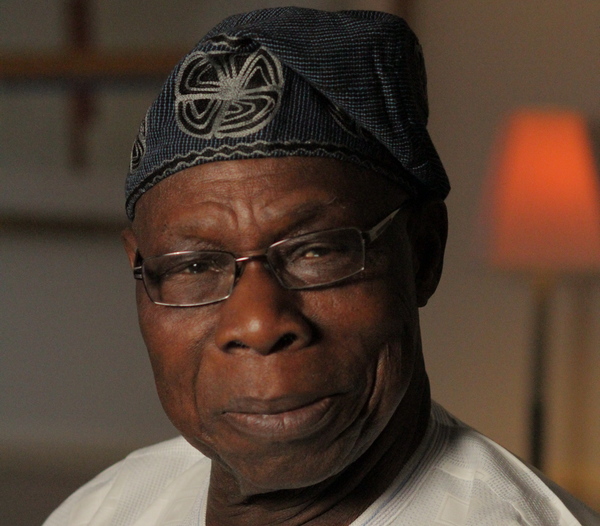
A new judgment from the Bayelsa State High Court has returned an old wound to the surface of Nigerian public life. On 28 September 2026 the court awarded twenty billion naira in general damages against the Federal Government for the military invasion of Odioama Kingdom in Brass Local Government Area in February 2005. The finding covers unlawful killings of unarmed civilians, degrading treatment of the king and chiefs, and the pillaging of a coastal settlement. The award is not a Supreme Court decision. It is nonetheless a reminder that the pattern of state violence that marked the early years of Olusegun Obasanjo’s civilian presidency has never been closed.
That pattern has three names that still stain the Fourth Republic. Odi in November 1999. Zaki Biam and neighbouring Tiv towns in October 2001. Odioama, also written Odioma, in February 2005. All three took place while Obasanjo was President and Commander in Chief. All three began with the killing of security personnel or local officials. All three ended with soldiers visiting collective punishment on entire communities rather than with the arrest and trial of named suspects. The methods were similar enough to form a doctrine: surround the town, burn the houses, shoot those who remain, then describe the wreckage as the restoration of order.
Odi came first and set the template. In early November 1999 armed men in the Niger Delta killed policemen and soldiers. Obasanjo issued an ultimatum to the Bayelsa State Government to produce the culprits. Before that ultimatum had run its course, federal troops entered Odi in Kolokuma Opokuma Local Government Area on 20 November. What followed was not a police operation. It was the near erasure of a town. Houses, farms, canoes and workshops were destroyed. Human rights groups later put the civilian death toll in the hundreds, some estimates far higher. The Federal Government first spoke of a few dozen dead and of a battle with militants. A Federal High Court in Port Harcourt in 2013 rejected that account. Justice Lambo Akanbi described the attack as genocidal, reckless and brutish, a bombardment rather than a gun battle, and awarded 37.618 billion naira in damages, of which twenty billion naira was general damages. The Federal Government did not pay the full sum. After years of delay it settled for about fifteen billion naira. No senior officer and no political principal was tried for the slaughter of civilians.
Two years later the same logic was applied in Benue State. On 10 October 2001 nineteen soldiers on a mission linked to Tiv and Jukun communal fighting were abducted. Their mutilated bodies were found two days later near Zaki Biam. At the soldiers’ funeral Obasanjo vowed that those responsible would be found. Within days the 23rd Armoured Brigade of the 3rd Armoured Division moved through Gbeji, Vaase, Anyiin, Tse Adoor, Sankera, Kyado and Zaki Biam itself. Witnesses told investigators that soldiers called residents to meetings, separated the men, and opened fire. In Gbeji more than one hundred and fifty people were reported killed, some burned. In Zaki Biam traders were shot in and around the yam market. Homes, shops, schools and public buildings were looted and set alight. Human Rights Watch concluded that more than two hundred unarmed civilians died in a planned reprisal, not in self defence. Tens of thousands fled. The army at first denied a revenge operation. Obasanjo later said he had authorised troops to restore order after the state governor reported that the crisis had passed the police. He also suggested that soldiers under such provocation might be expected to react. The distinction between hunting killers and flattening civilian towns was never honoured in practice. Again, no commander and no political authority stood in the dock.
Odioama completed the trilogy while Obasanjo was still in office. On 19 February 2005 a Joint Task Force of army and navy units, operating as Operation Restore Hope, attacked the Nembe speaking community in Brass after twelve people, including four councillors, were killed in a dispute over oil bearing land claimed by Odioama and neighbouring Obioku. The stated aim was to arrest a cult group blamed for the ambush. The suspects were not captured. The town was. Amnesty International recorded at least fifteen to seventeen civilian deaths, including a ten year old boy shot in the stomach and elderly and infant victims burned in their homes. Residents said houses along the waterfront were set alight from gunboats, that people drowned fleeing across the creeks, and that traditional rulers were abused. The army said at first that nobody had died. Community lists put the dead at more than thirty. About four fifths of the houses were reported destroyed. A state inquiry was announced. Its full findings were not made a public instrument of justice. Twenty one years later a Bayelsa court has now put a price of twenty billion naira on that silence.
These were not three accidents. They were three applications of the same idea: that when security agents are killed, the surrounding civilian population may be treated as a legitimate target. That idea is the definition of collective punishment. It is also the definition of a cowardly use of force. A professional army that wishes to arrest named men does not need to burn an old woman in her house or to machine gun a market. It does not need to degrade a king and his chiefs. It does not need to leave a town without roofs. The cowardice lies in the choice of victim. Militants and cultists can shoot back. Children, traders, farmers and the elderly cannot. The Nigerian state under Obasanjo chose the easier target and called it firmness.
Obasanjo and his defenders have always offered the same brief. Security personnel had been murdered. Governors had failed to produce the killers. No responsible government could look away. The Constitution, they say, gives the President command of the armed forces. All of that may be true as a starting point and still be worthless as a defence of what followed. Command includes the duty to set limits. A civilian president who had himself once worn uniform knew what an armoured brigade does when it is sent into a town with a licence to avenge. He knew it in Odi. He knew it in Benue. He allowed the same method in the Delta again in 2005. When the smoke cleared he offered muted regret at most, sometimes a defence of military honour, almost never a prosecution. That is not the record of a leader surprised by excess. It is the record of a leader who accepted excess as the price of being seen to act.
Is he the worst President Nigeria has had? The question is not a parlour game and it should not be answered with a slogan. Military rulers killed on a different scale and without the pretence of constitutional restraint. Later civilian presidents have presided over mass abductions, insurgency, banditry and the slow collapse of public security in which tens of thousands have died by neglect as much as by order. Corruption, election rigging and the hollowing out of institutions are other measures of failure, and Obasanjo is not unique on those counts. What is unique in the Fourth Republic is the openness with which his government used the regular army to punish whole communities of Ijaw and Tiv citizens in the first years of restored civilian rule. Democracy had been sold to Nigerians as the end of the soldier’s boot on the civilian neck. Within months the boot was back, this time with a presidential warrant.
On that narrower and more damning test, the test of state massacre of unarmed people by order or by tolerated design, Obasanjo’s first term stands in a class of its own among elected presidents. Odi, Zaki Biam and Odioama are not footnotes to an otherwise successful transition. They are the evidence that the transition was willing, when pressed, to govern by terror. Courts have now put figures on two of the Bayelsa operations. Benue still waits for a reckoning equal to the graves. Money cannot restore the dead. It can, if paid and if accompanied by apology and by the naming of those who gave the orders, mark the difference between a republic that remembers and a republic that only survives. Until that difference is made real, the claim that 1999 restored dignity to Nigerian civilian life remains a half truth written over burned ground.
By A.Ikechukwu
- Justice Crack Files Fundamental Rights Suit Against Nigerian Army Over Alleged Abuse in Detention
- Captain Smit Machchhar hailed as hero after fighting off cockpit attacker on flydubai flight to Tel Aviv
- How Obasanjo’s Regime Unleashed Military Violence on Odi, Zaki Biam and Odioama
- President Tinubu to Address the Nation on Nigeria’s 66th Independence Anniversary
- US War Secretary names Elon Musk, Newt Gingrich and Palmer Luckey to lead Project Meridian


