
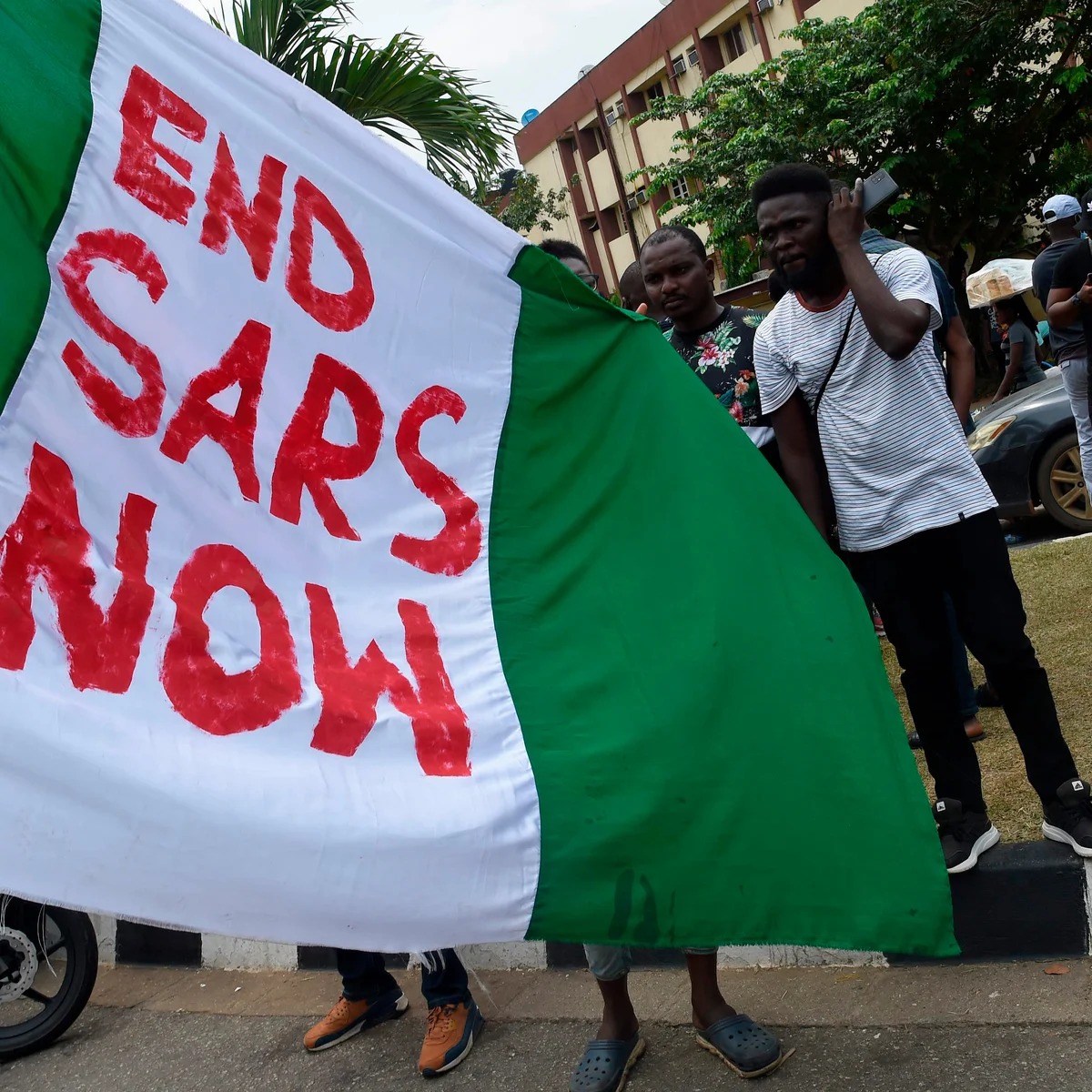
An EndSARS organiser has again published certified autopsy papers from an unidentified man who died in Lekki in the early hours of 21 October 2020, arguing that official accounts of the Lekki Toll Gate shootings still conceal how people were killed.
Serah Ibrahim, who gave evidence to the Lagos State Judicial Panel of Inquiry and tendered video and still images from the night of 20 October 2020, wrote that authorities first denied holding certain men, then denied arresting them, and later denied shooting them after bodies were found. She said many people killed during the protests had projectiles taken from their bodies so that death could be recorded as blunt force trauma rather than gunfire, and that she holds post mortem files on a number of those cases.
One of the documents now circulating is the coroner authorised report numbered EndSARS/YABA/2020/041. It lists the deceased as an unknown adult male. Place of death is given as Lekki, Lagos. Time of death is recorded as 1.45am on 21 October 2020. The body was received at Reddington Hospital in Lekki while unconscious, with an open skull fracture said to have occurred at about 1.15am. Attempts at revival failed. He was certified dead at 1.45am and later moved to the Mainland Hospital mortuary at Yaba, then to the Lagos State University Teaching Hospital for autopsy on 1 November 2020, between 7.45am and 11.00am.
The stated cause of death is severe craniocerebral injury due to blunt force trauma. The file is signed by Dr O. O. Onayemi, pathology resident; Dr O. O. Oyewole, consultant pathologist; Dr S. S. Soyemi, consultant pathologist; and Prof. J. O. Obafunwa, forensic pathologist. The copies bear the stamp of the Lagos State Judicial Panel on Restitution for Victims of SARS Related Abuses and Other Matters and were certified in June 2021.
A commentary on the same file, circled in the papers now being shared, reads: “The body was noticed to have been tampered with after death (Possibly by the Morticians). This definitely hampers proper postmortem examination.”
That sentence is the core of the fresh argument. Campaigners say interference after death made it easier to present shooting victims as casualties of blows to the head or chest. Pathologists who later spoke to the panel gave a narrower account of what they found on this particular body.
What the pathologists told the panel
Prof. John Obafunwa, then the leading forensic pathologist for Lagos State, told the panel that the coroner’s office carried out post mortem examinations on 99 bodies brought in across Lagos between about 20 and 27 October 2020. He said only three of those files were presented as Lekki related cases, all of them unidentified men.
On case 041 he said an x ray taken before the body was opened showed no bullet and no pellets. The films showed multiple skull fractures. The autopsy found a ragged laceration running across the scalp, bleeding into the scalp and brain, and a fractured rib. Internal organs were pale, consistent with severe blood loss. Incidental hypertensive heart disease was noted and said not to have caused death. Samples were taken for DNA. The official conclusion remained skull and brain injury from blunt force trauma.
Asked at the hearing about the remark that the body had been tampered with, Prof. Obafunwa said the man had arrived at hospital with an open skull fracture and that, after death and embalming, the defect in the vault of the skull had been packed with polythene or similar material. He said that packing is not unusual among mortuary staff who are trying to stop fluid leaking and to keep the appearance of the head. He said the word “hamper” was used because that packing limited how cleanly the wound track could be read, not because a projectile had been recovered and hidden.
Of the other two Lekki labelled files, one death was attributed to bleeding into the chest after blunt force trauma. The third, tagged EndSARS/YABA/2020/062, was attributed to severe blood loss after a major vessel was torn by a gunshot. That last finding is the only Lekki labelled autopsy among the 99 in which the state pathologist recorded a firearm injury.
Two official stories of the same night
The Justice Doris Okuwobi panel, which sat for more than a year, did not treat the three labelled autopsies as the full measure of what happened at the toll gate. It heard from hospital staff who described a mass casualty night at Reddington Hospital. It heard from protesters, including Ibrahim, who said soldiers then police fired into a crowd that had been sitting, waving flags and singing the national anthem. It received footage from the Lekki Concession Company and from witnesses. Independent forensic reviewers instructed by the panel said some of that footage showed muzzle flash consistent with live rounds.
The panel concluded that the army and the police used live ammunition, that unarmed protesters were shot, injured and killed, and that the manner of the assault could in context be called a massacre. It listed 48 casualties linked to the Lekki incident, including people confirmed dead, people missing and presumed dead, people with gunshot wounds and people who were beaten. It also recorded that the scene was washed down on the morning of 21 October and that soldiers and other agencies were accused of removing bodies. It said the fact that most of the 96 other EndSARS labelled corpses remained unidentified did not prove they were unrelated to the wider violence of those days.
The Lagos State Government later issued a White Paper that accepted some of the panel’s wider recommendations on police reform and compensation but rejected the finding that nine people were shot dead at the toll gate. The government said that conclusion sat badly with Prof. Obafunwa’s evidence that only one of the Lekki labelled bodies showed a gunshot wound. It called the higher death figure assumption and speculation. The army had earlier said troops fired blanks to disperse the crowd. Governor Babajide Sanwo-Olu first said no one had died, then said two people had died. Those statements have never been reconciled with the panel report in a way that satisfies campaigners.
In 2023 the state said 103 unclaimed bodies from the wider October 2020 unrest were to be buried in a mass interment, and insisted that none of those remains had been collected from the Lekki Toll Gate itself. Relatives were invited years earlier to come forward for DNA matching. Officials said no one did.
Why this file still matters
The papers now being shared do not, on their face, prove that a bullet was taken from the man in file 041. They do prove that pathologists recorded both an open skull fracture and later interference with the head, that no projectile was found on x ray, and that the formal cause of death was written as blunt force. They also sit inside a much larger fight over custody, missing men, washed pavements, denied shootings and unidentified bodies.
Ibrahim’s point is that this pattern, denial of arrest, denial of shooting, then a trauma finding after a body has passed through hospitals and mortuaries, was not confined to one file. Other EndSARS deaths have produced different medical conclusions. A separate post mortem completed years later on journalist Pelumi Onifade, shot while covering protests in Lagos on 24 October 2020, recorded a penetrating firearm injury to the abdomen.
Six years on, the man in EndSARS/YABA/2020/041 is still unnamed. The certified copy of his autopsy remains one of the few public medical records tied to Lekki on the night the lights went out at the toll gate. Whether the packing of his skull was routine embalming, as the pathologist told the panel, or part of a wider effort to strip shooting cases of their most incriminating evidence, as Ibrahim alleges, is precisely the question the documents were meant to settle and have not.
By John James


