
Abuja 17 September 2026
Nigeria’s Economic and Financial Crimes Commission has warned point-of-sale operators to stop helping fraudsters, money-launderers and those who move ransom and terrorist funds, saying some agents have become complicit in serious financial crime.
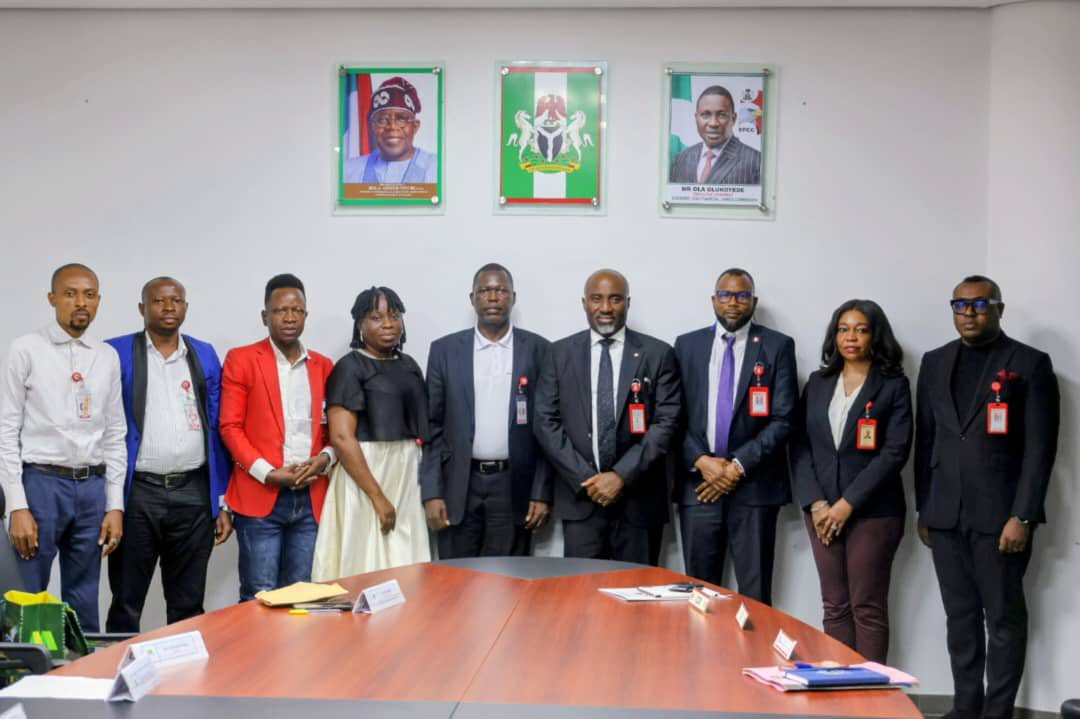
The warning was delivered on Wednesday, 16 September, when a delegation from the Association of Mobile Money and Bank Agents in Nigeria (AMMBAN), led by its national president, Oti Obioha, paid a courtesy visit to the commission’s headquarters. Executive chairman Ola Olukoyede spoke through his chief of staff, Commander Michael Nzekwe.
Nzekwe said POS terminals were now a common channel for money-laundering, terrorist financing and ransom payments. AMMBAN, he argued, lacked the structure to police its own members, leaving machines open to abuse.
“We have realised that the issues of money-laundering, terrorist financing, and even ransom payments are made mostly from POS machines,” he said. “Your association needs to do more, by coming up with a structure and a comprehensive framework that will have records of all your operators, so that during the course of investigation, we will be able to trace, monitor and have records that can aid us.”
He questioned how much influence the association actually had over agents. “My question is, what is the impact of your association on the members? Do you train your members? Do you have records of the address of your members? I think you need to have more awareness and training for your members.”
Some operators, he added, were not merely careless but actively involved. “There are even some POS operators who are actually fraudsters; they aid, conspire, give out information and abet fraudsters.”
Investigators often hit a wall, he said, because agents kept no usable records. “Most times, in the course of investigation, when you find out that money was laundered through a POS operator, by the time you bring them in, they won’t even know the person who sent the money and who withdrew it no records of the transactions and no one is asking questions. You need to put your house in order and do more.”
Olukoyede, through Nzekwe, urged AMMBAN to insist that members keep a financial record of every transaction and to compile a nationwide register of operators. The commission, he said, was ready to work with the association on training, awareness and the sharing of information.
Obioha thanked the EFCC for receiving the delegation and said the association wanted a closer partnership. Agents work at grassroots level, he noted, and many are regularly invited in for questioning.
“We deem it fit to present ourselves to help and work with the EFCC in preventing money-laundering and other kinds of fraud,” he said. “We are at the grassroots and we observe that your institution is always inviting our members, so we wish we can have a partnership that can see to the training of our members on some of the issues like financial thresholds and the risks involved in some of our operations.”
He added: “We want to collaborate in the areas of training, because most of our agents don’t know the rules of our operations. So, we need to partner in creating awareness.”
POS and mobile-money agents form a large last-mile network in Nigeria’s cash-lite economy, handling deposits, withdrawals and transfers in places where bank branches are scarce. Regulators and the EFCC have for some time raised alarm that the same convenience is being used to move illicit cash, including ransom payments, with many operators still poorly registered and weakly supervised.
By A. Ikechukwu (Legal & Crime Editor)


