
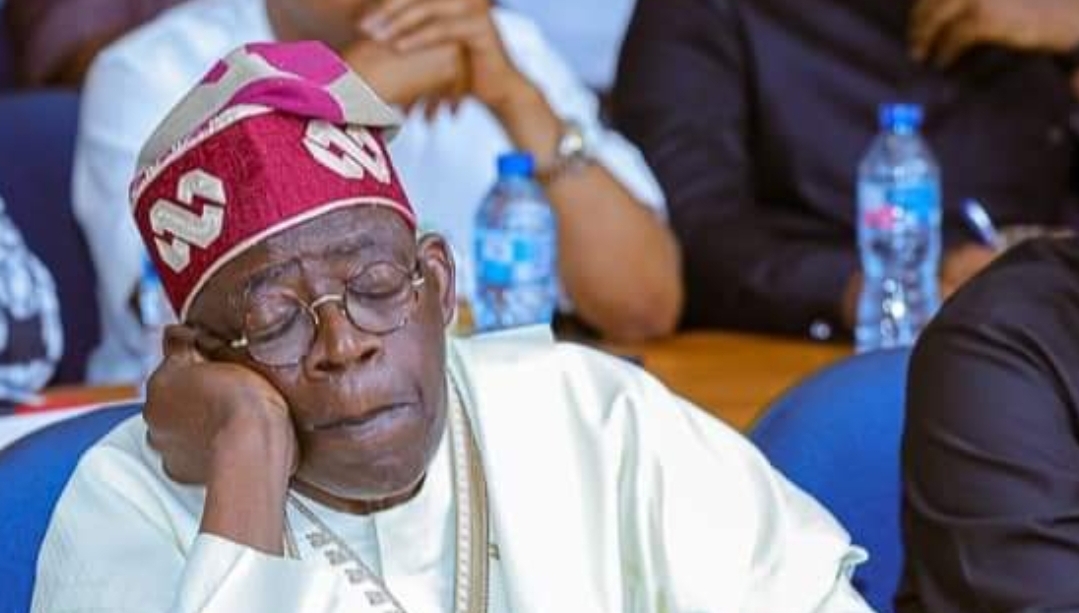
Former Vice President Atiku Abubakar has demanded that President Bola Tinubu explain his decision to miss the United Nations General Assembly for the third year in a row.
In a statement issued on Sunday by his Senior Special Assistant on Public Communication, Phrank Shaibu, Atiku said Tinubu stayed away from the 79th session in 2024, the 80th in 2025 and now the 81st in 2026. Vice President Kashim Shettima was again sent to represent Nigeria.
Atiku said three consecutive absences could no longer be dismissed as coincidence or routine delegation. He called the pattern one of presidential evasion that required an honest account.
He described the General Assembly as one of the world’s most important diplomatic gatherings. It brings together representatives of the United Nations 193 member states and gives presidents and prime ministers a platform to defend national interests, negotiate partnerships and influence decisions on trade, security and development.
Vice President Shettima may represent Nigeria capably, Atiku said, but representation by delegation cannot permanently take the place of the personal authority, visibility and responsibility of the President. Tinubu cannot treat Nigeria’s seat at the world’s biggest diplomatic table as an inconvenient appointment that can be endlessly outsourced.
Presidential absence on the global stage has consequences, the statement continued. The Assembly is not merely a ceremonial gathering or an annual photo opportunity. Its sidelines are where leaders hold decisive bilateral meetings, court investors, negotiate trade partnerships, mobilise development finance and make the case for their countries.
When a president stays away from that stage for three consecutive years, his country loses opportunities. Investment does not follow silence. International capital does not pursue a country whose leader repeatedly leaves the room in which consequential economic relationships are being built.
The cost is eventually transferred to ordinary citizens. Fewer investments mean fewer businesses and fewer jobs. Reduced capital inflows place extra pressure on the local currency. A weaker naira raises the cost of imports, production, transportation and food. These are among the economic pressures now punishing Nigerian families through the worst cost of living crisis in living memory.
Tinubu may consider attending the Assembly a matter of personal choice, Atiku said, but the economic and diplomatic consequences of his absence are being paid by Nigerians. A president may surrender his seat, but a nation cannot escape the bill.
Atiku described as extraordinary the reported announcement by Nigeria’s Permanent Representative to the United Nations, Jimoh Ibrahim, that he had secured Tinubu a seat not too far from where United States President Donald Trump would be seated. The seat was secured, but the President disappeared.
If proximity to President Trump was considered such a diplomatic achievement, why did Tinubu abandon the opportunity and send his deputy? Why celebrate securing a strategic seat for the President when the President had no intention of occupying it?
That contradiction becomes even more troubling, Atiku said, when Nigerians remember that the Tinubu administration committed up to nine million dollars of Nigeria’s scarce foreign exchange to American lobbyists supposedly hired to improve its standing before the government and people of the United States.
What exactly did Nigerians purchase with that money? Why spend millions of dollars lobbying Washington while Tinubu repeatedly stays away from New York? Why hire lobbyists to speak for Nigeria in America when the Nigerian President cannot appear at the world’s biggest diplomatic gathering on American soil? Did the lobbyists fail, or is Tinubu’s American baggage simply too heavy for any public relations firm to carry?
Atiku said the President’s persistent avoidance of the United States inevitably invites questions. Is Tinubu afraid that he could become Donald Trump’s next Nicolás Maduro? Is he haunted by the controversies surrounding his American academic claims and his documented drug related forfeiture history? Is this the kind of President Nigeria deserves, one who projects bravado at home but appears terrified of scrutiny abroad?
These questions were legitimate, Atiku said, because of Case No. 93 C 4483 before the United States District Court for the Northern District of Illinois. In that case the United States government instituted forfeiture proceedings concerning funds held in multiple accounts in the name of Bola Tinubu and associated companies.
The verified complaint was brought under federal laws governing the forfeiture of assets connected to narcotics trafficking and money laundering. The complaint stated that the funds represented proceeds of narcotics trafficking and money laundering. A supporting sworn affidavit by an Internal Revenue Service criminal investigation agent similarly stated that funds in accounts controlled by Bola Tinubu were connected to drug trafficking proceeds. The proceedings eventually resulted in the forfeiture of approximately 460,000 dollars to the United States government.
Nigerians are therefore entitled to ask whether Tinubu’s three consecutive Assembly absences have anything to do with this documented American history. The statement did not assert that Tinubu is legally prohibited from entering the United States. The Presidency has announced no such restriction. But if no legal, diplomatic, medical or personal impediment exists, why has Tinubu repeatedly avoided the Assembly since 2024? Is he afraid of renewed scrutiny? Is he uncomfortable appearing on American soil amid continuing public interest in the narcotics related forfeiture proceedings? Has one man’s personal history become a burden on Nigeria’s diplomatic engagement?
Atiku said Tinubu’s conduct presented a glaring contrast between the image he cultivated at home and the timidity he displayed on the international stage. Why is Tinubu eternally paranoid about the global podium, especially when that podium stands in the United States?
Here is a President who professes tigritude at home, draped in an assortment of aliases including Jagaban, the leader of warriors in the Borgu Emirate, and Asiwaju, the one who supposedly leads from the front, but who becomes a whimpering, lily livered and timid chicken on the global stage.
Nigeria’s foreign standing has never been more miniaturised. Under Tinubu the country rarely features prominently in continental leadership, the Commonwealth or world affairs. His government deployed Nigerian fighter jets and troops to Benin Republic following the December 2025 attempted coup while bandits, terrorists and freelance criminals continued to terrorise Nigerians at home.
Nigeria could project military power across its border, yet its President could not project Nigeria’s voice from its seat at the United Nations. That contradiction is humiliating.
Atiku demanded that the Presidency state unequivocally whether Tinubu was free to travel to the United States and disclose the real reason for his third consecutive Assembly absence. If there is no impediment, the Presidency must explain this serial absenteeism. If an impediment exists, Nigerians have a right to know.
Nigeria is bigger than Bola. Our diplomatic influence, economic interests and international reputation must not be subordinated to Tinubu’s American baggage. After committing up to nine million dollars to American lobbyists, Nigerians deserve more than silence, evasions and another empty presidential seat at the United Nations.
Is this the kind of President Nigeria deserves? Mr Bola, your seat was reportedly secured near President Donald Trump. Why did you refuse to occupy it? What exactly are you afraid of in America?
By Uche Igbo (International Correspondent)


