
Abuja, Friday, 18 September 2026
The Court of Appeal in Abuja has set aside a Federal High Court judgement that had stripped the Nigeria Democratic Congress (NDC) of legal recognition, restoring the opposition party’s registration ahead of next year’s general election.
In a split decision delivered on Friday, a majority of the appellate court held that the 26 June 2026 ruling by Justice Isah Dashen of the Federal High Court in Lokoja amounted to an abuse of judicial power. The majority said the Lokoja court had no business sitting, in effect, as an appeal court over its own earlier judgement of 10 December 2025, which had directed the Independent National Electoral Commission (INEC) to register the NDC.
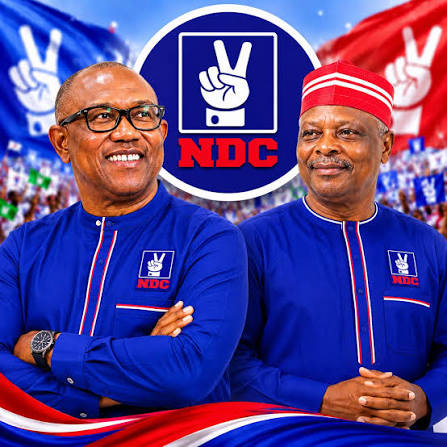
The appellate judges also dismissed claims that the NDC’s logo belonged to another political association, the Peace Movement Party (PMP), the dispute that underpinned Justice Dashen’s decision to vacate the original registration order.
Justice Okon Abang dissented. He said he would have upheld the lower court’s move against the NDC, a significant opposition vehicle on whose platform Peter Obi is seeking the presidency in 2027.
How the dispute began
The NDC’s status has been contested since last winter. On 10 December 2025 the Federal High Court in Lokoja ordered INEC to register the party after the commission declined to do so, citing problems with its proposed symbol. INEC later recognised the NDC, citing that court order.
On 26 June this year Justice Dashen set that December judgement aside. He accepted an application from the PMP, which argued that it had not been joined as a party even though it claimed ownership of the logo used by the NDC. The judge held that the earlier proceedings were constitutionally defective, restored the position that existed before December 2025, and directed that the case start afresh with INEC, the PMP and the NDC as parties.
The NDC immediately rejected any suggestion that it had been formally deregistered. National chairman Senator Moses Cleopas said there was “no order directing our deregistration” and instructed lawyers to appeal, arguing that the trial court had become functus officio, spent of power, once it delivered its final December judgement and could not sit in review of itself. Senior lawyers made the same point: only the Court of Appeal, they said, could set aside a Federal High Court judgement.
Party leaders, including national leader Seriake Dickson, insisted candidates nominated in INEC monitored primaries remained valid. The NDC later filed its appeal and said it had been granted access to INEC’s candidate upload portal, including for Mr Obi.
What Friday’s ruling means
Friday’s majority decision restores the legal force of the December 2025 registration order and rejects the PMP logo claim that had been used to unwind it. In practical terms, the NDC remains a recognised political party unless a higher court says otherwise.
The split on the bench, and Justice Abang’s dissent, leaves open the possibility of a further appeal to the Supreme Court. INEC has not yet issued a formal public response to Friday’s judgement.
The case has been closely watched because of its bearing on the 2027 contest. The NDC has emerged as a leading opposition platform, with Mr Obi as its presidential candidate and former Kano governor Rabiu Kwankwaso widely identified with the ticket. Supporters have portrayed earlier attempts to unsettle the party’s registration as an effort to shrink the field; the appellate majority has now declined to endorse the Lokoja reversal.
Whether the electoral commission promptly regularises the party’s records, and whether the PMP or other interested parties press the matter further, will determine how quickly Friday’s victory translates into an uncontested place on the 2027 ballot.
By John James


