
Former vice-president Atiku Abubakar has condemned the deaths of dozens of Nigerians held by the Nigeria Security and Civil Defence Corps (NSCDC) in Niger State, saying no citizen should enter government custody and lose the right to life.
In a statement posted on Friday, Mr Abubakar said he was “deeply saddened and profoundly disturbed” by the deaths of people he described as sons, fathers, brothers and loved ones. Families, he said, had every right to expect that the state would protect the lives and dignity of those in its care, whatever allegations they faced.
“No Nigerian should enter government custody and lose the most basic right of all: the right to life,” he wrote.
Deaths after mining raids
Governor Mohammed Umaru Bago has confirmed that 37 suspected illegal miners died while detained at an NSCDC facility in Minna. They had been arrested on 15 and 16 September during NSCDC operations against artisanal mining in the M.I. Wushishi and Lukoto area west of the state capital. The bodies were discovered in the early hours of 17 September and taken to the General Hospital in Minna.
The Niger State NSCDC commandant, Suberu Siyaka Aniviye, initially attributed the deaths to a suspected disease outbreak. Later official statements said the cause had not been established and would be determined by medical examination. Some early reports mentioned diphtheria; the governor has said investigators are also examining overcrowding, suffocation and possible exposure to hazardous chemicals used in illegal mining. Autopsies and forensic tests are under way.
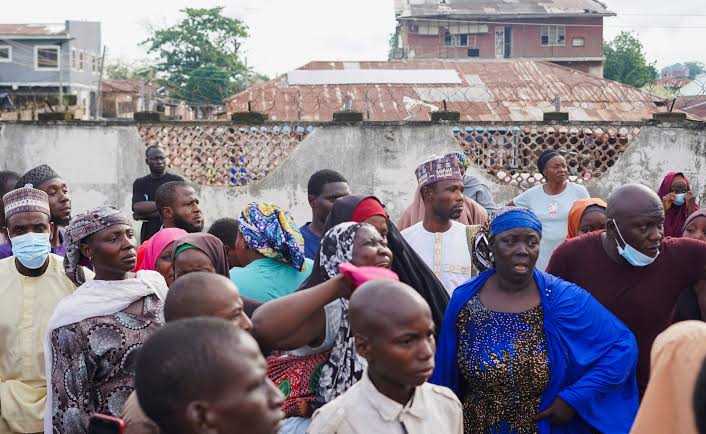
A survivor, Dauda Shehu, told reporters that scores of detainees were packed into a poorly ventilated cell. He said they struggled for air and tried to alert guards by banging on the door. Relatives have disputed the disease explanation. Some of the dead were reported to be teenagers; others were said to be internally displaced people from Shiroro local government area. Reuters filmed dozens of bodies at the hospital. Overnight protests followed in Minna, and extra security was deployed.
Officials stand aside
The Minister of the Interior, Olubunmi Tunji-Ojo, has ordered a full investigation and the immediate suspension of Mr Aniviye. The NSCDC commandant-general, Professor Ahmed Abubakar Audi, directed the state commandant and the heads of operations, mining, legal, intelligence and investigation to report to national headquarters in Abuja. A new commandant has been sent to Niger State. The police have opened a parallel inquiry. The state government has set up its own committee, chaired by the deputy governor, and declared three days of mourning. Campaigning for elections due in January has been postponed.
Amnesty International Nigeria called the deaths shocking and demanded an independent investigation into how detention of one or two days became fatal for dozens of young men, including minors.
Atiku: first step is not enough
Mr Abubakar commended the federal government for swiftly suspending officers under whose watch the tragedy occurred and for ordering an investigation. That, he said, was an important first step but must not be the last.
“The investigation must be independent, thorough and transparent, and its findings must be made public,” he said. “Anyone found responsible through action, abuse or negligence must be held fully accountable.”
The families of the dead, he added, deserved more than condolences. “They deserve the truth. They deserve justice. And Nigerians deserve the assurance that custody by the state will never become a death sentence.”
He offered prayers for the bereaved and called for the truth to be established without delay.
Illegal mining is widespread in mineral-rich Niger State, which has long been associated with small-scale gold extraction. Successive governments have treated it as both an economic and a security problem. The deaths have sharpened questions about how suspects are held, how cells are managed, and whether paramilitary agencies can be trusted with the duty of care that detention imposes. Those questions now sit with several overlapping inquiries. Their independence, and whether their findings are published, will determine whether Mr Abubakar’s demand for accountability is met.
By John James


