In the long and dismal history of Nigerian governance failures, few episodes illustrate the interplay of ethnic loyalty, bureaucratic capture, and elite rent-seeking as clearly as the rise and sudden collapse of the Presidential Foreign Intervention Promotion Council (PFIPC), also styled as the Presidential Economic Advisory Council (PEAC). Far from being a purely fictitious construct invented by a single fraudster, the PFIPC was a captured vehicle tolerated, legitimised in part by official channels, and used by dubious elements within government to extract public resources. It only unravelled when one party in the arrangement demanded far more than the usual cut, exposing the fragile foundations of ethnic patronage networks that sustain much of Nigeria’s political economy.
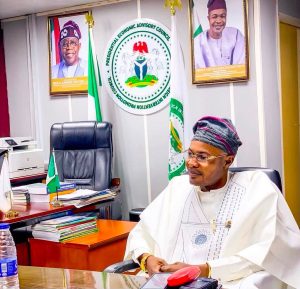
The evidence for this more nuanced reading lies not in speculation but in official documentation. A letter dated 24 June 2025, issued on the letterhead of the Office of the Secretary to the Government of the Federation (Political and Economic Affairs Office) under the Presidency, addressed the “Director General, Presidential Economic Advisory Council / Presidential Foreign Intervention Promotion Council” at the Federal Secretariat Complex in Abuja. It invited this individual to join the Nigerian delegation to the Canada-Africa Fintech Summit in Toronto. The letter carried a formal reference number, was signed by a serving Permanent Secretary, and treated the entity as a legitimate arm of government capable of representing Nigeria abroad. This correspondence predates the later public disavowals by several months. It demonstrates that, at least in mid-2025, parts of the federal bureaucracy were prepared to engage with the PFIPC as a functioning organisation.
This official recognition sits uncomfortably alongside the subsequent narrative, advanced by the Presidency in 2026, that the council “does not exist” and that no appointment was ever made. The contradiction is not accidental. It reveals how such structures are permitted to operate while they serve the interests of insiders, only to be retroactively declared illegitimate once the internal bargain breaks down.
A Vehicle for Extraction, Not a Lone Fraud
The PFIPC secured a budget allocation of over ₦1.3 billion in the 2026 Appropriation Act, obtained office accommodation in the Federal Secretariat, received the secondment of civil servants, and maintained bank accounts in the names of government-sounding entities. These outcomes are not easily achieved by an outsider operating in isolation. They require either active facilitation or deliberate inaction by officials with access to the levers of state. The structure was allowed to function because it provided a convenient channel for budget capture, international engagements, and the distribution of patronage rents classic features of Nigerian elite corruption dressed in the language of economic diplomacy and foreign investment promotion.
In this sense, the PFIPC was never truly “illegal” in the manner later portrayed. It was a semi-official or pseudo-official instrument, tolerated within the system precisely because it could be milked. Such vehicles are commonplace in Nigeria’s governance landscape: entities created or captured not to deliver public goods but to siphon resources under the cover of presidential or governmental authority. The involvement of the SGF’s office in issuing an invitation to an international summit in June 2025 confirms that the PFIPC enjoyed a degree of bureaucratic legitimacy, however tenuous or self-serving.
The Trigger: Greed Beyond the Customary Share
The scheme did not collapse because investigators suddenly discovered its fraudulent character. It collapsed because the patronage arithmetic no longer worked for the more powerful participants. Adeniyi Adeyemi, who operated as the visible Director General, has alleged that he paid substantial sums reportedly ₦400 million initially through a proxy, with further demands of ₦200 million — to secure his position. He further claimed that he was later pressed to surrender 48 per cent of a purported multi-billion-naira take-off grant. When he resisted these escalated demands, the relationship soured. The Chief of Staff’s office, which had earlier tolerated or facilitated the arrangement, moved swiftly to disown the entity, petition the security agencies, and frame Adeniyi as a lone impostor who had forged documents.
This sequence is entirely consistent with how Nigerian patronage networks function. A connected operator is permitted to run a structure and take a share. The real power holders extract their own larger cut, often through proxies. When one side becomes excessively greedy or refuses to honour the unwritten rules of division, the structure is abruptly declared illegitimate. The visible operator is sacrificed, documents are labelled forgeries after the fact, and the more senior figures retreat behind claims of ignorance. The June 2025 official invitation demonstrates that the entity was still being treated as usable and legitimate well after Adeniyi had assumed control. The subsequent about-turn occurred only when the rent-sharing formula became unacceptable to those higher up the chain.
The Ethnic Dimension: Loyalty Over Integrity
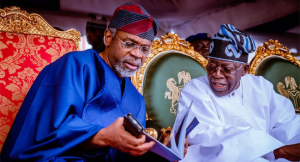
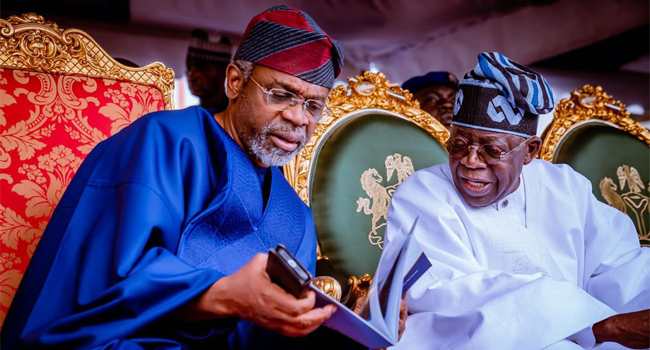
The ethnic composition of the key actors is impossible to ignore and central to understanding how the scheme was initially enabled. President Bola Tinubu, Chief of Staff Femi Gbajabiamila, and Adeniyi Adeyemi are all Yoruba. This shared ethnic and, in the case of Tinubu and Gbajabiamila, long-standing political affiliation created the conditions for reduced scrutiny and facilitated access. In Nigerian politics, proximity to power within one’s ethnic or godfather network often substitutes for institutional checks. Appointments, budget lines, and official correspondence flow more easily when the participants share the same communal or political identity.
Gbajabiamila’s own background illustrates the point. Despite a documented professional controversy in the United States where, while practising law in Georgia, he faced disciplinary proceedings that resulted in the suspension of his licence following the mishandling of client funds, he was elevated to the powerful position of Chief of Staff. The appointment was not made despite these issues; it proceeded because Gbajabiamila was a trusted Yoruba ally from Tinubu’s Lagos political base. Ethnic and political loyalty outweighed concerns about past conduct. The same calculus that protected Gbajabiamila’s rise also permitted the PFIPC to operate within the orbit of the Presidency until the internal bargain collapsed.
This pattern, ethnic networks shielding questionable arrangements until they become inconvenient — is a recurring feature of Nigerian governance. It explains why structures like the PFIPC can secure budget allocations, office space, and even official invitations before being suddenly disowned. The network protects its own until the cost of protection exceeds the benefit.
A Miniature Version of the Larger Nigerian Problem
The PFIPC saga is not an aberration but a concentrated example of how Nigeria’s governing class operates. A structure is created or captured, given the trappings of state authority, fed with public funds, and used for private extraction. It enjoys partial official recognition as evidenced by the June 2025 SGF correspondence precisely because it serves the interests of insiders. It only becomes “illegal” and “non-existent” when one participant demands too much, breaking the delicate balance of patronage.
The subsequent official narrative, which portrays Adeniyi as a solitary forger and insists the council never existed, serves to protect the ethnic and political core around the Presidency. It shifts blame downward while shielding those who benefited from the structure’s operation. An independent investigation, free from the control of the same network, would be required to establish the full extent of facilitation, the identities of those who inserted the budget line, and the precise point at which the decision was taken to sacrifice the visible operator.
Until such accountability occurs, the PFIPC affair will remain what it is: another chapter in the story of packaged fraud run by government insiders and ethnic champions for selfish ends. It succeeded for a time because the usual rules of Nigerian elite collusion were observed. It failed only when someone decided those rules no longer applied to them. In that sense, it is indeed a miniature version of the larger Nigerian tragedy, a system that tolerates corruption until the greed of its participants makes continued tolerance impossible.
- NDLEA dismantles major cocaine cartel using Nigeria as transit hub to UK, Europe and Asia
- US court sets tight deadline for release of Tinubu-related drug investigation records
- Wike: I would have been in Osun if Tinubu wanted APC victory at all costs
- Jonathan calls for new boundaries on political conduct in off-cycle elections
- Tinubu’s Failed Osun Gambit and the Limits of Force