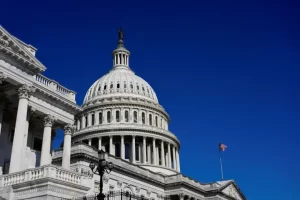
Washington, D.C. – Republican congressmen have introduced legislation aimed at tackling the ongoing religious persecution and mass atrocities targeting Christians in Nigeria, calling for greater transparency and accountability in American foreign policy towards the West African nation.
The Nigeria Religious Freedom and Accountability Act of 2026 (H.R. 7457) was introduced on 10 February 2026 by Rep. Chris Smith (R-New Jersey), Chairman of the House Foreign Affairs Subcommittee on Africa, and Rep. Riley Moore (R-West Virginia). The bill has secured early support from prominent figures, including House Foreign Affairs Committee Chairman Brian Mast (R-Florida), House Appropriations Committee Chairman Tom Cole (R-Oklahoma), Appropriations Vice Chairman Mario Diaz-Balart (R-Florida), and Foreign Affairs Subcommittee Chairman Bill Huizenga (R-Michigan).
The proposed legislation requires the US Secretary of State, in consultation with other relevant agencies, to submit a detailed report to Congress within 180 days of enactment. The report must outline US government programmes and assistance provided since 2015 to combat religious persecution, terrorism, and mass atrocities in Nigeria. It should assess their effectiveness in reducing violence against religious communities—particularly Christians—promoting accountability for perpetrators, and protecting displaced persons.
Key elements of the required report include:
- Descriptions of security assistance, humanitarian aid, and governance programmes aimed at addressing the crisis.
- Evaluations of diplomatic efforts, sanctions, or other measures to urge the Nigerian government to investigate and prosecute those responsible for attacks.
- Analysis of Nigeria’s blasphemy laws, which carry the death penalty in several northern states and have been used to target religious minorities.
- Breakdowns of funding for counterterrorism and stabilisation initiatives, with specific focus on support for affected Christian and minority communities.
- Assessments of coordination with international partners such as the African Union and United Nations.
The bill explicitly states that nothing in the Act authorises the deployment of US armed forces for military operations in Nigeria.
Congressional findings underpinning the legislation paint a grim picture of the situation in Nigeria. Since at least 2009, systemic religious persecution has persisted, involving mass murders, kidnappings, village destruction, and forced displacements carried out by groups including Boko Haram, the Islamic State West Africa Province (ISWAP), and Fulani militant militias. Estimates suggest between 50,000 and 125,000 Christians have been killed over this period, with more than 19,000 churches attacked or destroyed. Nigeria is said to account for 82 per cent of global Christian martyrdoms, according to Open Doors’ 2024 Watch List.
The bill highlights specific incidents, such as major massacres in Benue and Plateau States between May 2023 and May 2025, which claimed more than 9,500 lives—mostly Christians—and displaced over half a million people. It argues that Fulani-ethnic militias have engaged in acts meeting the US statutory definition of terrorism, including targeted killings and massacres intended to intimidate and displace civilian populations.
Criticism is also directed at the Nigerian government’s perceived failure to investigate or prosecute perpetrators effectively, contributing to a culture of impunity. The legislation notes the enforcement of blasphemy laws carrying capital punishment and cases where Christians defending themselves have faced severe penalties.
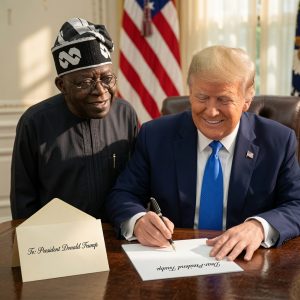
Rep. Smith and Rep. Moore emphasised the moral and strategic imperative for the United States to address the issue, given Nigeria’s importance as a counterterrorism partner in West Africa. The bill builds on prior actions, including President Trump’s designation of Nigeria as a Country of Particular Concern (CPC) for severe religious freedom violations and related congressional resolutions.
The measure has been referred to the House Committee on Foreign Affairs. Supporters anticipate it will progress swiftly through the chamber, reflecting bipartisan concern over religious freedom and the need for robust US oversight of foreign assistance programmes.
As the bill advances, it underscores growing international attention on the plight of Nigeria’s Christian communities amid escalating violence and displacement.
- Religious Bigotry on Full Display: Sheikh Sani Yahaya Jingir’s “Infidels” Rant in Kano Must Be Condemned and Investigated by the DSS
- Paul Biya’s prolonged absence from Cameroon fuels power vacuum fears
- Bandits abduct Kebbi High Court judge, Justice Faruku Hassan Bunza
- ICC Chief Prosecutor Karim Khan Removed in Historic Vote
- US House backs measure targeting Nigeria over Christian persecution as Ted Cruz hails defeat of Abuja’s PR drive