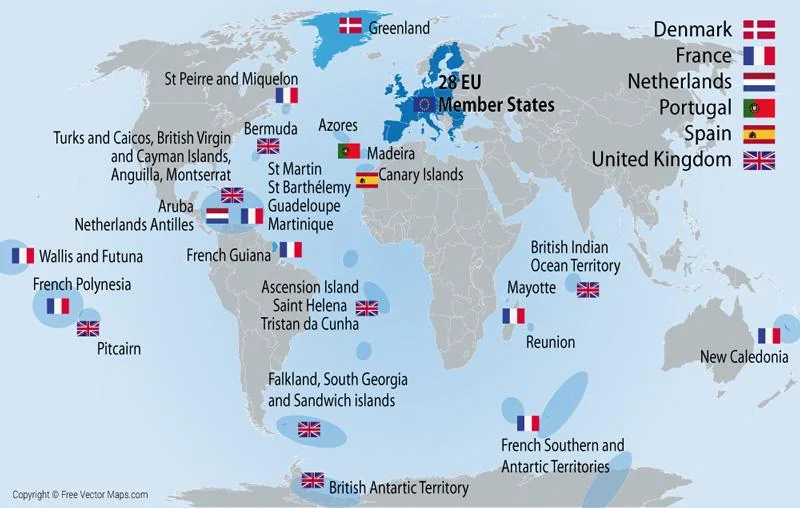
In the opening weeks of 2026, as geopolitical tensions swirl around the Arctic, Denmark continues to maintain sovereign oversight over Greenland, its vast, resource-rich autonomous territory. This enduring relationship, amid heated discussions of independence and external pressures from powers like the United States, underscores a broader hypocrisy among European Union nations: while the bloc loudly champions self-determination and condemns imperialism elsewhere, several member states cling to far-flung dependencies that span oceans and continents.
Greenland, an Overseas Country and Territory (OCT) associated with the EU via Denmark, enjoys high autonomy following the 2009 Self-Government Act, which allows it to manage internal affairs, natural resources, and policing. Yet Denmark retains control over foreign policy, defence, and security, while providing substantial annual subsidies. Despite widespread support for eventual independence among Greenlandic political parties, economic reliance and recent external pressures – including renewed U.S. interest in the island’s strategic location and resources – have tempered immediate moves toward full separation.
France leads in scale, overseeing the EU’s most extensive overseas network. Its Outermost Regions (OMRs) – fully integrated parts of the EU – include French Guiana in South America, Guadeloupe and Martinique in the Caribbean, Mayotte and Réunion in the Indian Ocean, and Saint Martin (the French side). OCTs encompass French Polynesia, New Caledonia, Wallis and Futuna in the Pacific; Saint Barthélemy and Saint Pierre and Miquelon in the Atlantic; and the uninhabited French Southern and Antarctic Lands.
In New Caledonia, recent unrest and independence debates persist, yet referendums have favoured continued affiliation with France.
Denmark also holds the Faroe Islands as an autonomous territory outside the EU. The Netherlands maintains Caribbean OCTs including Aruba, Curaçao, Sint Maarten (Dutch portion), Bonaire, Saba, and Sint Eustatius. Portugal’s Azores and Madeira are OMRs in the Atlantic, while Spain controls the Canary Islands (OMR) and the North African cities of Ceuta and Melilla as integral EU parts.
These arrangements – often defended as partnerships offering economic benefits and stability – provide European powers with vast exclusive economic zones, strategic military positioning, and access to resources. Yet the EU routinely criticises “neo-colonial” actions by others, from Russia’s influence in neighbouring states to China’s engagements in Africa.
The contrast is especially sharp in Greenland’s case: as Denmark defends its oversight against external encroachments while Greenlanders debate their future, the Kingdom’s position mirrors the very imperial legacies Europe claims to have left behind. Historians and critics point to this as classic double standards – lecturing the world on sovereignty while preserving colonial-era structures.
As 2026 unfolds, with Arctic geopolitics intensifying, Europe’s overseas empire remains a quiet but telling reminder: true commitment to decolonisation may require confronting dependencies closer to home. Until then, the map of lingering control speaks volumes about enduring hypocrisy.
- Bandits abduct Kebbi High Court judge, Justice Faruku Hassan Bunza
- ICC Chief Prosecutor Karim Khan Removed in Historic Vote
- US House backs measure targeting Nigeria over Christian persecution as Ted Cruz hails defeat of Abuja’s PR drive
- President Trump Replies to Tinubu’s Letter
- 12 Reasons Why Seyi Makinde Is Right to Demand an International Investigation into Terrorism in Nigeria