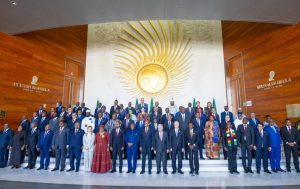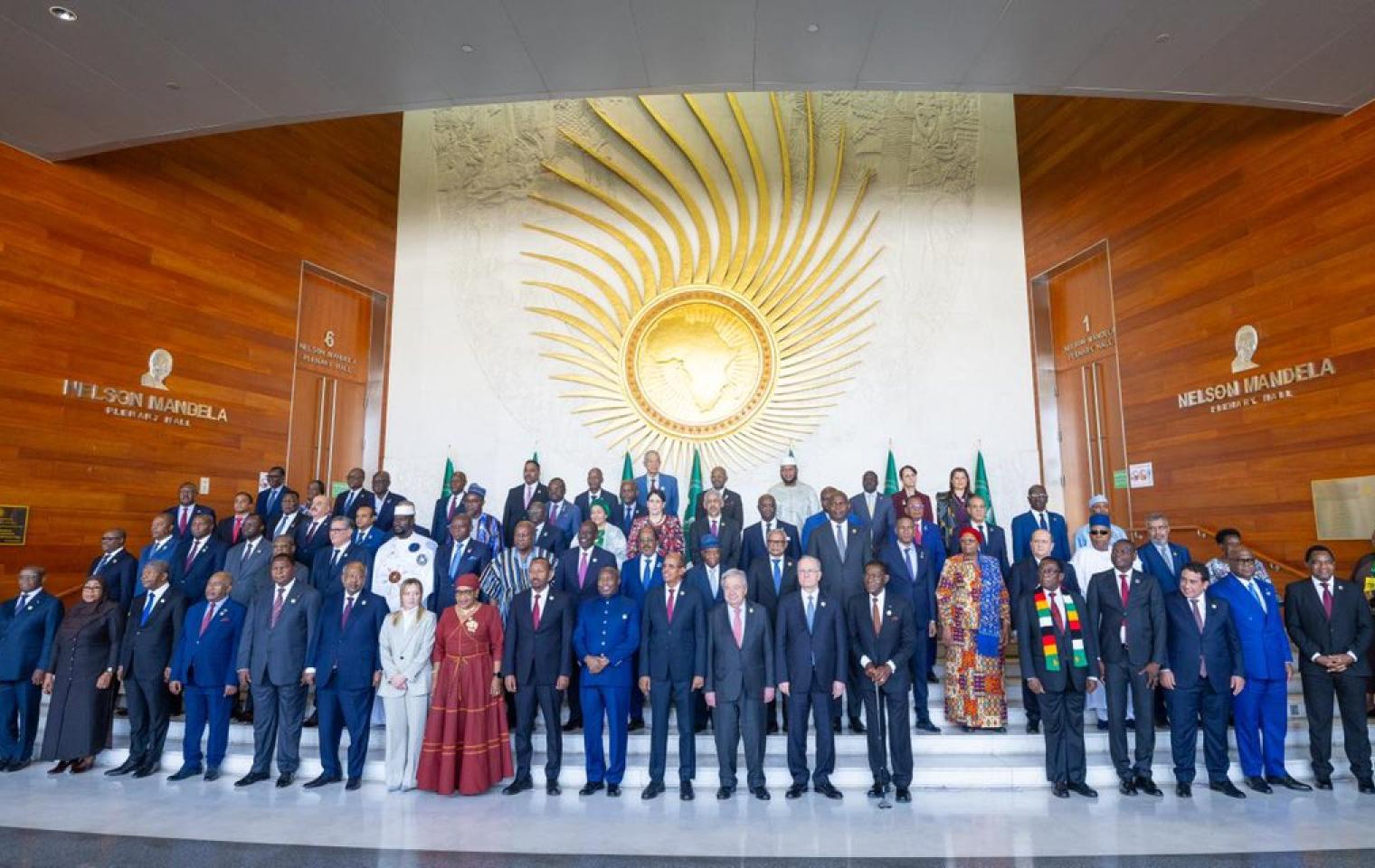
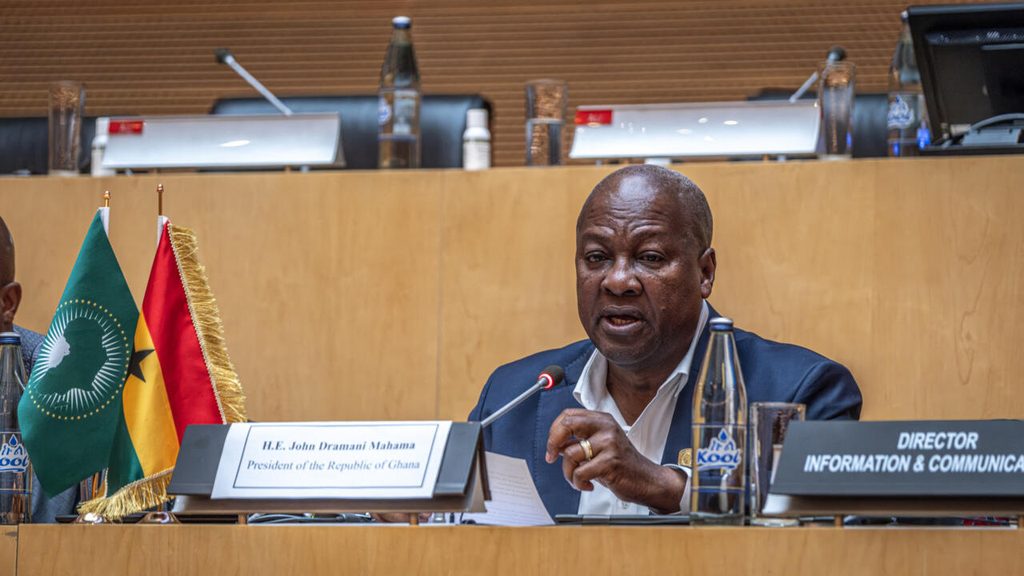
ADDIS ABABA / ACCRA : African governments are now at the centre of the most organised international campaign for slavery and colonial reparations in a generation. The African Union has turned the cause into official policy, Ghana’s President John Dramani Mahama has been named the Union’s champion for the issue, and a United Nations resolution adopted in March 2026 branded the trafficking and racialised chattel enslavement of Africans “the gravest crime against humanity”.
The momentum is real. So is the backlash and a more awkward question that African and diaspora campaigners would rather not answer in public: reparations for what, and paid by whom?
Is the claim principally for the transatlantic slave trade? For the older and longer trans-Saharan trade? Or for the return of resources looted by African rulers themselves since independence money that, unlike seventeenth-century sugar fortunes, is still sitting in identifiable bank accounts, properties and shell companies?
An increasing number of African commentators argue that the third claim is the one that can actually be collected, and that it should precede any demand on London, Paris or Lisbon. “Reparations must begin with corrupt African leaders restituting what they have stolen from the people.
That argument does not cancel the horror of the slave trades. It does insist that moral accounting start with the living, and with money that African states already have a legal right to recover.
A campaign that has moved from slogan to architecture
The AU designated 2025 as the Year of “Justice for Africans and People of African Descent Through Reparations” and then extended the agenda into a 2026–2036 Decade. In June, African and Caribbean governments meeting in Accra adopted a 19-point plan calling for formal apologies, a Global Reparations Fund, debt cancellation, the return of looted artefacts and reforms of international financial institutions.
CARICOM has refreshed its Ten-Point Plan. Jamaica has petitioned King Charles to seek Privy Council advice on whether Britain owes a legal remedy for slavery. Barbados is hosting a further regional conference this week.
Britain’s position has not shifted. A Downing Street spokesman for Prime Minister Andy Burnham repeated this month that “the UK does not and will not pay reparations”, while calling the trade “abhorrent”. London abstained on the March UN vote and declined to endorse the Accra outcome document.
Campaigners treat that refusal as proof of unfinished business. Critics treat it as a reminder that historical guilt is being asked to do work that present-day governance will not.
Three trades, not one story
The Atlantic trade is the best documented. Scholars using shipping records now estimate that about 12.5 million Africans were embarked on European vessels between the sixteenth and nineteenth centuries; roughly 10.7 million survived the Middle Passage. Portugal/Brazil and Britain carried the largest shares.
It was not the only trade, and it was not the first. The trans-Saharan, Red Sea and Indian Ocean trades ran for more than a millennium. Estimates are less precise than the Atlantic figures, but the leading reconstructions put several million people on those routes between 650 and 1900 — in some tallies approaching the Atlantic total when the much longer timespan is taken into account. North African and Middle Eastern markets preferred women and children for domestic and military service; the Atlantic market preferred adult men for plantation labour. Both systems were commercial, violent and African-sourced.
European merchants did not wander into an empty market. They bought people from African polities that already sold captives, expanded that commerce when demand rose, and in several cases treated it as the principal source of firearms, cloth, cowries and royal revenue.
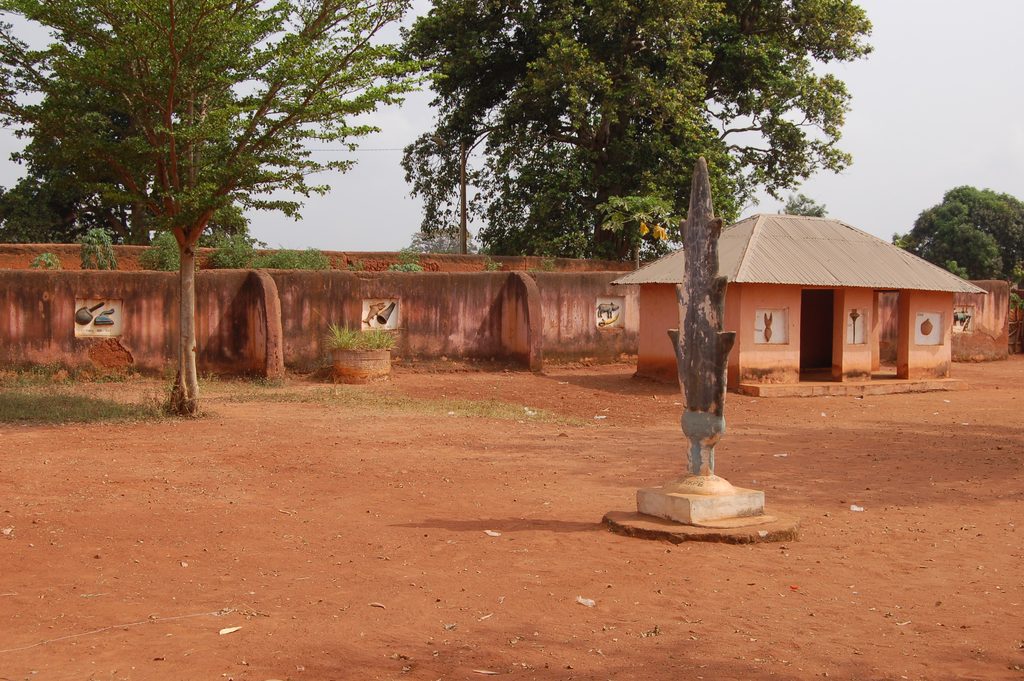
The Kingdom of Dahomey, in what is now Benin, is the clearest case. After conquering the coastal ports of Allada and Whydah in the 1720s, Dahomey made Ouidah one of the great embarkation points of the Slave Coast. When Britain, having abolished its own trade in 1807, pressed King Ghezo in the 1840s to stop selling captives, he refused. “The slave trade is the ruling principle of my people,” he is recorded as saying. “It is the source and the glory of their wealth… the mother lulls the child to sleep with notes of triumph over an enemy reduced to slavery.” He later offered to end exports if Britain paid compensation for lost income the same logic of indemnity that Britain had applied to its own West Indian planters. A Royal Navy blockade forced a treaty in 1852. Exports resumed within a few years.
The Aro Confederacy of south-eastern Nigeria ran a different machine: an oracle-centred commercial network that supplied riverine middlemen at Bonny, Calabar and Onitsha. Published estimates put Aro-linked exports in the high hundreds of thousands between the late seventeenth century and the British destruction of Arochukwu in 1901/02. The Aro did not invent slavery in Igboland. They industrialised it for the Atlantic market and fought to keep the trade after European abolition.
Similar patterns held on the Gold Coast, in the Niger Delta city-states, in Kongo and among Sahelian states that fed both desert caravans and, later, the Atlantic. African agency does not wash European buyers clean. It does make a simple story of white predators and African victims historically false. The captives were African. So, very often, were the captors.
All of it was bad. Pretending that only one of the trades counts, because it is the one that leads to a claim on Western treasuries, is advocacy, not history.
The loot that is still in the banks
Independence did not end extraction. It changed the extractors.
Transparency International, the UN Office on Drugs and Crime and successive Nigerian inquiries have put the sums in the tens and hundreds of billions. Sani Abacha, Nigeria’s military ruler from 1993 to 1998, is estimated to have stolen between $2 billion and $5 billion in five years; Switzerland, Jersey, Liechtenstein and others have returned only a fraction. Mobutu Sese Seko is commonly placed in the $4–5 billion range after 32 years in Zaire, a fortune that at one point rivalled the country’s foreign debt. Robert Mugabe’s circle accumulated wealth as Zimbabwe’s economy collapsed. Equatorial Guinea’s Obiang family has been the subject of years of “ill-gotten gains” cases in France and the United States.
Those names are the famous ones. The broader haemorrhage is larger. The AU/UNECA High-Level Panel on Illicit Financial Flows, chaired by Thabo Mbeki, estimated that Africa lost more than $50 billion a year through trade mispricing, tax evasion and corruption, a figure later assessments have revised upwards, in some conferences this decade towards $80/90 billion. A frequently cited UNODC figure holds that Nigerian officials alone diverted more than $400 billion from the 1980s onwards. Between 1970 and 2008, the continent is estimated to have lost in the order of $1.8 trillion.
This is not ancient history. It is money that left African treasuries in living memory, often with the help of the same Western banks, law firms and secrecy jurisdictions now being asked to underwrite a moral debt from the eighteenth century.
The AU already has a policy for it: the Common African Position on Asset Recovery. That document links stolen assets to the longer story of slavery and colonialism and then, correctly, treats recovery as a present legal task. The contradiction is that the same capitals now leading the reparations drive have been slow, selective or self-protective when the stolen funds belong to their own predecessors and clients.
If a Global Reparations Fund is to be filled by former colonial nations, as the Addis Ababa declaration envisages, the first deposits that African governments can actually compel are the ones hidden by their own elites.
The argument that will not go away
Reparations advocates answer that African complicity is a distraction used to dilute European liability; that the Atlantic system was unique in its racial chattel form and its scale over a short period; and that post-colonial theft is a separate crime that does not erase an earlier one. They also note that Britain paid compensation to slave-owners in 1833 about £20 million then, a sum serviced by the British taxpayer until 2015 and paid nothing to the enslaved.
Those points have force. Unique legal features of New World slavery do not disappear because Dahomey sold people. Corruption in Lagos does not licence amnesia in Liverpool.
They do not, however, settle the order of operations. A government that cannot recover Abacha’s remainder, or stop today’s illicit flows through its oil and mineral books, is a weak plaintiff. It asks foreign voters to accept a historical invoice while its own ruling class treats the national treasury as a private quarry. Western governments, for their part, cannot credibly lecture Africa about stolen assets while hosting the deposits.
The honest position is uncomfortable on every side. The transatlantic trade was a crime in which Europeans were the principal long-distance buyers and shippers, and African rulers and merchants were indispensable suppliers, sometimes enthusiastic ones, who resisted abolition when it threatened their revenue. The trans-Saharan trade was a crime with a different set of buyers and a longer run of time. Post-independence kleptocracy is a crime whose victims are alive and whose proceeds are, in principle, recoverable now.
If Africa wishes to lead the world’s argument about repair, the test is not another communiqué from Accra. It is whether the same leaders will pursue, with equal energy, the money taken from Africans by Africans and whether Western jurisdictions will stop being a safe house for it. Until that happens, the demand for slavery reparations will continue to sound, to many of the people who would have to pay it, like a claim made over the heads of the poor by those who already helped themselves.
By A. Ikechukwu (Legal and Crime Editor)
- Which reparations? As Africa leads a global slavery claim, critics say stolen wealth at home must come first
- US lobbyist files $26m defamation suit against Sahara Reporters in Washington
- Ekweremadu still in British jail as late 2028 release date looks more realistic than mid-2027 claims
- The Madness of a Mantra: Nigeria Has Spent Nearly 50 Years Blaming Leadership While Ethnicity Manufactures the Leaders It Gets
- Tinubu in Paris, Shettima in Delhi: what Nigeria’s constitution actually requires when both leaders are abroad