
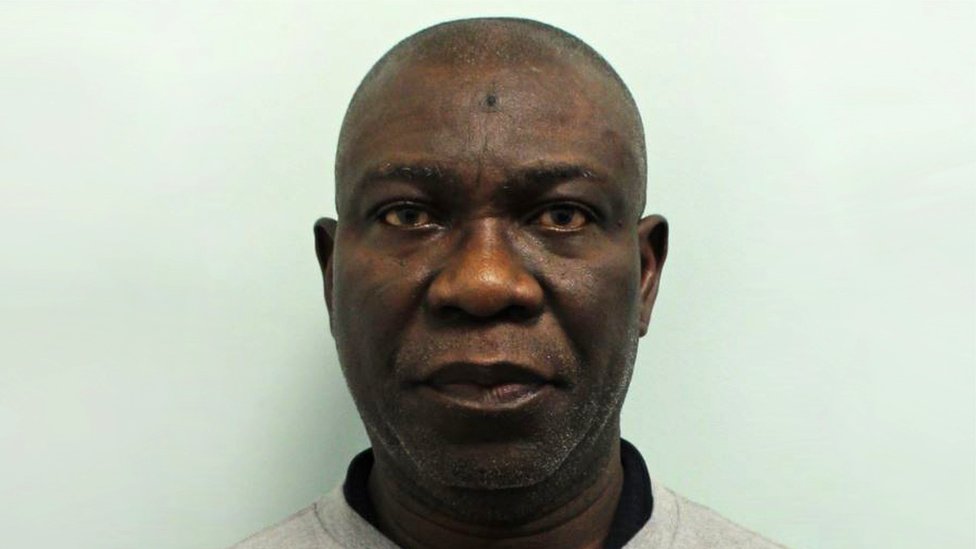
Former Nigerian deputy senate president must serve two-thirds of a nine-year, eight-month sentence for organ trafficking, the Old Bailey ruled. A Nigerian bid to bring him home was rejected.
LONDON: Senator Ike Ekweremadu remains in a British prison more than four years after his arrest at Heathrow, and well after his wife completed the custodial part of her sentence and returned to Nigeria. On the face of the sentence passed at the Old Bailey, he is not due for automatic release this year, nor in mid-2027, as some Nigerian commentary has suggested. The more credible window is late 2028.
That date is an estimate drawn from the published term and the judge’s direction. It is not an official Prison Service release notice. It could move only if ministers later grant a transfer, home detention curfew, compassionate release or some other exceptional measure. None has been approved.
From Enugu to the Old Bailey
Ike Ohakimena Ekweremadu was born on 12 May 1962 in Amachara Mpu, Enugu State. A lawyer by training, he sat as Peoples Democratic Party senator for Enugu West from 2003 until 2023 and served three consecutive terms as Deputy President of the Nigerian Senate between 2007 and 2019 one of the most powerful offices in the National Assembly.
His political career did not end in Abuja. It ended in Court One at the Central Criminal Court.
The plot
The case was the first organ-trafficking conviction under the Modern Slavery Act 2015.
Ekweremadu’s daughter, Sonia, has serious kidney disease and requires regular dialysis. Prosecutors told the jury that, between 2021 and 2022, he, his wife Beatrice (also known as Nwanneka) and London-based doctor Obinna Obeta arranged to bring a poor 21-year-old Lagos street trader, David Ukpo Nwamini, to Britain as a paid kidney donor. The planned procedure was an £80,000 private transplant at the Royal Free Hospital.
The young man was offered money figures of about £2,400 to £7,000 featured in the evidence and the promise of work in the United Kingdom. The jury accepted that he was not a freely consenting altruistic donor. A consultant became suspicious, the operation was stopped, and in May 2022 the intended donor fled and walked into a police station. Ekweremadu and his wife were arrested at Heathrow on 21 June 2022 as they returned from Turkey. They were carrying a substantial sum in cash.
Sonia was charged and later acquitted. The three adults were not.
Trial and verdict
After a trial lasting six to seven weeks, a jury on 23 March 2023 found Ike Ekweremadu, Beatrice Ekweremadu and Dr Obeta guilty of conspiracy to arrange the travel of another person with a view to exploitation, namely organ harvesting.
The defence presented a father trying to save his daughter, and suggested the donor had been willing or had later recast events. The prosecution case, which the jury accepted, was that a vulnerable young man had been treated as the source of a spare organ.
Sentence: 5 May 2023
Mr Justice Jeremy Johnson sentenced:
Ike Ekweremadu to nine years and eight months
Beatrice Ekweremadu to four years and six months
Dr Obinna Obeta to ten years
The judge described people-trafficking across borders for the harvesting of organs as “a form of slavery”. It “treats human beings and their body parts as commodities to be bought and sold” and “preys on poverty, misery and desperation”. He said Ike Ekweremadu was “the driving force throughout”, that he played a leading role in order to obtain a kidney for his daughter, that he was involved in the corruption of a member of hospital staff, and that the conviction represented “a very substantial fall from grace”. The judge also noted that Ekweremadu had sat in the Nigerian Senate when Nigeria itself outlawed organ trafficking.
The release date turns on one further direction. The judge said Ekweremadu must serve two-thirds of the sentence in custody and the remainder on licence. That is not the halfway-release rule that applies to many shorter determinate sentences. Beatrice was directed to serve half. Obeta, like Ike, was placed on the two-thirds track. Time spent on remand from June 2022 counts towards the term.
Prison, his wife’s release, and a rejected transfer
Ekweremadu has been held in the British prison system; reporting has placed him at HM Prison Wandsworth. Accounts from people who encountered him there have described a man who reads, prays and at times taught other inmates.
Beatrice served the custodial half of her sentence, was released and returned to Nigeria. Nigerian outlets have given both January 2025 and January 2026 as the date of her homecoming; the consistent point is that she is no longer in British custody.
In November 2025 a Nigerian delegation led by the foreign minister, Yusuf Tuggar, asked the Ministry of Justice to transfer Ekweremadu so that he could finish the sentence in Nigeria. The United Kingdom refused. Officials were not satisfied that Nigeria would keep him in prison for the remaining term. A Ministry source told The Guardian that any transfer is discretionary and must be “in the interests of justice”, and that “the UK will not tolerate modern slavery”.
A later UK/Nigeria migration and returns framework, discussed around President Bola Tinubu’s 2026 visit to Britain, has prompted speculation that a transfer could be revisited. As of mid-September 2026, Ekweremadu remains in British custody.
When is he likely to be released?
The arithmetic follows the published sentence, not political talking points.
The headline term is nine years and eight months 116 months. Two-thirds of that is about 77 months, or roughly six years and five months of actual imprisonment, including remand. Remand began on 21–23 June 2022. Adding that custodial slice to the start of remand produces an automatic release point the conditional release date of around November or December 2028.
That is why “mid-2027” figures circulating in Nigerian media are usually wrong. They apply the half-sentence rule. The Old Bailey did not. Counsel for Ekweremadu confirmed outside court that the custodial portion would be two-thirds.
He would not simply walk free in London. Foreign national offenders are commonly removed at or around the custodial release point. The full sentence would in principle run on licence until about early 2032, but in practice the live issues would be deportation to Nigeria and any conditions attached to removal.
Release could come earlier only through home detention curfew in the months before the two-thirds date (eligibility for modern-slavery offenders is not automatic and may be barred), compassionate or medical grounds, a future prisoner-transfer deal of the kind already refused, or exceptional executive action. None of those is scheduled.
The working assumption in September 2026 should therefore be: still inside; first realistic automatic release window in late 2028; then likely removal to Nigeria.
What remains
The intended donor has lived out of public view in Britain after giving evidence. Relatives in Nigeria have said they lost regular contact with him. His father died in August 2025 without seeing him again. Sonia was cleared. Beatrice is home. Obeta is still serving a longer term on the same two-thirds basis.
Ekweremadu’s case is no longer chiefly a Senate drama. It is a sentencing calculation. Abuja can still ask for mercy or a transfer. The figures left on the page at the Old Bailey still point to late 2028, unless London changes its mind.
By A. Ikechukwu
- Which reparations? As Africa leads a global slavery claim, critics say stolen wealth at home must come first
- US lobbyist files $26m defamation suit against Sahara Reporters in Washington
- Ekweremadu still in British jail as late 2028 release date looks more realistic than mid-2027 claims
- The Madness of a Mantra: Nigeria Has Spent Nearly 50 Years Blaming Leadership While Ethnicity Manufactures the Leaders It Gets
- Tinubu in Paris, Shettima in Delhi: what Nigeria’s constitution actually requires when both leaders are abroad


One comment