
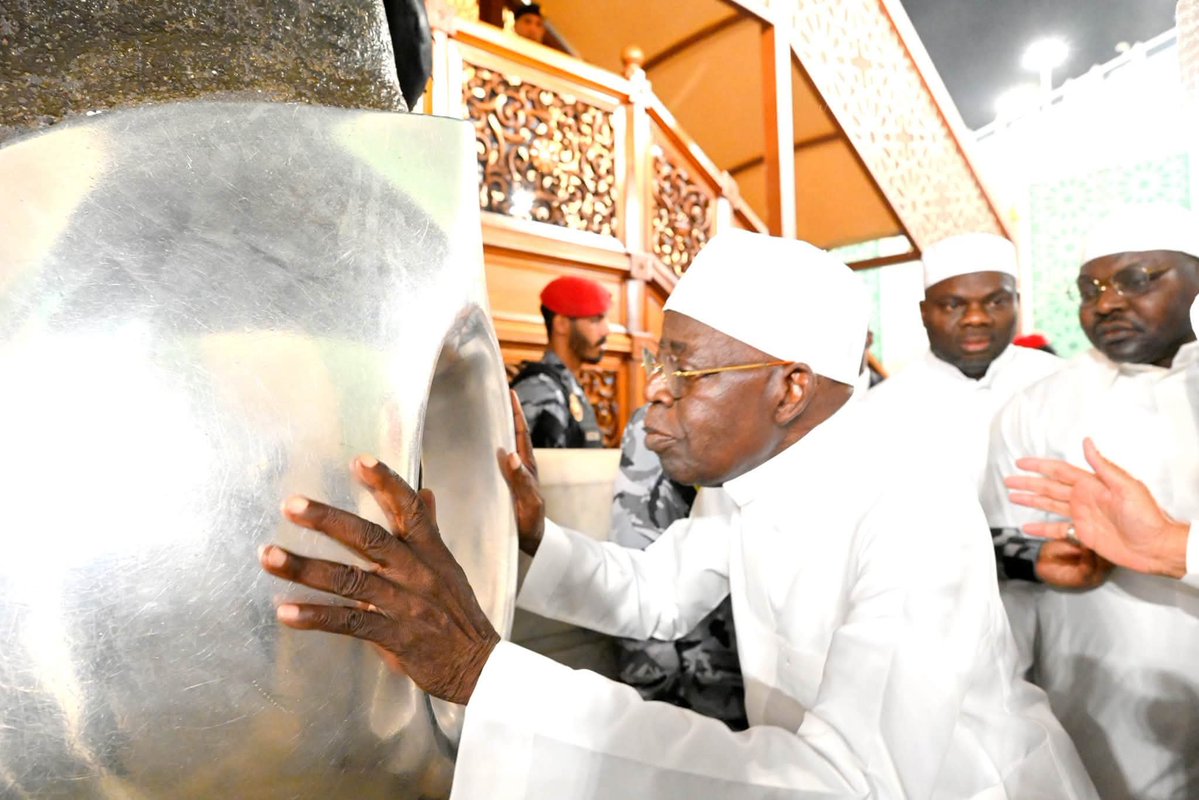
President Bola Tinubu has again described Nigeria’s ethnic and religious diversity as a national strength that can be turned into prosperity and security. Speaking during his recent pilgrimage in Mecca, he prayed that the country’s differences would become a source of unity and development, and he told Nigerians that their collective strength lies in that diversity. Similar remarks have been a consistent feature of his public statements since he took office.
Critics argue that this view is misplaced. They contend that diversity imposed without the consent of the peoples involved has proved more of a curse than a blessing in Nigeria. The modern state was created on 1 January 1914 when British colonial authorities under Lord Lugard amalgamated the Northern and Southern Protectorates for administrative convenience. No popular consultation or agreement among the many ethnic groups took place. The arrangement was an imperial decision, not a choice made by those who would live under it. Over a century later, the consequences of that decision remain visible.
Nigeria contains more than 250 ethnic groups with deep historical, linguistic, religious and political differences. Major blocs such as the Hausa Fulani, Yoruba and Igbo, together with numerous smaller nationalities, were brought under one administration without a shared civic foundation. After independence in 1960 the country experienced a civil war, repeated ethnic and religious violence, and persistent demands for greater autonomy or secession. Institutions such as the federal character principle and zoning arrangements have often reinforced ethnic calculation rather than equal citizenship. Primary political loyalty frequently remains ethnic or regional rather than national. In this setting, leaders can succeed as champions of their groups even while the wider project of nationhood stalls.
The claim that diversity is simply an asset therefore sits uneasily with Nigeria’s record. In well governed multi ethnic societies, differences can enlarge markets and supply complementary skills. In Nigeria, weak institutions have often turned those differences into zero sum competition over appointments, resources and power. The indigene and settler distinction continues to limit full rights for many people in their places of residence. Shared symbols such as the flag, the anthem and success in sport exist, yet they have not produced the deep sense of equal citizenship seen in more cohesive federations.
Defenders of the present arrangement note that few large multi ethnic states were formed by the free consent of every group, and that legitimacy can be built later through elections, constitutions and shared prosperity. Nigeria has held competitive elections and expanded its federal structure to 36 states. Nonetheless, continuing agitation for true federalism and the subordination of competence to ethnic balance suggest that the original lack of consent has never been fully overcome. Rhetoric that treats diversity as an automatic virtue does not address the structural incentives that keep ethnicity at the centre of political life.
As Tinubu and other leaders continue to invoke diversity as a source of strength, the debate turns on whether Nigeria can still construct the civic nation that the 1914 amalgamation never provided, or whether the country’s ethnic architecture will continue to shape outcomes more powerfully than any presidential appeal.
By John James

- Tinubu’s Praise of Nigerian Diversity Meets Sharp Criticism Over Colonial Origins and Weak Citizenship
- Tinubu Absent from CHOGM in Antigua and Barbuda Extending Pattern of Missed International Summits
- Harry Kane Won Ballon d’Or by Narrow Margin Over Kylian Mbappé
- Two Europe based Nigerians arrested at Abuja airport after swallowing 200 wraps of cocaine
- EFCC Re-arraigns Two Over Alleged N78.3 Million Theft in Lagos


