
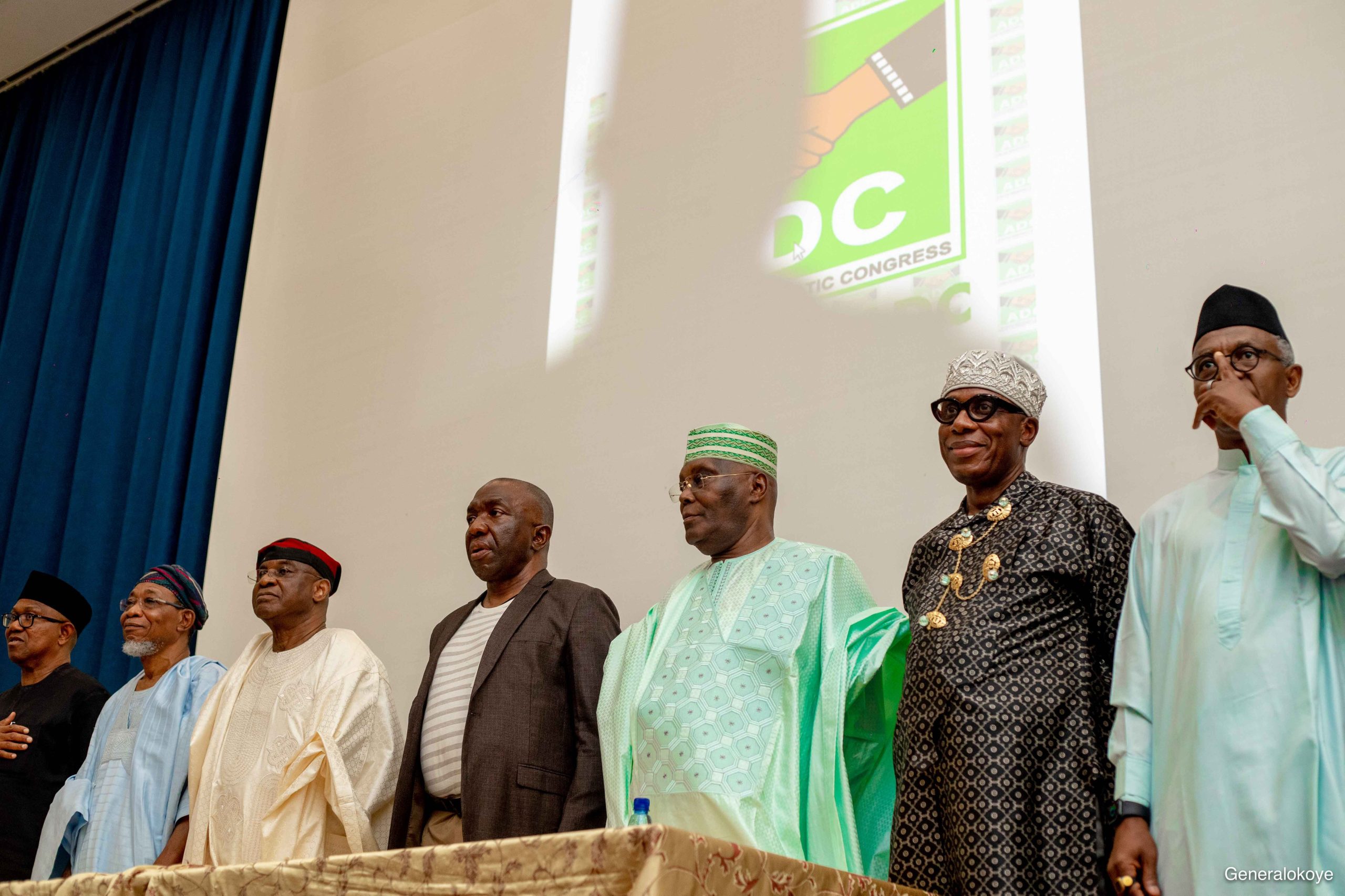
The possibility of the African Democratic Congress (ADC) fielding a presidential candidate for the 2027 Nigerian general elections is extremely low, bordering on negligible, given the prevailing legal constraints (induced by the APC), internal structural crises, and the imminent INEC deadlines as of 2 May 2026.
The Electoral Act, 2022, and INEC’s revised timetable require political parties to conduct primaries, including resolution of any disputes arising therefrom, between 23 April and 30 May 2026. Submission of updated membership registers is due by 10 May 2026, with nomination forms for presidential candidates to follow in late June to early July 2026. These timelines leave the ADC with fewer than four weeks to regularise its affairs; an impractical window considering ongoing litigation.
First let’s analyse the impact and implications of the Supreme Court Judgment delivered on 30 April 2026, reverting the Leadership Dispute to Justice Emeka Nwite’s Federal High Court
The Supreme Court, in a unanimous ruling delivered on 30 April 2026, vacated the Court of Appeal’s “status quo ante bellum” order and restored the David Mark-led National Working Committee pending determination of the substantive suit filed by Nafiu Bala Gombe. The apex court directed an expedited hearing at the Federal High Court, Abuja.
While this temporarily favours the Mark-led faction, it does not resolve the leadership crisis. The Federal High Court had previously adjourned proceedings indefinitely pending the Supreme Court’s decision. Resumption and conclusion of the substantive matter followed by any appeals cannot realistically occur before the 30 May 2026 primaries deadline. INEC’s recognition of any faction remains contingent on final judicial pronouncement, creating continued uncertainty regarding the party’s authorised leadership for conducting primaries.
Secondly, lets discuss the Justice Joyce Abdulmalik’s Judgment of 29 April 2026, Nullifying State Congresses Organised by the Mark-Led Caretaker Committee
In a separate but overlapping suit instituted by ADC state chairmen and executive committees, Justice Joyce Abdulmalik of the Federal High Court, Abuja, delivered a judgment on 29 April 2026. The court held that:
The Mark-led caretaker NWC lacked constitutional authority under the ADC constitution and the 1999 Constitution as amended to appoint committees for state congresses.
It also held that only duly elected state executive committees possess the power to organise such congresses.
The judgment also held that the tenure of existing state executives remains valid until properly conducted congresses and a national convention are held.
Finally, the judgement declared that INEC is restrained from recognising or participating in any congresses or conventions organised by the disputed caretaker leadership.
This ruling directly impedes the conduct of valid state level primaries or congresses required for democratic nomination of a presidential candidate. Even with the Supreme Court’s interim restoration of the Mark-led NWC, the Abdulmalik orders render any congresses convened under that leadership legally defective and unrecognisable by INEC. The resultant paralysis at both national and state levels prevents the party from satisfying Section 84 of the Electoral Act, which mandates democratic primaries.
Third, lets again analyse the Suit by the Attorney General of the Federation Supporting Deregistration of ADC and Allied Parties for Non-Performance.
The Attorney General of the Federation, Lateef Fagbemi, has filed a notice supporting the suit by the National Forum of Former Legislators seeking the deregistration of the ADC, Accord Party, Action Alliance, Action Peoples Party, and Zenith Labour Party. The AGF argues that these parties have failed to meet the performance thresholds stipulated in Section 225A of the 1999 Constitution, including winning seats at various electoral levels or securing the required percentage of votes. The Federal High Court has fixed 5 May 2026 for hearing.
Although a final decision is unlikely before the primary’s deadline, the mere pendency of this suit coupled with the AGF’s explicit endorsement exposes the ADC to existential risk. INEC may be reluctant to recognise any ADC processes while the party’s continued registration is under judicial scrutiny. Any adverse ruling, even if appealed, would further complicate candidate submission.
Consequently, the confluence of these factors renders it practically impossible for the ADC to produce a duly nominated presidential candidate whose submission INEC would accept by the statutory deadlines. The ADC has therefore been structurally incapacitated by conflicting court orders which preclude the holding of valid INEC recognisable primaries.
With membership registers due by 10 May 2026 and primaries closing on 30 May 2026, there is insufficient time for the Federal High Court to resolve either the leadership suit or the congresses dispute, let alone for appeals.
Moreover, INEC’s obligation to act only on recognised party structures, combined with the deregistration proceedings, creates an insurmountable barrier.
- Supreme Court restores Electoral Act rules on party registers and primaries
- Lagos court remands influencer KC Luxury and two others over alleged 184.5kg cocaine haul
- Lagos Police Identify Inspector In Viral Video And Begin Disciplinary Action
- Utomi Restates Support for Obi Presidency and Rejects Any Vice President Role
- Peter Obi rejects Anambra debt claims and says official records contradict the US$123 million figure


