
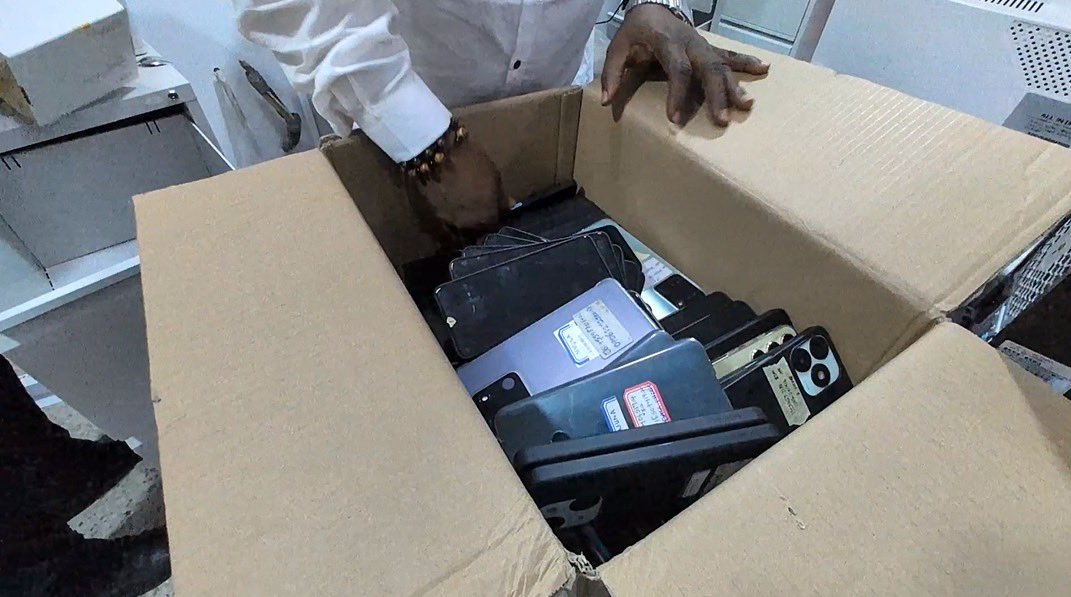
The Lagos Zonal Directorate 1 of the Commission obtained the order on Tuesday, 29 September 2026. Justice Dehinde Dipeolu of the Federal High Court in Lagos granted the forfeiture following a motion on notice filed by the Commission through its counsel, Hannatu Kofarnaisa. The phones are now the property of the Federal Government of Nigeria.
The court had earlier made an interim forfeiture order on 8 July 2026. That order required the Commission to publish notice in a national newspaper so that any interested person or entity could show cause why the devices should not be permanently forfeited. Counsel told the court that the notice appeared in The Guardian on 11 August 2026. No individual or organisation came forward to contest the forfeiture within the period fixed by the court.
The application was supported by an affidavit sworn by an EFCC operative, Christopher Augustine. The affidavit set out the findings of the investigation. It stated that the 431 phones were linked to a cyber fraud operation at a facility known as HK in Victoria Island, Lagos. The facility was allegedly used to train and deploy Nigerian youths and foreign nationals to carry out romance, investment and cryptocurrency fraud. Victims in the United States, Canada, Mexico and parts of Europe were identified as principal targets.
A sting operation on 10 December 2024 led to the arrest of more than 700 people. Those arrested included about 500 Nigerians, 148 Chinese nationals, 40 Filipinos and other foreign nationals. The affidavit further stated that Genting International Company Limited, allegedly controlled by Huang Haoyu, also known as Ken, a Chinese national, and other foreign nationals were involved in the operation.
Huang and the company were later charged with seven counts. The charges concerned cyber terrorism, possession of fraudulent documents, failure to declare activities to the Special Control Unit Against Money Laundering, illegal foreign exchange transactions and money laundering. They pleaded guilty and were convicted and sentenced by the court.
The Commission argued that the 431 devices were reasonably suspected to be proceeds of unlawful activities and were therefore liable to forfeiture under Section 17 of the Advance Fee Fraud and Other Related Offences Act 2006. After hearing the submissions and reviewing the affidavit evidence, Justice Dipeolu held that the application had merit and ordered the final forfeiture of the phones to the Federal Government.
By A.Ikechukwu


- UK: Employers face £60,000 fines and prison for hiring illegal delivery riders
- Former NCA officer ordered to repay more than £1.8 million after Bitcoin theft
- Police arrest dual British Iranian national over terror plot suspicion after RAF Fairford incident
- Peter Obi Urges Sober Reflection as Nigeria Marks 66 Years of Independence
- Harem Ahmed Abwbaker jailed for eight years over Channel boat deaths


