
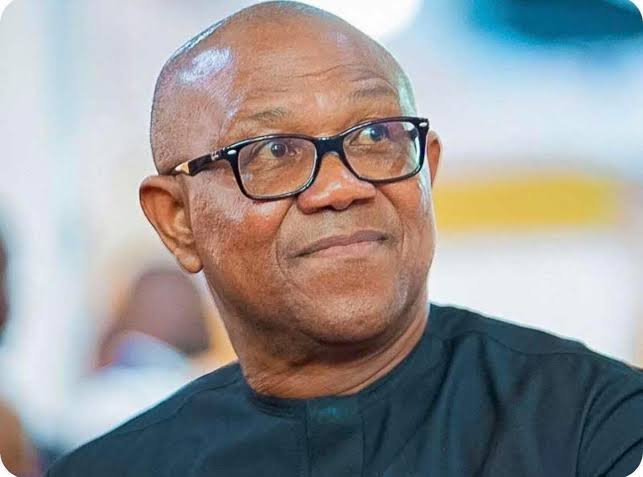
In a country where power is too often sought, contested and exercised through ethnicity and corruption, Peter Obi, the former governor of Anambra State, still looks like an exception. The manner he has brought to public life, through measured speeches, frequent media appearances and a habit of talking about accounts rather than invective, sits awkwardly with the habits of Nigerian politics. It is, in that sense, unusual.
The latest argument over what he left behind in Anambra has sharpened that contrast. Obi says that when he left office in March 2014 he handed over dollar savings of about 155 million dollars, invested so as to yield a regular income for the state, and that he left no unpaid salaries, pensions, gratuities or certified contractor bills. The present Anambra government under Charles Soludo answers that eight external facilities linked to his years in office had an original value of about 123.77 million dollars and that tens of millions of dollars remain outstanding. Obi calls that presentation false public accounting. He points to Debt Management Office figures showing Anambra’s recorded external debt far below the bundled total now advertised, and he argues that even if one accepted the state’s figure at face value, the savings he left would have serviced and extinguished the liability while leaving the capital intact. He has challenged Nigerians to name another state government that left savings on that scale for its successor.
That quarrel, however noisy, should not be allowed to shrink the man to a spreadsheet. From many angles Obi has become the chief casualty of his own prudence, sincerity and character. He is among the few senior Nigerian politicians who have not been arrested or prosecuted for fraud after leaving office. He has gone on air, more than once, to explain how he made his money. In a political culture that treats unexplained wealth as normal, that willingness to account for oneself is itself a form of dissent.
The uncomfortable question follows. Is Obi simply not made for Nigerian politics? Is he too clean for a system that rewards corruption, incompetence, ethnicity and prebendalism? The suspicion is hard to dismiss. Nigeria’s terrain is thick with seen and unseen interests. Groups that profit from the old order have every reason to raise a hard political headwind against anyone who talks of a different kind of state. If Aso Rock remains closed to him, it may not be for want of capacity, competence, integrity or compassion. It may be because the system is still unready to reward a leader whose record is comparatively unblemished.
That hostility is no longer theoretical. Sitting governors and their supporters have sought to keep him out of their states. Edo is one such case. Other parts of the country, including Delta and beyond, have seen organised attempts to stop his visits. The message is crude and familiar. Politics here is still treated by too many as a licence for rigging, violence and extreme ethnicity. Obi stands against men who campaigned under the philosophy of Emi Lo Kan and who have spoken as if one Nigeria were optional. He is up against people who believe that all is unfair in politics, and who practise that belief.
His record in office fits the same pattern. He declined traditional land allocations in Awka that other former governors were ready to accept. He refused the pensions and personal largesse that governors elsewhere have written into bills and pushed through their assemblies. Those choices look modest until they are set against the ordinary conduct of power in Nigeria. Then they look almost eccentric.
His moral ledger is, on the public evidence, cleaner than that of several of the country’s founding fathers, who were themselves caught in extreme ethnicity and in the scandals examined by the Forster Sutton Commission of Enquiry and the Coker Commission of Enquiry. That comparison will offend traditionalists. It is still worth making. Sanctity of origin is not the same thing as integrity in office.
Obi’s electoral path since about 2003 has been remarkably free of the personal stains that attach to so many careers. He is now the presidential candidate of the Nigeria Democratic Congress for 2027 and has said that this contest is likely to be his last. The result is unknown. Whatever it is, Nigeria will already have felt the pressure of a man who insists that a New Nigeria is possible.
The future remains pregnant. Whether the country is prepared to deliver something better than the politics it already knows is the real question hanging over Peter Obi, and over Nigeria itself.
By Dr Austin Aneke


