
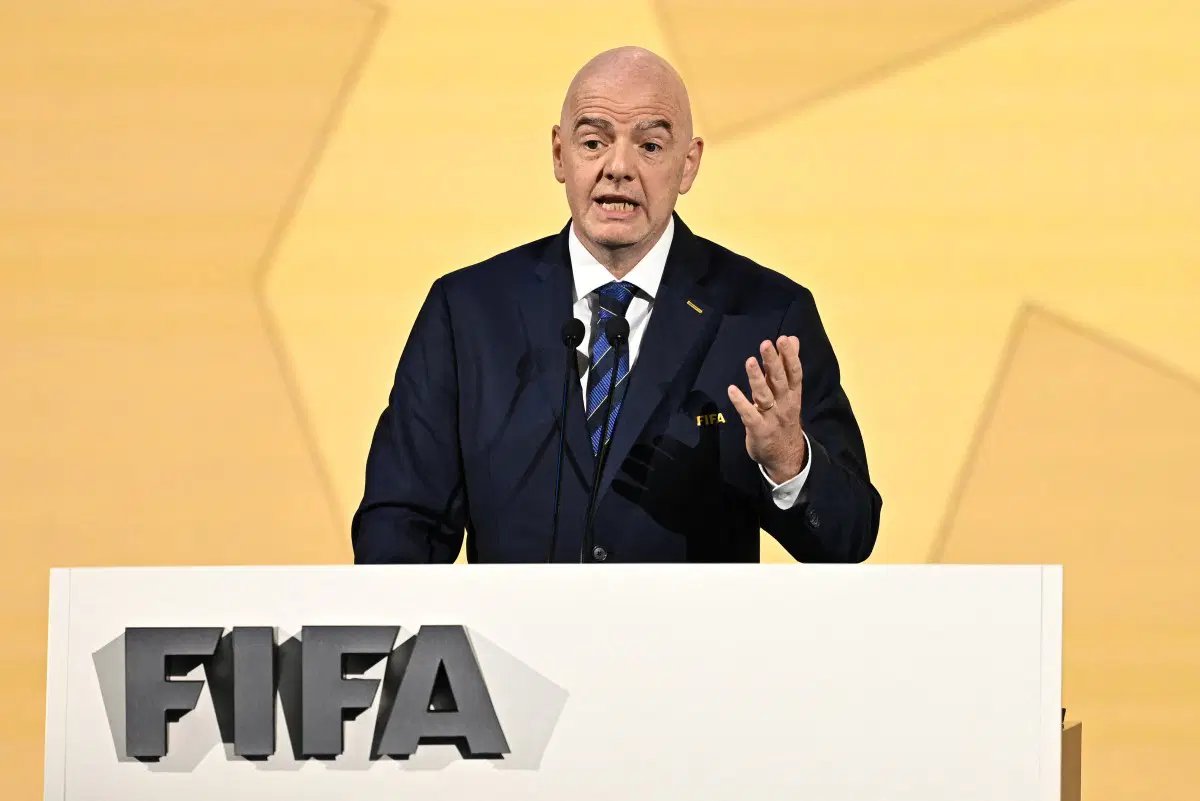
FIFA’s own lawyers privately concluded that Democratic Republic of Congo goalkeeper Lionel Mpasi was ineligible to play, months before the country sealed its place at the 2026 World Cup, according to an investigation by The New York Times and Le Monde. No sanction followed. Mpasi kept his place, Congo beat Jamaica in the intercontinental play-off, and the goalkeeper appeared in all four of the Leopards’ matches at the finals.
The reports, published on 6 October and based on internal FIFA documents, correspondence and an official directly involved in the case, say the breach was identified in March 2026, before Congo’s decisive qualifier against Jamaica. FIFA did not deny the core finding. It said its disciplinary bodies are autonomous, that they decide cases on the regulations and the facts before them, and that president Gianni Infantino played no part.
Mpasi, 32, was born in Meaux, France, to Congolese parents. He represented France at under-17 level, including a UEFA qualifier against Serbia in June 2011, which provisionally tied him to the French federation. The Congolese federation began the process of switching his association in 2021. According to the documents reviewed by the two newspapers, that process was never completed. He was nevertheless selected, and had been playing for Congo for more than three years without formal FIFA approval when the file was re-examined.
The case reached FIFA after Nigeria’s complaint. In November 2025, in Rabat, Congo drew 1-1 with the Super Eagles after extra time in the African play-off final and won 4-3 on penalties. The Nigeria Football Federation then challenged the eligibility of several foreign-born Congo players, arguing that Congolese nationality rules had been misrepresented to FIFA. Then NFF president Ibrahim Gusau said at the time that FIFA had been “deceived” into clearing them.
FIFA’s disciplinary committee later declared Nigeria’s complaint inadmissible on a technicality, namely a late filing, and notified the NFF in early March 2026. With no appeal lodged within the rules, that decision became final. Separately, the newspapers report, FIFA lawyers reviewing the file around 9 and 10 March found that Mpasi specifically had never completed the change of association paperwork.
Internal options drafted at the time, according to the documents, included awarding the Nigeria match to the Super Eagles, imposing fines, replacing Congo with Nigeria in the play-off against Jamaica, or taking no action because the complaint had been filed late. Nothing was done. Later in March, with Mpasi in goal, Congo beat Jamaica 1-0 after extra time and qualified for a World Cup for the first time in 52 years.
At the tournament Mpasi played in the 1-1 group draw with Portugal and produced a series of saves in the round of 32 against England in Atlanta, before Harry Kane’s late brace ended Congo’s run. He featured in all four of Congo’s matches.
Under Article 19 of the FIFA Disciplinary Code, a team found to have fielded an ineligible player after a complaint can be punished with a forfeit and a fine. In at least two comparable cases in the past decade, FIFA has awarded defeats where ineligible players were used. Had the same approach been applied to Congo’s earlier qualifying results, the reports note, the African play-off path could have opened for another nation, including Burkina Faso.
The political context has drawn as much attention as the paperwork. Congo’s federation president, Véron Mosengo-Omba, was elected unopposed in May 2026, after the Jamaica play-off. He studied with Infantino in Switzerland, later worked with him at UEFA and FIFA, and served as general secretary of the Confederation of African Football. He has said he is “ready to take a bullet” for the FIFA president. Infantino received him in Zurich in September and, according to the Congolese federation, congratulated Congo on its return to the World Cup and pledged support for domestic projects. FIFA has rejected any suggestion that Infantino intervened in the eligibility decision.
Concacaf, the confederation of which Jamaica is a member, said eligibility matters that affect the integrity of a competition must be reviewed and addressed. Nigerian sports officials, according to local reporting, are considering whether to seek compensation. FIFA has not announced any fresh disciplinary step.
The episode lands on an already difficult autumn for Infantino. The 2026 tournament was marked by the decision to lift Folarin Balogun’s ban after a call from President Trump, and by a disputed plan to sell a stake in future World Cups to a private fund linked to Jared Kushner’s brother. In the Mpasi case, the governing body’s position remains that an autonomous committee closed Nigeria’s complaint on procedural grounds, and that the president had no role. The documents reported by The New York Times and Le Monde show that, by March, FIFA knew the goalkeeper’s switch had never been completed, and still allowed him, and Congo, to go to the World Cup.
By A.Ikechukwu

- Keyamo and Air Chief agree closer civil and military aviation safety collaboration after Igbokoda tragedy
- President Tinubu Mourns Chief Ralph Obioha and Praises His Stand for Democracy
- Fifty nine years on, an Asaba survivor recounts how federal troops killed men who had come out for peace
- Kanu appeal: fresh plea, repealed terrorism Act, and whether sections 97 and 98 can still save the conviction
- Shettima arrives in Addis Ababa for Nigeria–Ethiopia nutrition leadership exchange


