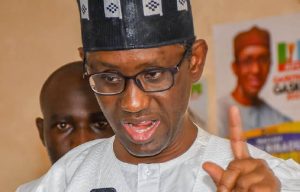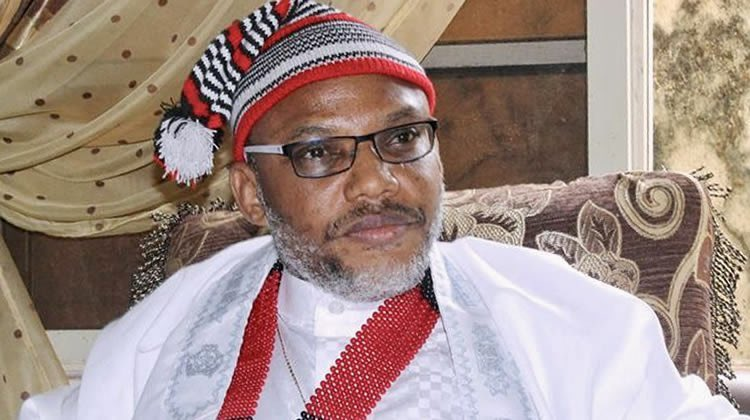
Abuja, 28 November 2025 – A fierce debate erupted in Nigeria’s House of Representatives today as Bello El-Rufai, son of former Kaduna State governor Nasir El-Rufai, lambasted what he called glaring disparities in the country’s terrorism sentencing regime. Speaking during plenary, the lawmaker for Kaduna North federal constituency questioned why a convicted Boko Haram member received a mere 20-year jail term, while the leader of the proscribed Indigenous People of Biafra (IPOB), Mazi Nnamdi Kanu, was handed a life sentence just a week earlier.
“It is wrong that Mazi Nnamdi Kanu got a life sentence while a Boko Haram terrorist received 20 years in prison,” El-Rufai declared, his voice rising amid murmurs from colleagues. “Why is justice being served differently in Nigeria?” His remarks, delivered with palpable frustration, have ignited a firestorm of discussion on social media and among rights activists, who see them as a rare admission of bias in the nation’s judicial system.
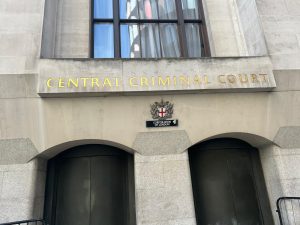
The controversy stems from two high-profile convictions in Abuja’s Federal High Court. On 18 November, Hussaini Ismail – identified as a member of the Ansaru terrorist group, an offshoot of Boko Haram pleaded guilty to four counts of terrorism and was sentenced to 20 years’ imprisonment by Justice Emeka Nwite. Prosecutors from the Department of State Services (DSS) had accused Ismail of providing logistical support to insurgents, but his guilty plea appeared to mitigate the punishment.
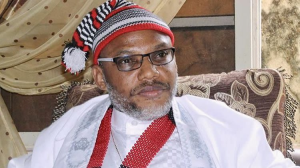
In stark contrast, Kanu – the fiery British-Nigerian separatist leader who founded IPOB in 2012 to agitate for an independent Biafra in Nigeria’s south-east – was convicted on 20 November on all seven counts of terrorism, treason, and incitement to violence. Justice James Omotosho described Kanu as a terrorist whose broadcasts from London had sown “fear and anxiety” among Nigerians, inciting attacks on security forces and civilians during events like the 2020 #EndSARS protests. Kanu, who holds dual citizenship and was dramatically rearrested in Kenya in 2021 after jumping bail in 2017, faces indefinite detention despite ongoing appeals and international outcry.
El-Rufai’s intervention came amid a broader discussion on President Bola Tinubu’s freshly unveiled national security blueprint, which promises enhanced intelligence sharing and community policing. While praising the plan’s ambition, the young lawmaker a first-term MP known for his outspoken views on governance pivoted to what he termed “execution failures” in Nigeria’s fight against terror. He advocated for decentralised policing to better tackle threats in remote areas, arguing that “Abuja cannot coordinate security in far-flung communities”.
His pointed critique of sentencing inconsistencies has struck a chord, particularly in the south-east, where Kanu’s supporters have long decried his trial as politically motivated. Prominent voices have highlighted procedural flaws: Kanu’s abduction from Kenya violated international law, as ruled by a Kenyan High Court in June 2025 and the UN Working Group on Arbitrary Detention in 2022. One US-based rights advocate described the life term as “vengeance, not justice”, noting that words spoken abroad now carry a heavier penalty than mass atrocities linked to groups like Boko Haram, which has killed thousands since 2009.
Latest News
- Historic Absence: Nigerian President Tinubu Misses ECOWAS Summit in Abuja
- Remi Tinubu’s Power Trip with Gov. Adeleke- By Farooq Kperogi
- Burkina Faso accuses Nigerian Air Force jet of airspace violation as 11 soldiers detained
- ECOWAS Orders Immediate Troop Deployment to Benin from Nigeria, Côte d’Ivoire, Sierra Leone, Ghana
- Coup d’État Shakes Benin: President Patrice Talon Missing After Military Takeover