
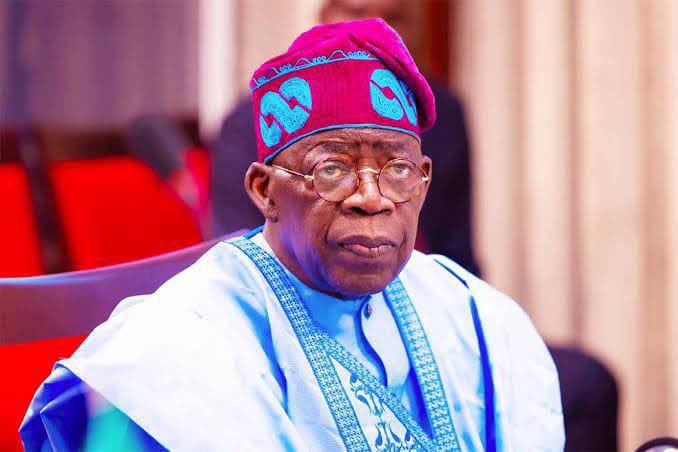
President Bola Tinubu’s Independence Day broadcast of 1 October 2026, styled “From Reform to Prosperity,” is less a national address than a defence of a presidency that has deepened Nigeria’s condition as a country without citizens. Sixty-six years after the flag was raised, the speech offers growth figures, a medical metaphor, and a declaration that the age of reform is over. It does not offer a nation. It offers a government speaking to subjects, not to citizens bound by equal membership of one republic.
A country without citizens is not a country that lacks people. It is a country in which ethnicity, not citizenship, decides who belongs, who is protected, who is appointed, and whose death is worth a sentence in a presidential broadcast. Independence promised that Nigerians would shape a common destiny. What has hardened under this administration is the older arrangement: the state as an ethnic estate, and the citizen as a residual category. Tinubu did not invent that arrangement. He has practised it, and he has made it worse.
The broadcast is the evidence. Its centre of gravity is the Yoruba led presidency’s economic narrative: subsidy removal as surgery, foreign-exchange unification as cure, and a claim that inflation has fallen, reserves have been rebuilt, and growth has exceeded four per cent. Even if every figure were granted, none of them answers the prior question. Prosperity for whom, and on what terms of belonging? A growth rate that does not disturb the ethnic allocation of power is not national recovery. It is the old disease reporting a better temperature.
Nowhere is that disease clearer than in the continued marginalisation of the South-East. Its grievances are treated as irritants, its elected voices as suspects, and its demand for equal citizenship as separatism. National integration, which section 15 of the Constitution makes a duty of the state, has not been pursued. It has been postponed in favour of an ethnic consolidation that benefits the President’s Yoruba constituency in appointments, in access, and in the unspoken assumption that the centre is theirs to interpret. Entrenched ethnicity does not require a speech announcing it. It requires a pattern. The pattern is there: a republic administered as a kinship network, with other nationalities managed rather than included.
The same failure of citizenship appears in what the address omitted. Days before the broadcast, Tinubu returned from a four-week stay in Europe, having left Nigeria on 30 August. In the fortnight before that return, thirty-seven Nigerians, many of them teenagers, died in the custody of the Nigeria Security and Civil Defence Corps in Minna after a mining raid. They entered a government cell alive. They did not leave it alive. Survivors have described overcrowding, locked doors and ignored cries. The President ordered a panel and suspended officers. He did not, in the one national address of the independence anniversary, name the thirty-seven. A president who can find words for foreign reserves, and none for thirty-seven bodies in his own government’s custody, has already answered the question of empathy. The holiday and the silence belong to the same habit: the country is a posting; the citizen is optional.
That habit has also been dictatorial. In three and a half years the administration has treated dissent as a security problem, stretched emergency power beyond its constitutional bank, and governed as though mandate were licence. The suspension of elected authorities in Rivers State, defended by reference to emergency powers, sits outside what sections 305 and 45 of the 1999 Constitution permit. Section 45 allows certain rights to be restricted by a law that is reasonably justifiable in a democratic society. It does not authorise a president to dissolve the democratic structures of a state, to rule by proclamation, or to treat fundamental rights as dispensable. Section 45(3) defines a period of emergency. It does not create a power to cancel elections already won. The right to life in section 33, and the right to dignity in section 34, are not derogable in the manner this government has behaved towards detainees. A Constitution violated with impunity is no longer a constitution. It is a courtesy.
Nor has the presidency shown the capacity these powers assume. Capacity is not the ability to announce a reform and endure its pain. It is the ability to protect life, to hold territory, to make policy legible to the household, and to govern without capturing the institutions that should restrain the governor. On each of those tests the record is thin. Insecurity continues. The cost of living, which the broadcast now promises to reduce, was inflated by choices this same government made and has refused to revisit. The National Social Register is offered as an afterthought to poverty the reforms deepened. A president who declares that the age of prosperity has begun, while families still cannot price a meal, is not describing the country. He is closing the argument.
Impeachment exists for this kind of breach. It is not a slogan. It is the constitutional remedy where a president conducts himself in grave violation of the Constitution and has ceased to be fit to hold the office. The case is not that every policy was unwise. The case is that section 45 and the wider fundamental-rights chapter have been treated as obstacles; that equal citizenship has been displaced by ethnic preference; and that the deaths of thirty-seven people in state custody did not rise to the level of an independence address. A president who has governed that way should be impeached. He should not be a candidate in 2027. Another term would not consolidate renewed hope. It would consolidate a country in which citizenship remains the one reform that is never attempted.
Tinubu asked Nigerians not to look back. The request is convenient. Looking back shows a patient who was not cured, a republic that was not united, and thirty-seven citizens who were not mentioned. The country without citizens is not a metaphor he inherited and left untouched. It is the country his practice of entrenched ethnicity has made worse.
By A.Ikechukwu
- UK: Employers face £60,000 fines and prison for hiring illegal delivery riders
- Former NCA officer ordered to repay more than £1.8 million after Bitcoin theft
- Police arrest dual British Iranian national over terror plot suspicion after RAF Fairford incident
- Peter Obi Urges Sober Reflection as Nigeria Marks 66 Years of Independence
- Harem Ahmed Abwbaker jailed for eight years over Channel boat deaths


