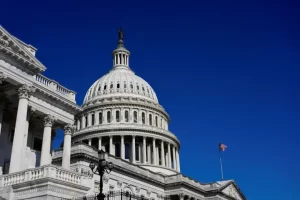
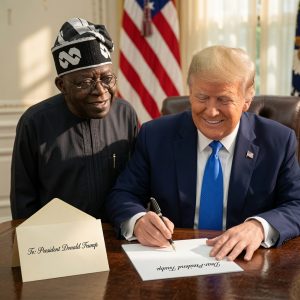
Washington, D.C. — A bipartisan congressional investigation has culminated in a comprehensive joint report delivered to the White House, commending President Donald Trump for his decisive redesignation of Nigeria as a Country of Particular Concern (CPC) and outlining urgent recommendations to combat ongoing violence against Christian communities.
The report, presented on 23 February 2026 by members of the House Appropriations Committee and the House Foreign Affairs Committee, follows President Trump’s action in late 2025 to redesignate Nigeria under the International Religious Freedom Act. This designation highlights what the document describes as decades of systematic persecution, including violent attacks by Fulani militias and terrorist groups such as Boko Haram, resulting in thousands of deaths, church destructions, kidnappings, and displacement in Nigeria’s northern and Middle Belt regions.
Key figures involved include House Appropriations Committee Chairman Tom Cole, Vice Chair and National Security Subcommittee Chairman Mario Díaz-Balart, Legislative Branch Subcommittee Vice Chair Riley Moore, Foreign Affairs Committee Chairman Brian Mast, and Africa Subcommittee Chairman Chris Smith. The investigation incorporated expert hearings, roundtables, and bipartisan congressional delegations to Nigeria, where lawmakers gathered evidence from government officials, civil society, and affected communities.
The findings emphasise that Nigeria hosts one of the deadliest environments for Christians globally, with ongoing attacks used to silence dissent, target pastors and minorities, and seize land. The report praises the redesignation as a “once-in-a-generation opportunity” for Nigeria to demonstrate political will and for strengthened US-Nigeria partnership to address the crisis.
Among the primary recommendations are:
Negotiating a bilateral security agreement between the United States and Nigeria to protect vulnerable Christian communities, eliminate jihadist threats in the region, and counter foreign influences, including from Chinese economic activities linked to illegal mining that allegedly funds militias.
Co-funding humanitarian assistance through faith-based organisations, prioritising internally displaced persons in the Middle Belt, and supporting rapid response mechanisms to attacks and kidnappings.
Providing technical and military support to Nigeria, including demobilisation and disarmament programmes for armed Fulani militias, land reform efforts, and enhanced capabilities for security forces to prevent violence.
Expanding counter-terrorism cooperation, including divestment from Russian military equipment in favour of American alternatives, and countering foreign terrorist organisations posing risks to US interests.
Conditioning US funding under the Fiscal Year 2026 National Security, Department of State, and Related Programs Appropriations Act on verifiable progress, including anti-money laundering reforms, disruption of terrorist financing, and accountability measures.
Additional proposals include imposing sanctions and visa restrictions on perpetrators and those tolerating violence, demanding the repeal of Sharia codes and anti-blasphemy laws, reviewing leverage points such as restrictions on cattle product exports, ensuring adequate US diplomatic staffing in Nigeria, expediting defence sales, and commissioning a National Intelligence Estimate on sectarian violence groups.
The report also calls for international collaboration with partners such as France, Hungary, the United Kingdom, and Senegal to address militia links to terrorism.
Congressman Riley Moore, who led much of the investigative effort at President Trump’s request, highlighted the urgency: the document represents a roadmap to end the slaughter and foster a safer, more prosperous Nigeria through joint action.
This development underscores heightened US focus on religious freedom in Nigeria, building on prior legislation such as the Nigeria Religious Freedom and Accountability Act of 2026, and reflects broader concerns over extremism threatening regional stability and American interests.
- Religious Bigotry on Full Display: Sheikh Sani Yahaya Jingir’s “Infidels” Rant in Kano Must Be Condemned and Investigated by the DSS
- Paul Biya’s prolonged absence from Cameroon fuels power vacuum fears
- Bandits abduct Kebbi High Court judge, Justice Faruku Hassan Bunza
- ICC Chief Prosecutor Karim Khan Removed in Historic Vote
- US House backs measure targeting Nigeria over Christian persecution as Ted Cruz hails defeat of Abuja’s PR drive