
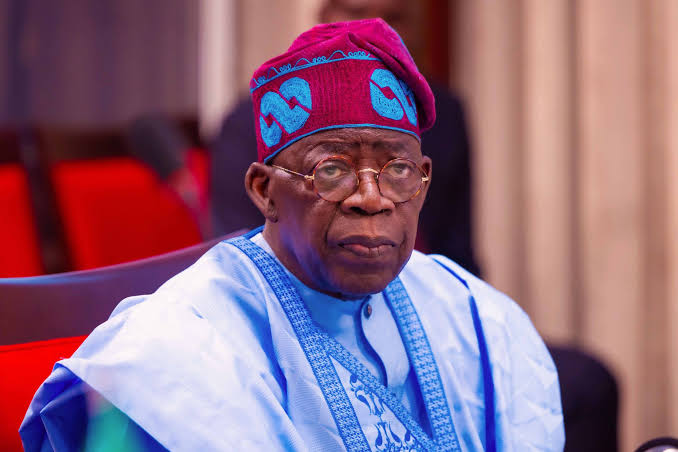
Aloy Ejimakor, a Nigerian lawyer who trained and practised in the United States, has set out the narrow circumstances in which President Bola Tinubu could, in theory, face a criminal indictment or arrest on American soil.
His legal note, published on Tuesday, lands in the same week that Mr Tinubu is again absent from the United Nations General Assembly in New York and after the Presidency dismissed talk of an American arrest as politics.
Mr Ejimakor’s central point is that no such indictment is feasible now. As Nigeria’s sitting head of state, he wrote, Mr Tinubu enjoys absolute personal immunity from foreign criminal prosecution, a protection known in international law as ratione personae.
Recognition, not the courts, decides the shield
Under the United States Constitution, he argued, the decision on who counts as a foreign head of state belongs exclusively to the executive branch, meaning the American president and the Department of State. Federal courts treat that determination as binding and not open to judicial challenge.
For as long as Washington continues to recognise Mr Tinubu as Nigeria’s head of state, Mr Ejimakor wrote, American federal courts lack jurisdiction to issue a criminal indictment, an arrest warrant or a subpoena against him.
Nigeria’s mission to the United Nations has separately pointed to protections for representatives travelling to the world body under the 1947 headquarters agreement with the United States. The Presidency has also said America would not arrest a sitting head of state and has called arrest rumours “pure nonsense”.
The 1993 Chicago case was civil, not criminal
Much of the political argument in Nigeria turns on a 1993 proceeding in the United States District Court for the Northern District of Illinois. Mr Ejimakor said that matter was a civil asset forfeiture action against property, known as a proceeding in rem, and not a criminal indictment of Mr Tinubu personally, which would have been an action in personam.
The case, he wrote, targeted funds in named bank accounts suspected of being linked to narcotics proceeds rather than charging Mr Tinubu as an individual with a crime. It ended in a compromise settlement under which he agreed to forfeit 460,000 dollars without admitting criminal guilt or liability. The court then entered a final consent judgment.
Court records and later reporting have long described the action as United States of America against funds in specified accounts, including an account at First Heritage Bank in the name of Bola Tinubu. A decree in October 1993 ordered 460,000 dollars forfeited. Other seized funds were released. The proceeding was civil. Mr Tinubu was not tried or convicted.
Mr Ejimakor has made the same distinction in earlier public comments, saying critics may still raise moral questions about fitness for office but that the legal record does not show a criminal conviction.
Time limits on old allegations
Even if prosecutors wished to convert the old allegations into a criminal case, he added, ordinary federal time limits would stand in the way. Statutes of limitation for standard federal drug or money laundering offences are typically five years under section 3282 of title 18 of the United States Code.
Unless there were an ongoing conspiracy or a crime whose clock had not started to run, he wrote, the limit for acts in the early 1990s has long expired.
Two theoretical routes, and a third
Mr Ejimakor then listed the routes by which an indictment could become legally thinkable.
First, immunity that attaches to the office ends when a foreign leader leaves power. After a president steps down, the remaining shield, known as ratione materiae, covers official state acts performed while in office. It does not cover private acts carried out before he took office, including the 1990s conduct that led to the forfeiture.
Second, if an American administration withdrew recognition of Mr Tinubu as Nigeria’s head of state, the Department of Justice could argue that head of state immunity no longer applied. He cited that mechanism as rare and pointed to the treatment of Nicolás Maduro in Venezuela as an example of Washington denying recognition and then treating the person as open to process.
The only other scenario he identified was the discovery of new or still live criminal acts that implicate Mr Tinubu, whether tied to the 1993 affair or not, such as an active international money laundering scheme or conspiracy that reaches into American jurisdiction.
A legal opinion, not a brief for either camp
Mr Ejimakor closed with a disclaimer. The note, he said, is a legal opinion and therefore apolitical. It is not intended as a defence of President Tinubu or of his political opponents on the controversy.
He is best known in Nigeria as counsel associated with Nnamdi Kanu, the detained leader of the Indigenous People of Biafra. He has previously written that the 1993 forfeiture raises moral questions but does not amount to criminal guilt under American law.
The Presidency says Mr Tinubu skipped this year’s assembly to concentrate on domestic concerns including the economy and security, and that Vice President Kashim Shettima is leading Nigeria’s delegation. Officials also note that the president has travelled to the United States before taking office and since, including a transit through Los Angeles.
On Mr Ejimakor’s own terms, none of that travel theory matters while recognition lasts. The arrest he describes is not a present legal step. It is a future possibility that would require either a change of office in Abuja, a change of recognition in Washington, or a fresh criminal case that is still within time and inside American reach.
By A.Ikechukwu


