Cotonou, Benin – 7 December 2025
In a dramatic escalation of political turmoil, Benin has been plunged into chaos this morning following an audacious military coup that has toppled the government of President Patrice Talon. A cadre of army officers, styling themselves as the “Military Committee for Refoundation,” seized control of the national broadcaster in the early hours, declaring the suspension of the constitution and the dissolution of all state institutions. As gunfire echoed through the streets of Cotonou, the whereabouts of the 67-year-old president remain unknown, with unconfirmed reports suggesting he may have been detained or fled the capital.
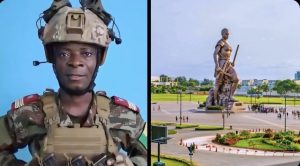
The putsch, led by Lieutenant-Colonel Pascal Tigri, erupted shortly after dawn when armed troops stormed the state television station, ORTB, interrupting regular programming with a stark announcement. Flanked by fellow officers in fatigues, Tigri proclaimed himself interim leader, vowing to “restore dignity and sovereignty” to the West African nation. “The corrupt regime of Patrice Talon has been dismantled,” he declared in a broadcast viewed by millions. “We act in the name of the people to refound our republic free from foreign meddling and internal decay.” The committee has imposed an immediate nationwide curfew, sealed borders, and warned against resistance, with mobile networks intermittently disrupted to curb the spread of information.
Eyewitnesses in the Guezo district, near Talon’s presidential residence, described scenes of pandemonium as heavy gunfire and explosions rocked the area around 5am local time. “We heard tanks rumbling and soldiers shouting orders,” recounted Aïcha Kouassi, a local shopkeeper, who fled her home with her family. “The president’s guards fought back fiercely, but it was over quickly. No one knows if he’s alive or captured.” The French embassy in Cotonou issued an urgent advisory to its citizens, confirming “intense exchanges of fire” at the nearby Camp Guezo military barracks and urging expatriates to shelter in place.
Benin, long hailed as a bastion of democracy in a region scarred by instability, now joins a grim procession of African nations – including neighbouring Niger and Burkina Faso – where military juntas have seized power amid accusations of electoral fraud and economic mismanagement. Talon, a cotton magnate turned statesman who assumed office in 2016, had pledged not to seek a third term in the April 2026 polls, following constitutional term limits. Yet his tenure has been dogged by controversy: critics lambast his reforms as authoritarian, citing the jailing of opposition figures and the suppression of protests against perceived French influence.
Just months ago, in September 2024, authorities foiled an alleged coup plot orchestrated by Talon’s erstwhile allies, including businessman Olivier Boko and former sports minister Oswald Homeky, who were later sentenced to 20 years’ imprisonment in January this year for conspiracy and corruption. Those events sowed seeds of distrust within the military and political elite, with whispers of deeper fractures in the Republican Guard. Activists like Damien Zinsou Dégbé, a vocal critic detained in October on charges of “incitement to violence,” had decried Talon’s rule as “neoliberal fascism,” accusing it of entrenching neocolonial ties while stifling dissent.
The coup’s architects framed their intervention as a patriotic response to these ills. In their televised communiqué, the committee lambasted Talon’s government for “betraying the Beninese people through rigged elections, resource plundering, and subservience to imperial powers.” They promised a “transitional roadmap” towards fresh elections within 18 months, alongside audits of state finances and the expulsion of foreign military bases – a nod to rising pan-Africanist sentiments sweeping the Sahel. Social media erupted with divided reactions: jubilant posts hailed the move as “liberation,” while others decried it as a “retrograde betrayal of democracy.”
Analysts warn of dire repercussions. Benin’s economy, buoyed by cotton exports and the bustling Port of Cotonou, could face immediate isolation, exacerbating inflation and youth unemployment that fuelled the unrest. “This is not just a Benin story; it’s a symptom of Sahelian dominoes falling,” observed Dr. Fatima Diop, a political scientist at the University of Lagos. “Talon’s ouster risks emboldening jihadist incursions from the north, where Benin already battles spillover from Mali and Niger.”
As armoured vehicles patrol the palm-lined boulevards of Cotonou and Porto-Novo, the nation holds its breath. Will the coup consolidate, or crumble under loyalist counterstrikes? For now, the tricolour flag flies at half-mast over the Palais de la Marina, and the people of Benin – resilient heirs to the ancient Kingdom of Dahomey – await clarity in the fog of uncertainty. The only certainty is that this dawn has redrawn the map of West African stability.
Latest News
- Historic Absence: Nigerian President Tinubu Misses ECOWAS Summit in Abuja
- Remi Tinubu’s Power Trip with Gov. Adeleke- By Farooq Kperogi
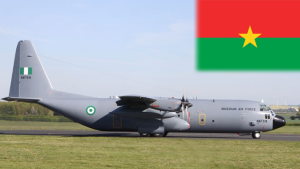
- Burkina Faso accuses Nigerian Air Force jet of airspace violation as 11 soldiers detained
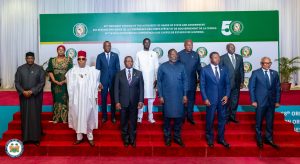
- ECOWAS Orders Immediate Troop Deployment to Benin from Nigeria, Côte d’Ivoire, Sierra Leone, Ghana
- Coup d’État Shakes Benin: President Patrice Talon Missing After Military Takeover