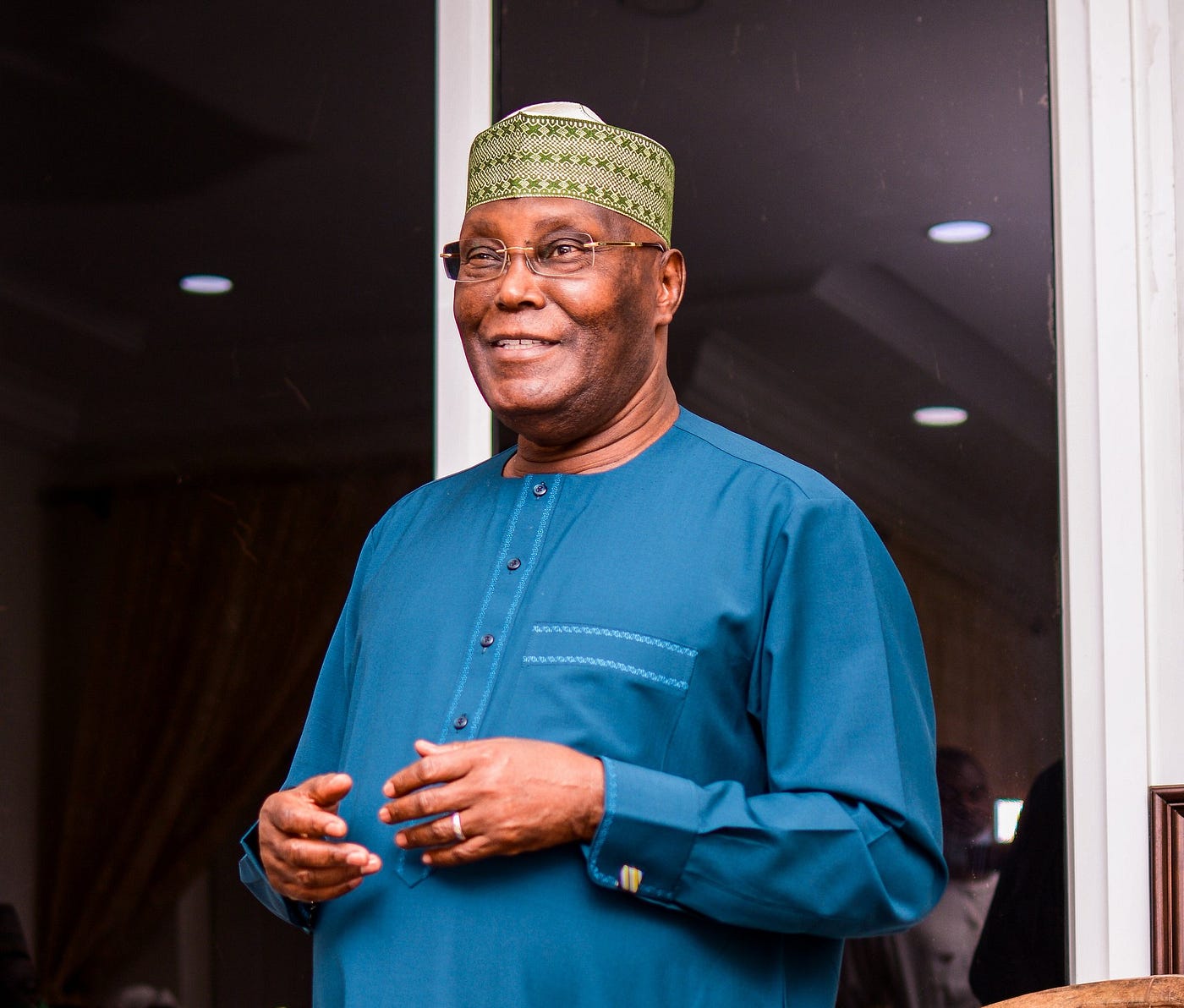
In the intricate tapestry of Nigerian politics, the principle of zoning has long served as a delicate mechanism to promote equity and national unity. Yet one figure’s persistent and irresponsible ambition continues to undermine this convention, with far-reaching consequences for the country’s major political parties and the democratic process itself. Atiku Abubakar, the perennial presidential aspirant, stands accused of placing personal ambition above party cohesion and regional rotational agreements.
The cracks first became glaringly evident during the 2023 election cycle within the Peoples Democratic Party (PDP). Iyorchia Ayu, a northerner serving as PDP National Chairman from 2022 to 2023, refused to resign even after Atiku – another northerner – emerged as the party’s presidential candidate. This breach of the unwritten zoning understanding fuelled internal dissent. Governor Nyesom Wike of Rivers State led a significant revolt against both Atiku and Ayu. In a dramatic turn, Wike aligned himself with Bola Tinubu of the All Progressives Congress (APC), openly urging voters in Rivers State to support the APC rather than the PDP. The repercussions of this schism persist to this day, leaving the PDP destabilised and fragmented into factions.
Atiku’s inordinate ambition also played a pivotal role in the departure of Peter Obi from the PDP. Disillusioned, Obi left to join the Labour Party, from where he mounted a formidable challenge in the 2023 presidential election. His exit highlighted the growing frustration with Atiku’s apparent disregard for established political norms.
As Nigeria approaches the 2027 general elections, the rotational principle dictates that it remains the turn of Southern Nigeria to produce the president, with President Tinubu having served only four years of his term. Despite this, Atiku has once again thrown his hat into the ring, signalling his intention to contest. This decision has sent shockwaves through the opposition.
Hopes for a unified front emerged with the formation of the African Democratic Congress (ADC) coalition. Prominent politicians, including Peter Obi and Rotimi Amaechi among others, coalesced around the ADC, operating under the assumption that Atiku, as a northerner, would respect the zoning convention and refrain from running. Their optimism was short-lived. Atiku’s refusal to withdraw his candidacy, insisting on contesting despite the regional considerations, led to further fractures. Peter Obi subsequently resigned and joined the National Democratic Congress (NDC) alongside Rabiu Kwankwaso. Both figures are now backed by the OK Movement. This development echoes the earlier emergence of the Obidient movement, which rallied behind Obi in 2022-2023 largely in reaction to Atiku’s perceived disrespect for zoning arrangements.
Critics argue that Atiku Abubakar lacks the political intelligence and discipline to discern when to pursue office and when to exercise restraint for the greater good of the opposition and the nation. His relentless ambitions have not only poisoned the PDP but are now threatening to do the same to the ADC and broader coalition efforts.
The ultimate irony and danger lie in the potential electoral outcome. By dividing the opposition votes through these multiple fractures, Atiku’s actions may inadvertently pave the way for President Tinubu’s re-election in 2027. As the opposition remains splintered – with factions in the PDP, a weakened ADC, and new alliances such as the NDC – the ruling APC stands to benefit from a divided field.
In Nigeria’s quest for stable democracy and equitable power rotation, Atiku Abubakar’s approach serves as a cautionary tale. Unless opposition leaders prioritise unity and respect for zoning over individual ambition, the cycle of fragmentation and incumbent advantage is likely to continue.
- Editorial: Good Morning, Tony: Hierarchy, Training and the Performance of Respect in Nigeria
- APC constitutes Presidential Campaign Council with Yari as Director-General
- Arsenal begin title defence in style with dominant win over Coventry
- US court grants FBI private review of records in Tinubu FOIA case and sets 28 August deadline
- Sowore: Compassion Does Not Require Historical Amnesia: My Response to Datti Baba-Ahmed on IBB at 85