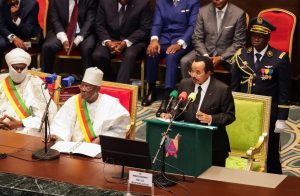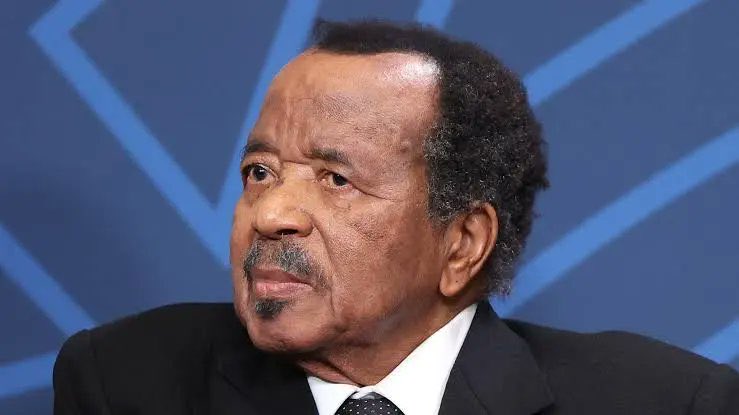
Paul Biya’s son Franck Emmanuel Biya has assumed the roles of Vice President and Head of the Armed Forces, consolidating the family’s grip on power in Cameroon amid deepening political unrest following a disputed presidential election.
In an official decree dated 4 April 2026, President Paul Biya appointed his son, Franck Emmanuel Biya, as Vice President of the Republic of Cameroon. The same decree named him Head of the Armed Forces and Minister Delegate at the Ministry of Defence.
The document states: “Mr Franck Emmanuel BIYA is appointed Vice President of the Republic of Cameroon.” It adds: “Mr Franck Emmanuel BIYA is appointed Head of the Armed Forces.” Expanding his authority, it further declares: “The Vice President of the Republic, Mr Franck Emmanuel BIYA, is also appointed Minister Delegate at the Ministry of Defence of the Republic of Cameroon.”
Citing constitutional provisions and defence laws, the presidency said the appointments were made in line with “service requirements”. The decree is to be registered, published with urgency, and inserted in the Official Gazette.
The move comes just months after the 92-year-old president was sworn in for an unprecedented eighth term following a highly contested election that has triggered nationwide protests and drawn international criticism.
Official results showed President Biya securing 54 per cent of the vote, defeating his main rival, opposition candidate Issa Tchiroma Bakary, who received 35 per cent. Mr Tchiroma Bakary has rejected the outcome, claiming he was the rightful winner and accusing the authorities of widespread electoral fraud — allegations the government has strongly denied.
Despite the controversy, President Biya described the election as “satisfactory” and praised the electoral body and security forces for their handling of post-election demonstrations. The Constitutional Council dismissed several petitions challenging the results, citing insufficient evidence or lack of jurisdiction.
President Biya, who has ruled Cameroon since succeeding Ahmadou Ahidjo in 1982, now faces renewed accusations from opponents that he is tightening his family’s hold on the Central African nation through both political and military channels. The elevation of his son to such senior positions is expected to intensify concerns over succession planning and the state of democratic governance, even as calls for reform grow louder.
- Religious Bigotry on Full Display: Sheikh Sani Yahaya Jingir’s “Infidels” Rant in Kano Must Be Condemned and Investigated by the DSS
- Paul Biya’s prolonged absence from Cameroon fuels power vacuum fears
- Bandits abduct Kebbi High Court judge, Justice Faruku Hassan Bunza
- ICC Chief Prosecutor Karim Khan Removed in Historic Vote
- US House backs measure targeting Nigeria over Christian persecution as Ted Cruz hails defeat of Abuja’s PR drive