
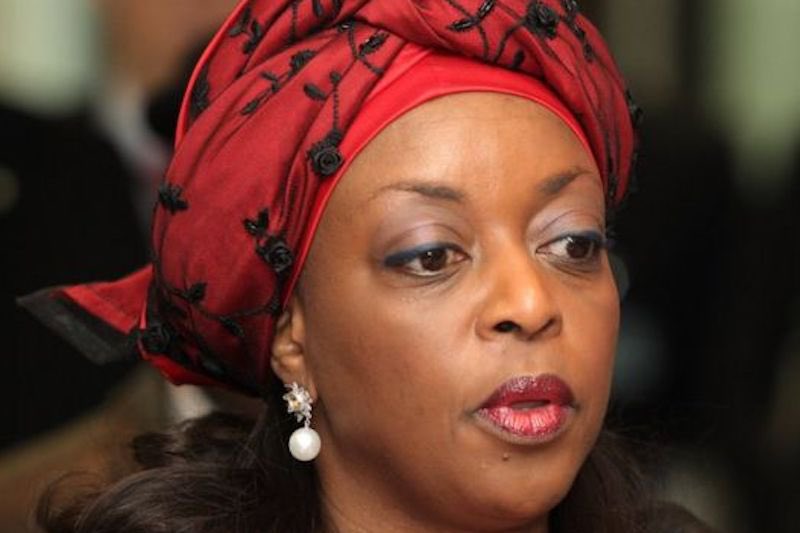
Acquitted of six bribery charges at Southwark Crown Court, the former petroleum minister is now at the centre of a fierce argument over double jeopardy, dual sovereignty and whether Abuja can or should try her again
LONDON / ABUJA — When a jury at Southwark Crown Court returned not-guilty verdicts on 17 June 2026, Diezani Alison-Madueke declared that an eleven-year “nightmare” was over. For Britain’s National Crime Agency (NCA), the outcome was a heavy blow to a flagship foreign-corruption prosecution that had consumed more than a decade of investigative work. In Nigeria, however, the verdict has opened a different argument: whether the Economic and Financial Crimes Commission (EFCC), the Independent Corrupt Practices and Other Related Offences Commission (ICPC) and other agencies may still put the former petroleum minister on trial at home.
The question is not merely political. It turns on how Nigerian and British law treat double jeopardy, on whether a London acquittal binds a Nigerian court, and on the awkward fact that Nigerian authorities themselves helped to build the British case.
A five-month trial and a unanimous acquittal
Alison-Madueke, 65, served as Nigeria’s minister of petroleum resources from 2010 to 2015 under President Goodluck Jonathan and, in 2014–15, as the first woman to preside over OPEC. She was charged in 2023 — eight years after her first arrest in London in 2015 — with five counts of accepting bribes and one count of conspiracy to commit bribery, covering alleged conduct between 2011 and 2015.
Prosecutors told the jury she had enjoyed “a life of luxury” in London funded by oil and gas figures seeking influence over lucrative Nigerian contracts. The alleged benefits included at least £100,000 in cash, private-jet travel, chauffeur-driven cars, stays at high-value properties in London and Buckinghamshire, and shopping, including about £2 million of goods at Harrods. Businessman Kolawole Aluko was named in the indictment but was not in the dock.
She denied every charge. Her case was that she never asked for, sought or took a bribe; that Nigerian ministers were barred from holding foreign bank accounts, so third parties sometimes met living costs when her London office was in disarray; that there was a culture of gift-giving; and that she had little real power over contract awards — more “rubber stamp” than deal-maker. Defence counsel Jonathan Laidlaw KC also attacked a “gross delay” in charging her, arguing that material which would have established her innocence had disappeared.
After a trial that began in January and more than 46 hours of deliberation, the jury acquitted her on all six counts. Also cleared were her brother, Doye Agama, 69, an archbishop at a Pentecostal church in Manchester, who faced conspiracy to commit bribery, and oil executive Olatimbo Ayinde, 54, who faced bribery counts and whose defence was that she had been working as an informant for Nigerian authorities. The NCA said it respected the jury’s decision.
In a statement issued by her spokesperson, Bolouere Opukiri, Alison-Madueke said: “For eleven arduous years this matter has weighed heavily upon me and my family. Today, a decade of unrelenting and unjust vilification, condemnation and scrutiny has finally concluded… My name has been cleared.” She later told the BBC that the investigation had destroyed her reputation and denied her the ability to travel or work. She also said the London judgment was “not the final chapter”.
That last remark has proved accurate. The legal fight has simply moved.
What remains open in Nigeria
The London case was a British prosecution of alleged bribery that crystallised in the United Kingdom. Parallel Nigerian proceedings have always been framed differently: money-laundering, corruption and civil asset forfeiture arising from her years at the ministry, including allegations about payments linked to the 2015 elections and funds said to have been moved through accounts and properties in Nigeria and abroad.
The EFCC has, over several years, obtained forfeiture orders covering large sums and a substantial property portfolio. Nigerian reporting has cited recoveries in the region of $153 million and more than 80 properties associated with investigations into the former minister and associates, together with earlier final forfeiture judgments, including a 2017 Lagos order over about N34 billion in frozen accounts and the forfeiture of dozens of houses. The United States has separately completed civil forfeiture actions and, in 2025, agreed with Nigeria to repatriate about $52.88 million linked to investigations associated with her circle. Those American actions were in rem — against property, not a criminal conviction of the person.
Since the London verdict, Alison-Madueke has moved to use it. In early July the Federal High Court in Abuja allowed her to place the Southwark judgment before the court in a 2023 suit seeking to reclaim assets forfeited through EFCC proceedings. Justice Inyang Ekwo granted the application; EFCC counsel did not oppose it. The matter was adjourned. She has described the British ruling as of “obvious material relevance” to the allegations on which the commission has relied, while stressing she is not asking a Nigerian judge to sit on appeal over a foreign court. The EFCC’s public line has been cautious. Asked whether it would revive a criminal prosecution, spokesman Dele Oyewale said: “I don’t want to talk about that now.”
That silence has not stopped the debate.
Two camps: try her again, or leave her alone
One camp, associated with anti-graft campaigners and some voices inside the enforcement agencies, argues that a British jury’s view of British bribery charges cannot close the book on Nigerian public money, Nigerian contracts and Nigerian criminal statutes. On this view the EFCC and, where their mandates overlap, the ICPC retain both the power and the duty to proceed on distinct Nigerian offences — especially money-laundering — even if some of the underlying facts look familiar. Senior Nigerian lawyers interviewed after the verdict made that point in almost identical terms: a foreign judgment is persuasive, not binding; section 36(9) of the 1999 Constitution does not treat Southwark Crown Court as “a court of competent jurisdiction” for Nigerian offences; and double jeopardy bites only where the later charge is the same offence, or one with the same ingredients, as the earlier one.
The other camp argues that a second criminal trial would be oppressive. Nigeria, they say, did not stand aside from the London case. It supported it. UK prosecutors issued multiple letters of request; NCA officers made repeated trips to Nigeria; an EFCC investigator, Chinedu Eneanya, gave evidence by video link from the Federal High Court in Abuja about documents seized from Alison-Madueke’s home on 2 October 2015. Mutual legal assistance was the pipeline through which much of the British case was fed. If Abuja helped London try the facts and London’s jury rejected them, a fresh Nigerian indictment built on substantially the same story would, critics say, look less like complementary justice and more like a second bite. Some lawyers have floated abuse of process, and even a double-jeopardy argument, if the evidential core is the same.
Both positions can cite law. Neither is a complete answer on its own.
Double jeopardy in the United Kingdom
English law starts from the old common-law pleas of autrefois acquit and autrefois convict: a person who has been acquitted or convicted of an offence cannot be tried again for that same offence. Courts may also stay a second prosecution as an abuse of process where it is founded on the same or substantially the same facts, even if the legal label is different.
Parliament carved a limited exception in Part 10 of the Criminal Justice Act 2003. For a list of “qualifying” serious offences, the Court of Appeal may quash an acquittal and order a retrial if there is new and compelling evidence and a retrial is in the interests of justice. The Act also reaches some foreign acquittals, where the conduct would have amounted to a qualifying offence in England and Wales. Those powers are tightly controlled, require the Director of Public Prosecutions’ consent, and are used rarely. They are a British tool for British prosecutions. They do not decide what Nigeria may do.
In cross-border cases, English courts also recognise a dual-sovereignty idea: two states may prosecute different offences arising from overlapping facts. The practical brake is abuse of process, not an automatic worldwide bar.
Double jeopardy in Nigeria
Nigeria constitutionalised the principle. Section 36(9) of the 1999 Constitution provides that no person who has been tried by a court or tribunal of competent jurisdiction for a criminal offence, and convicted or acquitted, shall again be tried for that offence or for a criminal offence having the same ingredients, “save upon the order of a superior court”. Section 36(10) sits alongside it. Nigerian courts have described the clause as a protection against prosecutorial harassment. It is not absolute: a superior court may order a retrial, and the protection is engaged only after a trial on the merits ending in conviction or acquittal. Withdrawal of a charge, or a civil forfeiture, is not an acquittal.
The decisive words for the present controversy are “court of competent jurisdiction” and “same ingredients”.
A substantial body of Nigerian legal opinion holds that “competent jurisdiction” in section 36(9) means a Nigerian court (or a tribunal recognised by Nigerian law), not a foreign crown court. On that reading, the Southwark acquittal does not, by itself, trigger the constitutional bar. The second question is factual and legal: would a Nigerian indictment charge the same offence, or one with the same ingredients, as the six British bribery counts?
If the EFCC or ICPC simply re-badged the London allegations — gifts, properties and influence over oil contracts — as Nigerian bribery, the “same ingredients” argument would be at its strongest. If they proceed on money-laundering, unexplained wealth, or other statutory offences whose legal elements differ, and which are said to have been committed in Nigeria or through Nigerian institutions, the bar is much weaker. Nigerian case law has repeatedly held that overlapping subject-matter is not enough. The later charge must be legally the same, or substantially so. Civil forfeiture, being an action against property rather than a criminal trial of the person, sits outside section 36(9) altogether — which is why the asset battle can continue even if a criminal retrial never happens.
There is a further, international-law layer. States commonly assert jurisdiction over their own officials and over offences that strike at their own public finances (the nationality and protective principles). Nothing in the Nigerian Constitution, as currently applied, converts a British acquittal into a global immunity. Comparative writing on extra-territorial crime in Nigeria has made the same point in other contexts: section 36(9) is a domestic shield against repeated Nigerian prosecutions, not a treaty-style ne bis in idem that automatically recognises every foreign verdict.
The cooperation problem
Law and legitimacy are not the same thing. Even if Nigerian courts would allow a fresh criminal case, the politics of having helped the NCA are uncomfortable.
The British investigation was not a solo run. With Nigerian co-operation, prosecutors sent multiple international letters of request and investigators travelled to Nigeria at least seven times. The defence, conversely, complained that vital exculpatory documents had “disappeared” in Nigeria and that the NCA had been kept away from the 2015 search of her Abuja home, relying instead on EFCC work. The prosecution asked the London jury to trust some EFCC-gathered material and to treat other EFCC-related evidence more sceptically — an inconsistency the defence exploited. Ayinde’s acquittal, on a case that she had been encouraged by Nigerian services to “play along” as an informant, only sharpened the sense that Abuja and London were entangled.
That entanglement cuts both ways. Supporters of further Nigerian action say co-operation proves the allegations were always, at root, about Nigerian public office and Nigerian oil rents; Britain tried the slice that occurred on its soil, Nigeria should try the rest. Opponents say a state that supplied the evidence for a full jury trial cannot, without looking vindictive, run the same narrative again when the jury said no.
What “tried again” would actually mean
Three tracks now matter, and they should not be collapsed into one.
First, existing or revived criminal charges in Nigeria. These are the only proceedings to which double jeopardy, strictly so called, could apply. Their fate depends on how they are pleaded. Distinct money-laundering counts, with distinct ingredients and a Nigerian territorial hook, are the agencies’ strongest legal route. A carbon copy of the Southwark indictment is their weakest.
Second, civil forfeiture and recovery. These have already produced final orders. Alison-Madueke is now using the London acquittal as fresh material in her challenge to those orders. A civil court is not required to treat a British jury’s verdict as conclusive, but it may find the judgment relevant to whether the underlying allegations still stand.
You can also read- Bandits abduct Kebbi High Court judge, Justice Faruku Hassan Bunza.
Third, political and reputational reckoning. That is not a legal category, but it is the atmosphere in which the first two will be decided. For some Nigerians, the London result is vindication of a woman they believe was hunted after the 2015 change of government. For others, it is a reminder of how hard it is to convict senior oil officials anywhere, and of how much stolen-value litigation still sits in Nigerian files.
A verdict that settled Britain’s case, not Nigeria’s
The law, stripped of slogans, is reasonably clear. The United Kingdom has finished its criminal case. Double jeopardy in England and Wales protects Alison-Madueke against a British retrial of the same counts, subject only to the narrow 2003 Act exception, which no one is presently invoking. Nigeria is not automatically bound. Its Constitution stops a second Nigerian trial for the same offence after a Nigerian acquittal or conviction; it does not, on the prevailing reading, convert a London jury into a Nigerian court of competent jurisdiction. Dual sovereignty still allows two countries to prosecute different crimes born of the same era.
What the law does not settle is whether a further Nigerian prosecution would be wise, fair or sustainable if it leans on the same witnesses, the same seized papers and the same story that a British jury has already heard and rejected — a story Nigeria helped to assemble. That is the real argument now playing out between the EFCC, the ICPC, the Attorney-General’s chambers, Alison-Madueke’s lawyers and a public that has watched this saga for more than a decade.
She said in June that she intended to “embrace the freedom that has been unjustly denied me for many years”. Whether that freedom includes a quiet retirement, a fight to claw back forfeited assets, or another dock — this time in Abuja — is no longer a question for Southwark. It is a question for Nigerian law, and for the institutions that must decide whether complementary justice ends where a London jury did, or only begins there.
By A Ikechukwu
- Tinubu in Paris, Shettima in Delhi: what Nigeria’s constitution actually requires when both leaders are abroad
- The 2003 FBI letter, the Chicago files, and what Reno Omokri’s “clean bill” claim actually proves
- After London acquittal, Diezani Alison-Madueke faces a second legal battlefield in Nigeria
- Tinubu arrives in Paris for the second leg of his foreign holiday.
- Prince Eka William, Cross River power commissioner, dies suddenly in Abuja hospital



One comment